
Canada undergraduate admissions consulting for Indian students.
Applying to Toronto, UBC, Waterloo or McGill? Don't assume the Canadian application process works the same everywhere. Ontario's universities share one OUAC form and then add their own portals and forms, UBC uses EducationPlannerBC and a Personal Profile, and McGill runs its own application with its own rules on marks. Our Canada undergraduate admissions support helps your family choose the right programmes and send complete applications on time.
Canada has no common application, and the differences matter.
Ontario, British Columbia and Quebec handle applications differently, and each university reads Indian board marks in its own way.
There is no single Canadian form. For the University of Toronto and Waterloo, your child applies through the Ontario Universities' Application Centre (OUAC). Students outside Ontario's school system are "Group B" applicants on its Undergraduate application, which costs CAD 159 for the first three programme choices. UBC applications go through EducationPlannerBC, with a fee of CAD 173.25 for students who will need a study permit. McGill has its own online application, at CAD 140.16. After OUAC, U of T and Waterloo open their own portals, where documents and supplementary forms are due on separate dates.
The traps are rarely the headline cut-offs. U of T and Waterloo do not accept CBSE Class 12 Applied Mathematics for calculus-based programmes. McGill does not use predicted marks; it reads Class 10 results, Class 11 and mid-year Class 12. Waterloo asks for predicted Class 12 board marks, and every Engineering applicant there must complete an online interview. UBC accepts 75% in senior English from a CBSE or CISCE school as proof of English, while McGill asks Indian applicants for a test even if their school teaches in English. And U of T's Lester B. Pearson Scholarship needs a school nomination by early October of Class 12, so for 2027 entry that window has already closed.
We start with your child's subjects, marks and interests, then build a shortlist where the prerequisites, English route and deadlines all line up. We have no admissions partnership with any university and are never paid by one, so our advice is about fit. Your child writes the AIF, Personal Profile and supplementary answers in their own words; Waterloo says it may reject an application if the AIF was written by someone else. Our job is to help the student decide what to say and say it clearly.
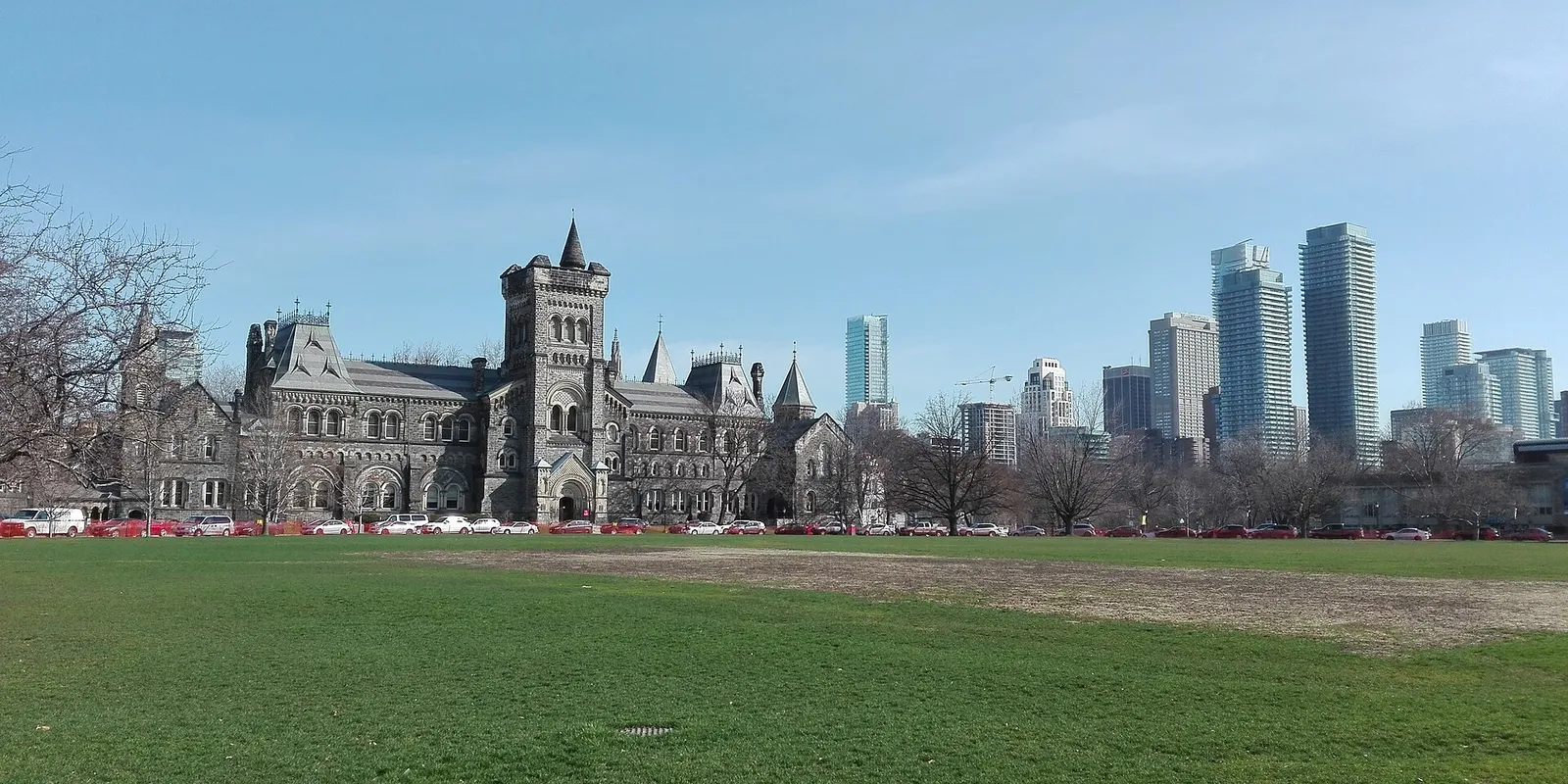
Canadian universities we help with.
Four universities and four different processes. Here is what each one asks of Indian applicants.
University of Toronto
Three campuses and broad admission categories, such as Life Sciences or Commerce, so first-year students can explore before choosing a major.
- Arts & Science, including Rotman Commerce and Computer Science
- Applied Science & Engineering
- Up to three programme areas on one OUAC application
University of British Columbia
Vancouver and Okanagan campuses, one application with a first and second degree choice, and a Personal Profile for almost every degree.
- Arts, Science and Applied Science
- Sauder Bachelor of Commerce, with a video interview in the profile
- UBC Okanagan, with a CAD 8,000 renewable award for new international students
University of Waterloo
Best known for co-op: students typically alternate four-month study and paid work terms, with four to six work terms in a co-op degree.
- Engineering: AIF and online interview
- Mathematics and Computer Science: AIF
- CAD 10,000 first-year scholarship for international students
McGill University
In Montreal, with its own application, no predicted marks and an English test for most Indian applicants.
- Arts, Science, Engineering and Management
- A second application at no extra fee
- Quebec: a CAQ instead of a PAL for the study permit
How GyanOne helps with your Canadian applications.
One plan across four portals, built around your child's board, subjects and goals.
Profile and subject check
We check Class 11 and 12 subjects against each programme's prerequisites, including Standard versus Applied Mathematics, and the English route each university accepts.
University and programme shortlist
Admission categories at U of T, two degree choices at UBC, co-op or regular at Waterloo, two applications at McGill. We help you use each choice well.
Application plan and deadlines
One calendar for OUAC, Join U of T, the Waterloo applicant portal, EducationPlannerBC and McGill's portal, from U of T's 7 November early date to UBC's 15 March document deadline.
AIF, Personal Profile and supplementary forms
Waterloo's AIF has 150-word answers, UBC's Personal Profile 500 to 2,100 characters each, and U of T's Rotman Commerce and Computer Science their own forms. Your child writes them; we coach and review.
References and documents
UBC wants two referees, one a school official. Waterloo does not review recommendation letters or certificates. McGill wants Class 10, 11 and mid-year Class 12 results. Each portal gets the right papers.
Interviews, offers and the study permit
Practice for Waterloo's Engineering interview and the Sauder video question, help comparing offers and scholarships, and a clear timeline for the PAL, or CAQ for Quebec, and the study permit.
Choose the support your family needs.
Some families arrive with a shortlist in Class 12. Others want help deciding whether Canada is the right choice at all.
Application-Only Support
For students who already have target Canadian universities and need expert help completing strong applications on time.
- OUAC, EducationPlannerBC and McGill application forms
- Waterloo AIF, UBC Personal Profile and U of T supplementary applications
- Referee and document planning for each portal
- Deadline tracking from November to March
- Interview practice and final quality checks
Comprehensive University Strategy
For families who want help choosing countries, courses and universities, and building a profile with time to spare.
- Student assessment and course direction
- Subject choices for Class 11 and 12, including the maths question
- Activities that give the AIF and Personal Profile real substance
- Scholarship planning, including school nominations
- An application roadmap and ongoing counselling
Canada 2027 entry: requirements and deadlines for Indian students.
From each university's official admissions pages, checked October 2026. Requirements vary by programme, so always confirm on the official page before you apply.
| University | How to apply | Indian boards / IB | English and tests | 2027 entry dates |
|---|---|---|---|---|
| University of Toronto | OUAC Undergraduate application (Group B), then the Join U of T or Engineering portal. Supplementary applications for Engineering, Rotman Commerce, Computer Science and some others. | CBSE or ISC; strong state board results considered individually. Calculus programmes need CBSE Class 12 Standard Mathematics. Offers use Class 11 and mid-term results. | English test unless English is the first language you learned at home; India is not on the exemption list. IELTS 6.5, no band below 6.0. | Early: apply by 7 Nov 2026. Deadline 15 Jan 2027. Engineering supplementary 15 Jan; Rotman Commerce and Computer Science 1 Feb. Documents 1 Feb (Engineering 15 Jan). |
| UBC | EducationPlannerBC. First and second degree choice. Personal Profile with two referees for almost every degree; Sauder Commerce adds a video interview. | Assessed on Class 11 and 12 academic courses, with degree prerequisites such as English and Grade 12 maths equivalents. IB Diploma accepted. | CBSE or CISCE school with 75% or more in senior English meets the English standard. Otherwise IELTS 6.5, no part below 6.0. | International Scholars 15 Nov 2026. Apply by 15 Jan 2027. English proof 15 Feb; documents for school applicants outside Canada 15 Mar 2027. |
| Waterloo | OUAC, then the Waterloo applicant portal. AIF for Engineering, Mathematics and Computer Science; online interview for all Engineering except Architecture. | Class 10 board, final Class 11 and predicted Class 12. Computer Science minimums: 90% in Standard Maths and one other Class 12 course, 85% overall. | English test unless your last four years of school were fully in English, confirmed by an official school letter. IELTS 6.5 (6.5 writing and speaking). | Engineering: apply 15 Jan 2027; AIF, interview and documents 1 Feb. Other programmes: apply 1 Feb 2027; AIF and documents 15 Feb. |
| McGill | McGill's own online application; a second application is free. Documents go to the McGill Applicant Portal. | Class 10 results, Class 11 and mid-year Class 12 school results. Predicted and positional grades are not used. Management accepts applied maths. | Test required for Indian applicants, even at English-medium schools, unless an exemption (such as IB English A at 5+) applies. IELTS 6.5, components 6.0. | Apply by 15 Jan 2027. Major Entrance Scholarship 21 Jan 2027. Documents 1 Mar 2027. |
The OUAC form is only step one. After you apply, U of T and Waterloo email portal log-ins, and their supplementary forms and documents fall due two to three weeks after the application deadline.
Build my Canadian university shortlist →What our undergraduate record shows, and what it doesn't.
We have not published Canadian admit figures, so we won't quote any here. Across all destinations, more than 1,000 students have reached their dream universities with our undergraduate counselling, and we help 250+ undergraduate students every year. In a single year, our students received 257 undergraduate admits: 78 in the USA, 55 in Singapore, 48 in the UK, 40 in the UAE and 36 in Australia. Stanford and Harvard are among our undergraduate admits.
For Canada we use the same method we have used since 2008: start from the student's real strengths, choose programmes whose prerequisites they meet, and submit every form on time.
Canada undergraduate admissions: questions parents ask.
Is there one application for all Canadian universities?
No. Ontario universities, including U of T and Waterloo, share the OUAC Undergraduate application. Its CAD 159 base fee covers three programme choices, with CAD 51 for each extra one and a limit of three at any one university. UBC uses EducationPlannerBC, and McGill has its own application. Checked October 2026.
Do Canadian universities use predicted Class 12 marks?
Waterloo does: it evaluates Class 10 board results, final Class 11 grades and predicted Class 12 board results. U of T makes conditional offers on the previous year's grades and mid-term results, and UBC assesses Class 11 and 12 courses. McGill uses Class 10, Class 11 and mid-year Class 12 results and says predicted grades are not used. Offers are usually conditional on final results.
Does my child need IELTS or TOEFL?
Usually for U of T and McGill, sometimes for Waterloo, and often not for UBC. UBC accepts 75% or more in senior English from a CBSE or CISCE school. Waterloo exempts students whose last four years were fully in English, if official transcripts or a school letter confirm it. U of T requires a test unless English was the first language learned at home, and McGill requires one even from English-medium schools in India. All four accept IELTS Academic 6.5, with different component minimums.
Is the SAT required?
No, not for Indian board applicants at these four. U of T, Waterloo and McGill do not list the SAT or ACT in their requirements for CBSE or ISC students, and UBC's assessment is based on Grade 11 and 12 results.
How much does a year cost?
It depends on the university and programme. For 2026–27, U of T's first-year international programme fee is CAD 66,110 in Arts & Science and CAD 72,860 in Engineering; McGill charges CAD 54,000 for Arts and CAD 65,167.50 for Engineering; Waterloo estimates CAD 51,000 to 75,000 including incidental fees; UBC charges per credit, CAD 1,717.68 in Arts. Fees for 2027–28 are not yet published. The study permit also requires proof of CAD 23,448 a year for living costs.
What scholarships can Indian students get?
Several are automatic. Waterloo gives CAD 10,000 to international first-years in most programmes. U of T awards about 900 first-year scholarships of CAD 10,000, and UBC's International Major Entrance Scholarship was worth CAD 10,000 to 25,000 a year for 2026/27. The biggest awards need early action: U of T's Pearson Scholarship needs a school nomination by early October of Class 12, and UBC's need-based International Scholars Program closes on 15 November 2026. McGill's Major Entrance Scholarships need a separate application by 21 January 2027.
What is a PAL, and is there a cap on study permits?
A provincial attestation letter (PAL) is usually required for an undergraduate study permit. U of T and Waterloo issue it after you accept the offer and pay a deposit. For Quebec, including McGill, you need a Quebec Acceptance Certificate (CAQ) instead. Canada caps permit applications that need a PAL: for 2026, IRCC set 309,670 spaces nationally. The 2027 allocations were not yet published in October 2026, so apply as soon as you have your letter.
Do you have tie-ups with Canadian universities?
No. We have no admissions partnership with any university and are not paid by universities, so our advice is in the student's interest. The student writes their own application; we help them plan it and make it stronger.
Planning Canadian applications for 2027?
Tell us the student's class, school curriculum (CBSE, ISC, IB or other), intended course, target universities and entry year. A consultant will reply personally.
- Still time for 2027. The main deadlines are 15 January and 1 February 2027.
- Class 11 now? Plan subjects, English tests and scholarship nominations for 2028 entry.
- No tie-ups. We are never paid by universities.
Build my Canadian university shortlist
Share a few details and we'll be in touch.
OUAC Undergraduate application · U of T admissions · UBC admissions · Waterloo admissions · McGill admissions · IRCC: provincial attestation letters
Undergraduate counselling from Class 9 · UCAS application help · Common App application help · Singapore undergraduate admissions