
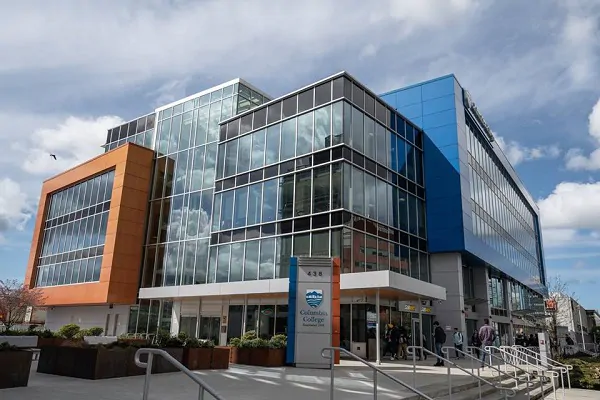
He Grew Up With a Mother Who Had Schizophrenia. He Took Slum Dwellers to the World Cup. Columbia Said Yes.
When Deepanshu Kansal submitted his Columbia Business School application, the odds, on paper, were not obviously in his favour. He had a commerce degree from a Delhi University college. He worked at an impact consulting firm that nobody at Columbia would have heard of, at a salary that started at Rs 4.5 lakhs. He had no Big 4 pedigree, no IIT or IIM on his résumé, no McKinsey or BCG stamp of approval.
What he had was a story that began at the Western Yamuna Canal, ran through the slums of Delhi, crossed ten countries in fourteen days to hear borrowers’ voices in five languages, and ended with a specific, defensible vision for how climate capital should reach the communities most vulnerable to the consequences of a warming planet.
“I knew the profile didn’t look like what Columbia usually admits,” he says. “I also knew that what I had done was real. The question was whether the application could make someone who had never heard of Sattva Consulting understand why it mattered.”
GyanOne built that case. Columbia said yes.
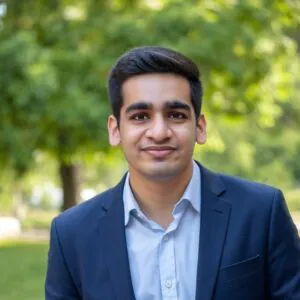
THE MOTHER, THE CANAL, AND THE BEGINNING OF EVERYTHING
Deepanshu grew up in a middle-class household in Delhi, the son of two working parents, in a family where money was always a factor in every decision. His mother battled schizophrenia. He does not describe this as a tragedy. He describes it as an education.
“Living with a parent navigating mental health challenges teaches you things that classrooms don’t,” he says. “You learn to read a room. You learn to mediate. You learn that setbacks are not endpoints. And you learn, very early, that the way money moves through a family — who has access to it, who makes decisions about it, who is protected by it and who is exposed by the absence of it — shapes everything.”
That early attunement to how financial access shapes human lives became the thread running through everything he built. It would show up at the Yamuna Canal, in a rural NBFC survey across fourteen states, in a climate risk assessment for a twelve-and-a-half-billion-dollar portfolio, and eventually in the essay that opened Columbia’s door.
He went to Lancer’s Convent, finishing with 95% in Class XII, and then to Sri Guru Gobind Singh College of Commerce at Delhi University, where he completed B.Com Honours with an 8.7 CGPA and became President of Enactus — the social entrepreneurship society that would produce the most extraordinary chapter of his undergraduate years.
THE GOTAKHORS, THE FLOATING BARRIERS, AND PUERTO RICO
The Western Yamuna Canal runs through Delhi. Along its banks live Gotakhors — slum dwellers who scavenge coins from the water, pulling what they can from the waste that flows past them. Deepanshu looked at this community and saw not a social problem to be documented but a system to be redesigned.
He built Project Kashti. He designed floating barriers to stop waste at source. He created a barter system that turned collected waste into rice or school supplies — converting what the canal discarded into something the community could use. The intervention was not charity. It was a redesigned incentive structure, built by someone who had learned from childhood that understanding what actually motivates people is the beginning of any real solution.
Under his leadership as President, Enactus SGGSCC went to the Enactus World Cup in Puerto Rico and reached the Top 16 internationally — beating teams from SRCC, SSCBS, and IIT Delhi at the national level. His team won the Race to Rethink Plastic competition twice, sponsored by Coca-Cola, taking home $15,000 and $20,000 in successive years against teams from 15 to 21 countries. They won the 77-Second Impact Film Award internationally. They placed in at least nine competitions across the undergraduate years.
“We were a commerce college beating IITs,” he says. “People were surprised by that. I wasn’t. I had a team that believed the problem was worth solving. That is more powerful than a brand name.”
TURNING DOWN PRICEWATERHOUSECOOPERS
After graduation, Deepanshu received an offer from PwC. He turned it down because the profile did not align with what he wanted to build. He took a short break, continued contributing to Enactus World Cup efforts, and then joined Sattva Consulting at a starting salary of Rs 4.5 lakhs.
The decision raised eyebrows. Sattva is an impact consulting firm — serious, rigorous, and deeply respected within the development finance world. But it is not a name that carries immediate recognition in the MBA admissions universe. Deepanshu knew this. He took the job anyway.
“I was not interested in a brand,” he says. “I was interested in the work. And the work at Sattva was the most demanding, most consequential work I could find.”
What followed was five years that would produce an application unlike anything Columbia’s committee had read before.
THE WORK THAT SPOKE FOR ITSELF
At Sattva, Deepanshu became a top-5% performer company-wide with the highest possible rating of 5 out of 5 for two consecutive years. He received an accelerated promotion in his first eligible cycle.
He built a climate risk assessment tool for Southeast Asia’s largest VC — a firm with more than $12.5 billion in portfolio assets — integrating 17 risk factors across 10 sectors across 4 countries. He co-built climate strategy for a $1.5 billion PE fund. He led a capacity-building programme for 700 portfolio companies of a development finance institution.
But the work that defined his application was a survey. An NBFC impact assessment across 14 states, 730-plus customers, conducted in 14 days. The prior research methodology had failed. It had not captured the actual voices of the borrowers — the people whose access to credit the entire assessment was supposed to illuminate. Deepanshu rebuilt the methodology from scratch. In five languages. In fourteen days.
“The borrowers had been speaking all along,” he says. “The research just hadn’t been designed to hear them. I rebuilt it so it could.”
That instinct — that the people most affected by a system are the ones whose voices are most systematically excluded from the design of that system — is the same instinct that had built Project Kashti at the Yamuna Canal. The Gotakhors had been speaking too. Someone just had to design something that listened.
THE APPLICATION THAT CONNECTED THE CANAL TO CLIMATE CAPITAL
When Deepanshu came to GyanOne, the challenge was architectural. The profile had every ingredient that tends to get a candidate looked past by a school like Columbia: unknown employer, commerce degree, low starting salary, no consulting brand that admissions committees would recognise in the first three seconds of reading.
What it also had, underneath all of that, was a single idea that ran with uncommon consistency across every chapter of his life. How does money reach the people who need it most? Who designs the systems that decide, and what do those designers understand — or fail to understand — about the lives of the people on the other side?
GyanOne built the CBS application around that idea as architecture, not theme. The essay opened with his mother’s schizophrenia and the Western Yamuna Canal — not as separate moments but as the same formative education in how financial access shapes human lives. It connected the Gotakhors to the NBFC borrowers to the climate-vulnerable communities he intended to serve through his post-MBA work. The same person who had rebuilt a survey in five languages to hear voices that lenders had ignored was the same person who would, given the right platform, redesign how climate capital flows to the communities most exposed to what is coming.
His CBS goal was specific: MBB’s PIPE practice, with a long-term ambition of co-founding a one-billion-dollar South Asia Resilience Fund focused on climate adaptation ventures.
“GyanOne helped me see that the liability was actually the proof,” he says. “The fact that I had chosen Sattva over PwC, that I had started at Rs 4.5 lakhs, that I had rebuilt a methodology in five languages in fourteen days — those were not things to explain away. They were evidence that the mission was real, not aspirational. Columbia wanted someone who had already been doing the work, not someone who planned to start.”
Columbia said yes.
FOR THE APPLICANT WHOSE PATH DOESN’T LOOK LIKE THE COLUMBIA TEMPLATE
Deepanshu’s file had almost none of the surface-level markers that dominate Columbia’s admitted class profiles. No IIT. No Big 4. No MNC letterhead. A commerce degree from a college most admissions readers would not immediately place. A starting salary that suggested, to anyone reading quickly, a candidate who had not yet arrived.
What it had was a mission that had been lived, not declared. A decade of work connecting financial access to human dignity across communities that most MBA applicants have never encountered except in case studies. And an essay that opened with a mother and a canal and arrived, with complete coherence, at a billion-dollar climate fund.
“I think people assume that Columbia wants a certain kind of person,” Deepanshu says. “A certain background, a certain firm, a certain number. And maybe for some candidates that is true. But what Columbia actually wants is someone who can make the case that what they are going to do with the degree matters. That is a different question. And it is a question I had been answering for years without knowing I was being asked it.”
Deepanshu Kansal is a GyanOne client who was admitted to Columbia Business School. GyanOne has helped applicants from impact consulting, social entrepreneurship, and non-traditional backgrounds build applications that go beyond the profile and into the mission. If you are applying in 2026, start the conversation.


 info@gyanone.com
Leave a Reply