
The short version
- The Gulf MBA is still mainly an executive market. Only 6 of the 43 MBA listings we checked are full-time programmes, and 7 of the 10 international programmes launched or announced since 2023 are executive or part-time [Published; Computed].
- Full-time study at internationally accredited schools is new and small: NYU Stern in Abu Dhabi and IIM Ahmedabad in Dubai, both first taught in 2025, with 82 students in their latest published intakes, against at least 215 in executive intakes over the same 13 months [Published; Computed].
- The Gulf price follows each school's own price list. LBS, Georgetown and NYU Stern charge less in the Gulf than at home in US dollars, INSEAD charges the same, and IIM Ahmedabad charges 2.1 times its Ahmedabad fee [Published; Converted].
- Evidence on results is thin: 2 of 43 listings publish employment figures, and no public source tracks applications to Gulf programmes [Published].
Executive summary
Every few months another internationally known business school announces a programme in Dubai, Abu Dhabi, Doha or Riyadh. This report asks what that adds up to. Is the Gulf becoming a place where people move to study a full-time MBA from an internationally branded school, as they move to London, Paris or Singapore? Or is it still mainly a market for executive education, where managers study without leaving their jobs?
The evidence points to the second answer, with one real change at the edge: since 2025, two accredited international schools have run daytime full-time MBAs in the UAE, and one has published a first employment report. Our title states that finding.
What we found, and how sure we are. Strong means official data read at source that cover the whole market we studied. Moderate means official data with gaps. Limited means one source, one school, one class or a small sample. Unavailable means no public data exist.
- The market is mostly executive and part-time. Of 43 listings, 6 are full-time programmes in the usual sense, 15 are executive or part-time programmes from international schools, and 22 come from regional universities, mostly taught in the evenings or at weekends [Published]. Evidence: strong.
- Two accredited international schools teach a daytime full-time MBA, both since 2025. Stern at NYU Abu Dhabi took its first class in January 2025 and IIM Ahmedabad's Dubai campus in September 2025; their latest published intakes are 47 and 35 [Published]. Evidence: strong.
- The executive side is bigger and already regional. Published executive intakes at international schools from September 2025 to September 2026 total at least 215, against 82 on the two accredited full-time programmes [Computed]; 82% of LBS's January 2026 blended Dubai class commute from outside the UAE [Published]. Evidence: strong for published figures; no market total exists.
- Entry far outpaces exit, mostly in executive formats. We count 10 international programmes launched or announced for 2023 to 2027 against one verified exit. Seven are executive or part-time, two full-time, one not yet described; both full-time entrants added an Executive MBA within two years [Computed]. Evidence: strong for documented events; moderate as a measure of the market.
- The Gulf price follows each school's own price list. In six of nine same-school pairs, the Gulf fee is at or below the home fee in US dollars, counting a gap of up to 5% as at par. NYU Stern's one-year Abu Dhabi tuition is 31.8% below two years in New York; IIM Ahmedabad's Dubai MBA costs 2.1 times its Ahmedabad equivalent. Within the Gulf, the median international EMBA costs 5.3 times the median regional MBA [Computed; Converted]. Evidence: strong.
- Outcome data rest on one class. Only 2 of 43 listings publish employment figures. In NYU Stern Abu Dhabi's Class of 2025, 85% of 33 job seekers accepted offers within three months, and 85.7% of those employed stayed in the Middle East and North Africa [Published]. Evidence: limited.
- The UAE has rewritten its rules; Saudi Arabia has opened its door. UAE Federal Decree-Law No. 31 of 2025 brings free-zone campuses under federal licensing, and a framework approved on 16 July 2026 adds financial guarantees and continuity plans. Saudi Arabia adopted rules for foreign branches in 2023 and approved its first, the University of New Haven in Riyadh, in October 2025 [Published]. Evidence: strong for the UAE and Saudi Arabia; unavailable for Qatar's licensing rules and for Bahrain, Kuwait and Oman.
- Demand signals are small and indirect. GMAC has published no application trend for Middle East programmes since at least 2024, because three to five of the region's schools responded. Among Central and South Asian candidates, plans to apply to the region went from 2% to 9% during 2025, but only 1% of internationally mobile candidates name it as their first choice [Published]. Evidence: limited.
- On our assessment, the Gulf is ready for executive education and partly ready for full-time study, mainly in the UAE. Our readiness matrix rates the executive segment Strong on five of seven channels and the full-time segment Moderate on all seven [Team GyanOne Research assessment].
The answer. The Gulf is a destination for executive MBA education. It is not yet one for internationally branded full-time study, but it has started a real test of whether it can be, and the first result is encouraging.
Limitations. No public source counts MBA applications or enrolments across the Gulf, so we measure supply, price, rules and published outcomes rather than demand itself. Many programmes publish no intake sizes, and fees are published on different bases. We did not research national regulation or labour data for Qatar, Bahrain, Kuwait or Oman.
About this study
This is independent research by Team GyanOne Research. It was not commissioned, sponsored or reviewed by any school, regulator or government. Alongside the official sources cited, it draws on GyanOne’s proprietary data and insight from more than 18 years of advising applicants. It describes programmes, rules and published data; it does not rank schools or evaluate any government's policy. It covers MBA and Executive MBA degrees that a student can join in 2026 in the six Gulf Cooperation Council states, and leaves out specialist master's degrees, online-only programmes, closed corporate cohorts and rotating global cohorts that teach only briefly in the Gulf. Our working title assumed a shift towards full-time study; the evidence did not support it, so the title states what we found.
How to read the numbers
- Labels. Published: printed by the source. Computed: our arithmetic on published figures. Converted: a published figure in another currency. Modelled: the output of stated assumptions, as in Chapter 8. One label at the end of a sentence covers every figure in it. Dates that identify a document or event are not labelled.
- Listings and groups. The dataset has 43 listings for 40 programmes, because Strathclyde's MBA appears in three countries and HEC Paris's EMBA in two. Group A is full-time MBAs (6), Group B executive and part-time MBAs from international schools (15), Group C programmes of universities based in the region (22).
- Currencies. One basis throughout: the Reserve Bank of India's reference rates for 30 October 2026, crossed to the US dollar, so €1 = US$1.1 and £1 = US$1.3. Gulf currencies use official central-bank rates: AED 3.7, SAR 3.8 and QAR 3.6 per US dollar; one Bahraini dinar is US$2.7, one Omani rial US$2.6 and one Kuwaiti dinar US$3.2, at the Central Bank of Kuwait's rate of 29 October 2026. Rupee amounts are in millions.
- Fee totals. Where a school prices per credit or per year, we multiply by the published credits or years and label the result Computed; such totals are tuition only.
- At par. Comparing a Gulf fee with a home fee, a difference of 5% or less counts as at par, because fee years, taxes and inclusions rarely line up exactly.
Chapter 1 · The question
The Gulf already attracts executives from across the region; full-time MBA study is the part still being tested.
"An MBA in the Gulf" covers three different products, and most confusion about the market comes from mixing them up.
- Full-time MBAs. You stop working, usually move, and study for about a year. This is the product that makes a city a study destination.
- Executive and part-time MBAs from international schools. You keep your job and study in monthly blocks, at weekends or online. An Executive MBA (EMBA) is built for experienced managers, typically with ten or more years' experience; the degree comes from the home school.
- Regional university MBAs. Universities based in the region teach MBAs, mostly in the evenings or at weekends, for people already living there.
A branch campus is one that a foreign university runs abroad in its own name. Most of Dubai's sit in free zones, business districts with their own licensing, where the emirate's education regulator, the Knowledge and Human Development Authority (KHDA), checks that teaching matches the home campus. Accreditation here means AACSB, EQUIS and AMBA, the three international business-school accreditations; schools holding all three are called triple-accredited. The lists name schools, not campuses.
For two decades, international schools came to the Gulf for the second product. Strathclyde has taught its part-time MBA in the UAE and Bahrain since 1995 and Oman since 2000; LBS opened in Dubai in 2007; HEC Paris launched an EMBA in Doha in 2010 [Published]. In 2025, two accredited international schools began teaching full-time MBAs in the UAE. If more follow and their graduates find work in the region, the Gulf could become a destination for full-time study too. The chapters that follow test that against supply, entry and exit, price, outcomes, rules and demand.
What this means for applicants
Decide which product you need before comparing schools. A full-time MBA is a career switch that costs a year's salary; an executive MBA suits people staying with their employer; a regional MBA is the low-cost route for people settled in one country. One school's name can sit on more than one of these, so read the format before the brand.
Chapter 2 · Supply
Only 6 of 43 Gulf MBA listings are full-time, and only two of those come from internationally accredited schools.
We checked 43 MBA and EMBA listings on official pages on 30 October 2026. The UAE has 23 of them, Saudi Arabia 11, Bahrain 3, and Qatar, Kuwait and Oman 2 each [Published; Computed].
| Country | A: full-time | B: international executive and part-time | C: regional universities | Total |
|---|---|---|---|---|
| UAE | 5 | 10 | 8 | 23 |
| Saudi Arabia | 1 | 2 | 8 | 11 |
| Qatar | 0 | 1 | 1 | 2 |
| Bahrain | 0 | 1 | 2 | 3 |
| Kuwait | 0 | 0 | 2 | 2 |
| Oman | 0 | 1 | 1 | 2 |
| Total | 6 | 15 | 22 | 43 |
Source: programme pages listed in Appendix A [Published; counts Computed].
Figure 1. Where are the Gulf's MBA programmes, and what kind are they?
Full-time listings are a thin slice of a market made mostly of executive, part-time and regional programmes, and five of the six are in the UAE.
Source: GyanOne Research programme dataset (43 listings, official programme pages, accessed 30 October 2026). Computed.
The six full-time programmes are not alike
- Stern School of Business at NYU Abu Dhabi: one year, 54 credits, with a summer term in New York; first class January 2025. The Class of 2026 has 47 students from 20 countries, chosen from 310 applicants, average age 27, five years' experience. NYU Stern holds AACSB [Published].
- IIM Ahmedabad, Dubai: one year; pioneer batch of 35 in September 2025, average applicant age 30, 7.2 years' experience. IIM Ahmedabad holds EQUIS [Published].
- S P Jain Global: one cohort taught in Singapore and Dubai; 105 students in its 2025 intakes, average age 27. On none of the three lists [Published].
- Middlesex University Dubai: a weekday daytime MBA open to graduates without work experience. On none of the three lists [Published].
- Heriot-Watt University Dubai: can be completed full-time in a year, though seminars run at weekends. On none of the three lists [Published].
- KFUPM, Dhahran: a new one-year MBA for Entrepreneurs, offered from 2026, at a Saudi university holding AACSB and AMBA [Published].
So the daytime full-time MBAs from international schools on at least one list number two, NYU Stern Abu Dhabi and IIM Ahmedabad Dubai, with 82 students in their latest published intakes [Computed]. Hult lists its one-year MBA only in Boston and London, and the Prince Mohammed Bin Salman College (MBSC) in Saudi Arabia offers an EMBA, not a full-time MBA [Published]. Four other listings carry a full-time label but differ: New Haven's Riyadh MBA runs from 6:30 to 9:30 in the evening, Qatar University schedules its MBA for working students, and the label for the University of Bahrain and Kuwait's Gulf University for Science and Technology comes only from the AACSB directory [Published].
The executive side is bigger, and it already travels
Group B has 15 listings from 12 international schools, all on at least one accreditation list (for Wollongong in Dubai and New Haven in Riyadh, through the parent university); seven of the 12 are triple-accredited [Published; Computed]. Their class profiles show a regional market [Published]:
- LBS, Dubai, September 2026: 40 students, 61% commuters, 17 nationalities, 13 years' average experience.
- LBS, first blended Dubai class, January 2026: 46 students from 20 nationalities, 82% commuting from outside the UAE.
- NYU Stern Abu Dhabi, first EMBA cohort, September 2026: 37 professionals from 21 countries.
- HEC Paris, Doha, Class of 2027: 45 executives, 44% Qatari, 8 travelling from Kuwait, the UAE and France. HEC's Riyadh launch cohort was 55% Saudi.
Side by side, the balance is clear. From September 2025 to September 2026, published intakes total 82 full-time students at the two accredited international schools and 215 executive students at LBS, NYU Stern and HEC Paris: 2.6 executive students for every full-time one [Computed]. The executive figure is a floor, because INSEAD, Georgetown and seven other international programmes publish no intake size.
Figure 2. How many students start full-time and executive MBAs at international schools in the Gulf?
Published executive intakes at international schools outnumber full-time intakes at accredited international schools by 215 to 82, and the executive count is incomplete.
Source: School programme and class-profile pages; latest published intake. Published.
Regional universities carry the volume
The 22 regional listings serve residents. They cost far less (Chapter 4), rarely need a test (3 of 22 require one), and 19 come from schools on at least one accreditation list [Published; Computed]. All nine dataset schools in QS's 2027 Middle East and Africa MBA table are regional universities, led by UAE University and Qatar University, and MBSC graduated 322 Executive MBA students in February 2026 [Published].
How we know
We built the dataset from each school's own programme, fee and admissions pages, read on 30 October 2026, and checked every school against the AACSB, EQUIS and AMBA lists the same day. Where a programme publishes both full-time and part-time study plans but no daytime timetable, we recorded it as part-time. Where official figures conflict, such as LBS's 90 and 93 for its combined September 2026 EMBA intake, we use the most specific and never combine them.
What this means for applicants
A full-time MBA from an accredited international school in the Gulf means one of two programmes, both in the UAE and both young. An executive MBA means a deep field and classmates who fly in from across the region. Check how "full-time" a programme is: evening or weekend teaching changes what the year can do for you.
What this means for universities
The executive segment is crowded with triple-accredited schools; the full-time segment has two accredited international players and none outside the UAE. Publishing intake sizes still stands out: only 9 of 43 listings do.
Chapter 3 · The entrants
Ten international programmes have launched or been announced since 2023 against one exit, and seven of the ten are executive or part-time.
From 2023 to 2027, counting programmes due to start in 2027, we document 10 international MBA launches or new Gulf locations, three launches by regional universities and one exit of an international business programme [Computed].
| Year | International, full-time | International, executive or part-time | Regional universities | International exits |
|---|---|---|---|---|
| 2023 | none | Georgetown EMBA, Dubai | King Abdulaziz University EMBA for Ministry of Commerce staff (closed cohort) | none |
| 2024 | none | HEC Paris EMBA Emerging Leaders Track, Doha | American University of Sharjah blended MBA | Bayes EMBA, Dubai (discontinuation reported 2024) |
| 2025 | NYU Stern, Abu Dhabi; IIM Ahmedabad, Dubai | HEC Paris EMBA, Riyadh track | none | none |
| 2026 | none | LBS blended EMBA, Dubai; NYU Stern EMBA, Abu Dhabi; University of New Haven MBA, Riyadh (evening, full- or part-time) | KFUPM MBA for Entrepreneurs (full-time) | none |
| 2027 (planned) | none | IIM Ahmedabad EMBA, Dubai | none | none |
Also due in January 2027: Peking University HSBC Business School's MBA and EMBA in Dubai, announced by KHDA, format not yet published. We found no launch in 2022. Sources are listed under "Launches, exits and market events" [Published; counts Computed].
Figure 3. What kind of MBA programmes have international schools brought to the Gulf since 2023?
International launches since 2023 outnumber exits ten to one, but seven of the ten are executive or part-time and only two are full-time.
Source: GyanOne Research market-events register, from official school announcements. Computed.
Three patterns
The executive format dominates even the new wave. Seven of the ten international launches are executive or part-time [Computed]. Established schools extended what they already did: LBS added a blended Dubai stream; HEC Paris added a younger-manager track in Doha and a Riyadh track.
Both full-time entrants added an executive programme within two years. NYU Stern opened its full-time MBA in January 2025, announced an EMBA in September 2025 and welcomed the first EMBA cohort in September 2026. IIM Ahmedabad opened in Dubai in September 2025, and its EMBA is due to start in February 2027 [Published]. Neither school has said why. Read together, the two cases fit a market where executive demand is the more established base; that reading is ours.
The UAE takes most launches; Saudi Arabia is the newest market. Of our 13 launches, 8 are in the UAE, 4 in Saudi Arabia and 1 in Qatar [Computed]. Saudi Arabia's four include New Haven's Riyadh campus, the first international branch the Kingdom has approved, whose founding intake began in August 2026 [Published].
Exits
One international business programme has left: City St George's, University of London, decided to discontinue its Dubai-based programmes, including the Bayes EMBA, as reported at an alumni event in May 2024 [Published]. Zayed University's and the American University in Dubai's EMBAs no longer appear on their sites, but neither university has announced a closure, so we record them as no longer listed. The region's main branch-campus exit is not a business school: Texas A&M's Board of Regents voted on 8 February 2024 to close its engineering campus in Qatar over four years, citing heightened instability in the Middle East as the reason for its review [Published].
This is a count of documented events, not of the market. Among international listings still running whose first Gulf intake is published, six began between 1995 and 2010, and seven listings publish no start year [Computed]. So the period since 2023 has been busy, but we cannot say by how much it exceeds earlier periods.
How we know
Launch dates come from schools' releases and KHDA, read on 30 October 2026, and are recorded in our events register and the chart file. Each launch counts once, in the year its first cohort started or is due to start; a new track or city for an existing degree counts. Strathclyde's 2024 Riyadh partnership and Bahrain hub do not, because neither is MBA-specific. We left out an Alfaisal health-leadership master's that is not an MBA by name, and a second Saudi branch approval reported only in news media.
What this means for applicants
New programmes bring choice and unknowns: no class history, no regional alumni base and usually no employment data. Ask a new programme what share of teaching home-campus faculty deliver, how the degree certificate reads and what it will publish about outcomes, and when.
What this means for universities
Business-school entry has been steady: ten launches against one exit. Both full-time entrants added an EMBA soon after opening. Saudi Arabia is open to licensed branches, and only one has been approved.
Chapter 4 · Price
The Gulf price follows each school's own price list: at or near home for the five leading EMBA schools, double home for IIM Ahmedabad.
Gulf prices sit in two tiers. The five international EMBAs from INSEAD, LBS, HEC Paris, Georgetown and NYU Stern cost from US$128,000 (HEC Paris) to US$180,252 (NYU Stern, two years of estimated tuition), with a median of US$159,008 (INSEAD, €142,150). The 19 regional listings with a comparable total have a median of US$29,952 (Abu Dhabi School of Management, AED 110,000), from US$13,404 (University of Bahrain, BHD 5,040) to US$77,333 (Alfaisal EMBA, SAR 290,000) [Published; Converted; Computed]. The median international EMBA costs as much as five median regional MBAs, with change left over: the ratio is 5.3 [Computed].
Between the tiers sit international part-time and blended MBAs from US$31,359 (Wollongong in Dubai, AED 115,167, Computed from its per-subject fee) to US$75,153 (Hult's Dubai EMBA, AED 276,000), and IIM Ahmedabad's Dubai EMBA at US$100,000 plus VAT. Full-time fees run from KFUPM's base SAR 80,000 (US$21,333) to NYU Stern Abu Dhabi's US$126,360 [Published; Converted].
Figure 4. How much does an MBA cost in the Gulf, by type of programme?
International EMBAs cluster between US$128,000 and US$180,252, while regional MBAs cluster around US$30,000.
Source: Official fee pages, latest published year. Converted to US$ at RBI reference rates, 30 October 2026.
All 11 listings priced in US dollars, euros or pounds belong to international schools; every regional listing with a published fee (21 of 22) prices in local currency [Computed]. With Gulf currencies pegged to the dollar, a dollar price is effectively local for residents; a euro or sterling price is not.
Same school, two campuses
The sharper comparison is between a school's Gulf programme and its home programme. Nine pairs have published fees on both sides.
| School and programme | Gulf fee | Home fee | Gulf against home | Comparability |
|---|---|---|---|---|
| LBS Executive MBA: Dubai stream against London stream (September 2026) | US$163,995 + 5% VAT (US$172,195 with VAT) | £134,950 (US$180,787) | -9.3% before VAT; -4.8% with VAT | Same programme and intake |
| INSEAD Global Executive MBA: Middle East section against Europe section | €142,150 (US$159,008) | €142,150 (US$159,008) | 0% | One price for every section |
| Georgetown Executive MBA: Dubai against Washington, D.C. (Fall 2026) | US$153,414 + VAT (US$161,085 with VAT) | US$172,044 | -10.8% before VAT; -6.4% with VAT | Same intake; D.C. fee includes residency lodging |
| NYU Stern Executive MBA: Abu Dhabi against New York | US$180,252 (2 x US$90,126, estimated tuition, August 2027 intake) | US$238,700 (programme cost, August 2026 and January 2027 starts) | -24.5% | Loose: New York price includes fees, books, meals and immersions |
| HEC Paris Executive MBA: Doha and Riyadh against Paris | US$128,000 | €110,000 (US$123,045) | +4.0% (at par) | Gulf fee year not stated |
| NYU Stern full-time MBA: one year in Abu Dhabi against two years in New York | US$126,360 (estimated tuition, January 2027 intake, 54 credits) | US$185,316 (2 x US$92,658, 2026-27 tuition, 60 credits) | -31.8%; -24.2% per credit | Year-two New York tuition held at the 2026-27 level |
| Hult Executive MBA: Dubai against London | AED 276,000 (US$75,153) | £49,900 (US$66,849) | +12.4% | London is Hult's other EMBA campus |
| Manchester Global Part-time MBA: Dubai centre against Manchester-enrolled | £42,064 (US$56,352) | £34,000 (US$45,548) | +23.7% | Same currency |
| IIM Ahmedabad one-year MBA: Dubai against MBA-PGPX, Ahmedabad | US$80,000 (excludes accommodation) | Rs 3.6 million (US$38,006; includes single accommodation; 2027-28 batch) | +110.5% (2.1 times) | Dubai fee excludes housing that Ahmedabad's includes |
Fees Published; Converted at RBI rates for 30 October 2026; totals with VAT, multi-year totals and differences Computed. The New York and Washington fees were read on the schools' official pages on 30 October 2026.
Figure 5. Does the same school charge more or less in the Gulf than at home?
Six of nine schools charge at or below their home fee in the Gulf, counting HEC Paris's 4.0% gap as at par; IIM Ahmedabad, Manchester and Hult charge more.
Source: Official fee pages for each school's Gulf and home programmes; RBI reference rates, 30 October 2026. Converted.
Two things explain most of the table. The five schools behind the Gulf's international EMBAs set Gulf prices at or near home: INSEAD charges one price everywhere, LBS and Georgetown charge less in Dubai before and after VAT, and HEC Paris is within 5% of Paris [Computed]. IIM Ahmedabad prices Dubai against the international market rather than India: 2.1 times its Ahmedabad one-year MBA, before any Dubai housing [Computed; Converted].
The full-time NYU pair is also a different product. Abu Dhabi is a one-year, 54-credit MBA; New York a two-year, 60-credit one. Abu Dhabi's tuition is 31.8% lower in total and 24.2% lower per credit, and it costs one year out of work instead of two [Computed].
Where the currencies differ, exchange rates can move the answer. LBS's London stream costs more in dollars than its Dubai stream with VAT unless sterling falls 4.8% or more from its 30 October level of US$1.3, at which point the two cost the same. HEC Paris's Gulf tracks cost more than Paris unless the euro rises 4.0% or more against the dollar [Modelled].
How we know
Gulf fees come from the programme dataset and home fees from our benchmark register, plus three we read on official pages on 30 October 2026: NYU Stern's 2026-27 full-time budget and Executive MBA cost, and Georgetown's Fall 2026 Executive MBA fee. The benchmark register had used European Central Bank rates for 29 October 2026 (€1 = US$1.1; £1 = US$1.3); we recomputed every benchmark at the RBI rates so both sides share one basis, which moves the INSEAD MBA, for example, from US$122,274 to US$122,889. We left out Oxford, whose site we could not read directly, and NUS and HKUST, for which the RBI publishes no rate and which have no Gulf programme.
What this means for applicants
If you live in the Gulf, a school's Gulf version usually costs the same or less in fees and saves flights and hotels for every teaching block. IIM Ahmedabad is the exception. Compare like with like: add VAT where the UAE fee excludes it, and check what housing, travel and immersions each fee covers.
What this means for universities
Pricing at or near home is now the norm among the five schools that lead the executive segment, so a Gulf premium needs a visible reason. The gap between international and regional programmes is so wide that the two mostly serve different buyers.
Chapter 5 · Outcomes and transparency
Two of 43 listings publish employment figures, so one class of 33 job seekers carries most of the evidence on full-time outcomes.
A study destination is partly a promise about what happens after the degree. In the Gulf, that promise is mostly unwritten. Only NYU Stern Abu Dhabi and S P Jain publish employment figures; none of the 15 international executive and part-time listings does, and none of the 22 regional ones [Published; Computed].
The one full report
NYU Stern Abu Dhabi published its first employment report in June 2026, for the Class of 2025 [Published]:
- 51 students, 33 of them seeking jobs; the report covers 98% of the class.
- Within three months of graduation, 85% of job seekers (28 people) had accepted an offer and 88% had received one.
- Median base salary US$101,048 and mean US$119,262; the middle half earned between US$92,132 and US$153,339.
- 85.7% of employed graduates took jobs in the Middle East and North Africa: 24 of the 28 [Computed].
The programme seems to work as a route into Gulf jobs for early-career people, with an average age of 27 or 28 and about five years' experience. But 33 job seekers in one class is a small base, and a first class can differ from later ones in either direction.
S P Jain reports, for its whole multi-city Global MBA Class of 2024, an average salary of Rs 3.4 million (US$35,402) and 55% international placements as it defines them, without saying how many graduates the figures cover [Published; Converted]. IIM Ahmedabad's first Dubai class finished in 2026; its careers page had no figures by 30 October 2026 [Published].
Class profiles are almost as scarce: 9 of 43 listings publish a class size (two of them graduating counts) and 6 publish average experience [Computed].
| Group | Listings | Publish employment figures | With a denominator | Name an external standard or review | Publish class size |
|---|---|---|---|---|---|
| Gulf: full-time (A) | 6 | 2 | 1 | 0 | 3 |
| Gulf: international executive and part-time (B) | 15 | 0 | 0 | 0 | 5 |
| Gulf: regional universities (C) | 22 | 0 | 0 | 0 | 1 |
| Home campus: full-time MBA benchmarks | 9 | 9 | 4 | 3 | not collected |
| Home campus: Executive MBA benchmarks | 3 | 1 | 0 | 0 | not collected |
Home full-time benchmarks: INSEAD, HEC Paris, IE, LBS, Cambridge, ISB and IIM Ahmedabad publish reports, NUS and HKUST headlines. LBS states that it follows CSEA standards, IIM Ahmedabad's report is audited under India's placement-reporting standard (IPRS), and ISB publishes a KPMG review [Published; counts Computed].
Figure 6. Who publishes what happens to MBA graduates, in the Gulf and at home?
Every home-campus full-time MBA in our benchmark publishes outcomes, against 2 of 43 Gulf listings, while executive programmes are silent in both places.
Source: School employment reports and programme pages, accessed 30 October 2026. Computed.
Silence is normal for executive programmes, not for full-time ones
Executive students usually stay with their employer, and home campuses rarely publish EMBA outcomes either: LBS and HEC Paris publish none, and INSEAD's career-progression report sits behind a download form [Published]. For full-time MBAs, the gap is real. All nine home-campus full-time benchmarks publish something, and the leading standard, from the Career Services and Employer Alliance (CSEA), requires known outcomes for at least 85% of a full-time class [Published]. A Gulf full-time programme that wants comparison with London or Paris will be judged on the same evidence.
Home-campus reports also show the Gulf pulling in MBA graduates trained elsewhere. In LBS's Class of 2025, 11% of job locations were in Africa and the Middle East, against 9% of the class with that background, at a mean salary of £106,108 (US$142,149) against £91,928 (US$123,152) for the whole class. At HEC Paris, 8% of the Class of 2025's accepted jobs were in Africa and the Middle East [Published; Converted]. For a Gulf full-time programme, those graduates are competition for the same jobs.
How we know
Employment and class data come from the programme pages and reports in the dataset, read on 30 October 2026. A denominator means the school states how many graduates the figures describe. Benchmark disclosure comes from our outcomes register; we dropped Oxford because its site could not be read directly. The LBS salaries are converted at our RBI rate; the report's own conversion gives US$142,404 for the Africa and Middle East mean.
What this means for applicants
For a career-switch MBA, ask for the employment report, the number of job seekers behind it and the share of the class it covers. NYU Stern Abu Dhabi can answer for one class; the others cannot yet. For an executive MBA, outcome reports are rare everywhere, so judge on cohort, faculty and format.
What this means for universities
A full employment report with a denominator is the cheapest way to stand out: one Gulf programme has one. Reporting to the CSEA standard, or with an external review, would put a Gulf full-time programme on the same footing as its home-campus peers.
Chapter 6 · Regulation and policy
The UAE has a mature, recently rewritten rulebook; Saudi Arabia opened to branch campuses in 2023 and approved its first in 2025.
UAE: one federal licence, with student protection built in
Until recently, KHDA authorised Dubai's free-zone campuses, and by KHDA's own description the federal Commission for Academic Accreditation licensed only some of them. Federal Decree-Law No. 31 of 2025, issued at the end of December 2025, brings every higher-education institution, free zones included, under a federal licence from the Ministry of Higher Education and Scientific Research (MoHESR) [Published]. Under it:
- no institution may operate, and no programme may admit students, without the federal licence and programme accreditation;
- free-zone institutions with a local authorisation receive the federal licence without repeating procedures or paying extra fees;
- programmes accredited by a reputable international body recognised by the ministry need no second review;
- closing academic units or making major programme changes needs ministry approval, and institutions are periodically classified [Published].
A national licensing framework approved on 16 July 2026 adds risk assessment and renewal, separation of ownership from academic decisions, financial guarantees, audited accounts, student protection and academic continuity plans [Published]. The last two are rules about what happens to students if a provider runs into trouble, which matters most to anyone joining a new programme.
Dubai's own checks are older: since 2008, KHDA has confirmed that branch programmes are substantially equivalent to the home campus's. It counted 37 international campuses among 41 private institutions in 2024-25 [Published].
The 2026 disruption. The UAE moved higher education to remote learning for parts of spring 2026, until 17 April and again from 5 to 8 May, and KHDA later referred to the exceptional circumstances of the 2025-26 academic year [Published]. We found no official notice that any MBA or EMBA cohort was paused, and the autumn 2026 cohorts we track all started.
Saudi Arabia: a new door, one approval so far
Saudi Arabia's Universities Affairs Council approved a Regulation for Branches of Foreign Universities on 30 August 2023 (14 Safar 1445, Converted date). A branch needs a licence after the Minister's approval, teaches in the foreign university's first approved language unless the approval says otherwise, issues degrees in the name of its Saudi branch and provides financial guarantees [Published].
The first approval went to the University of New Haven, approved by the Council of Ministers on 7 October 2025; its founding Riyadh intake began in August 2026 with an MBA among the first programmes [Published]. The University of Wollongong says it holds a Saudi investment licence, which is not a branch approval, and HEC Paris teaches in Riyadh through a partner, Altamayyuz Academy [Published].
Qatar, Bahrain, Kuwait and Oman
Qatar Foundation's Education City hosts seven international universities and one homegrown one; HEC Paris is the only business school [Published]. We did not research Qatar's rules for other providers or the regulators of Bahrain, Kuwait and Oman, where the only international MBA is Strathclyde's, taught in Bahrain since 1995 and Oman since 2000.
Residency after the degree
The UAE Golden Visa offers 10-year residence to top university graduates, but the two emirates' pages differ [Published]:
- Abu Dhabi's covers bachelor's, master's or PhD graduates of UAE universities classified A or B by the ministry, with a GPA of at least 3.5 (A) or 3.8 (B), graduating within the last two years.
- Dubai's applies the same thresholds but names only a bachelor's degree, and says student permits are not renewed after expiry.
- Graduates of universities outside the UAE qualify only with a bachelor's from a top-100 university.
We could not confirm whether free-zone branch campuses appear on the ministry's A and B list. For Saudi Arabia, Qatar and the other states, we found no official post-study route in our registers; Saudi Arabia's Human Capability Development Program says the Kingdom has introduced an educational visa for study [Published].
Localisation rules shape who gets hired
- UAE. Private firms with 50 or more staff must raise the Emirati share of skilled jobs by 2 percentage points a year, to 10% by the end of 2026. From 1 July 2026, firms pay AED 10,000 a month (AED 120,000 a year; US$32,675) per unfilled position, according to the labour ministry as reported by WAM; the federal portal's schedule implies AED 9,000 a month [Published; Converted; Computed].
- Saudi Arabia. Firms with three or more workers in marketing and sales must fill 60% of those roles with Saudis from 19 January 2026; the rule for project-management roles reaches 70% from 14 February 2027. Unemployment among Saudi nationals was 6.4% in the first quarter of 2026 [Published].
These rules widen the pool of national managers that employers want to develop, which supports executive education, and they narrow some roles open to expatriate graduates. No government publishes data linking them to MBA enrolment; both readings are our inference.
How we know
We read the official texts and releases listed under Sources on 30 October 2026: MoHESR, WAM, KHDA and ADEK for the UAE; Umm Al-Qura, the university release, HRSD and GASTAT for Saudi Arabia; Qatar Foundation; and the Golden Visa pages of u.ae, ADDED and GDRFA. Claims found only in news media, such as a second Saudi branch approval, are not used.
What this means for applicants
In the UAE, ask any programme to show its federal licence and accreditation. If you plan to stay after a full-time MBA, check the Golden Visa criteria for your emirate and whether your institution is on the ministry's classification list; do not assume a route exists elsewhere. Expatriates aiming at Saudi marketing, sales or project-management roles should read the localisation rules first.
What this means for universities
The UAE now asks for financial guarantees and continuity plans, which belong in the cost of a long Gulf commitment. Saudi rules make a licensed branch possible, but with one approval so far, partner models such as HEC's remain the faster route on the record. Clear post-study guidance for master's graduates would help any full-time programme recruit.
Chapter 7 · Demand
Interest from Central and South Asian candidates grew from a low base in 2025, but no public data track applications to Gulf MBA programmes.
GMAC, which runs the GMAT, publishes the main surveys of business-school demand. Its Application Trends Survey has reported nothing for Middle East programmes in 2024, 2025 or 2026, because only three to five of the region's schools responded each year. GMAC's "Middle East" also includes countries well beyond the Gulf, and no Gulf state reaches the 30 responses needed for country results [Published]. Any claim that applications to Gulf business schools grew or fell therefore cannot be sourced to GMAC.
What GMAC does publish is where candidates want to go [Published]:
- Among Central and South Asian candidates, plans to apply to Middle East programmes went from 2% in the first quarter of 2025 to 9% in the fourth; GMAC calls the change significant but small in scale. Over the same quarters, plans to apply to the United States fell from 72% to 49%.
- Among all candidates with international plans in 2025, 5% planned to apply to the Middle East and 1% preferred it.
- Among Middle East residents with international plans, 25% planned to apply in the region and 13% preferred it.
- Indian citizens surveyed in 2023 put the Middle East on 5% of application plans; the UAE fell below the 5% needed to appear as a preferred destination.
In plain terms, the Middle East is on more shortlists than before, but out of every hundred internationally mobile candidates, about one would choose it first.
Figure 7. Do MBA candidates who look abroad want to study in the Middle East?
The Middle East appears on 5% to 25% of candidates' application plans but is the first choice of only 1% to 13%.
Source: GMAC Prospective Students Survey 2026 (2025 data), pp. 34 and 36. Published.
Other signals
Dubai's student numbers. Dubai's private higher-education institutions taught 42,026 students in 2024-25, 20.4% more than a year earlier. International students, those who came to Dubai to study, were 35.2% of them and grew 29.4%; 54% of them study business and 43% are Indian [Published]. Dubai aims for international students to be 50% of the total by 2033, 14.8 percentage points above the 2024-25 share [Published; Computed]. KHDA publishes no absolute international count, no MBA breakdown and, by 30 October 2026, no 2025-26 figures.
GMAT testing. In the year to June 2024, UAE residents took 714 GMAT exams and UAE citizens 41, so most GMAT demand in the UAE is expatriate. Exams taken by Middle East citizens fell 22.7% between the years to June 2021 and June 2024, against 28.6% worldwide [Published; Computed].
Indian students. India recorded 6,611 departures for study to the UAE in 2023, 29.2% below the 9,341 of 2019; these are trips, not students [Published; Computed]. India's foreign ministry counts 6,507 Indian students in UAE tertiary institutions on 1 January 2025, which sits awkwardly with KHDA's figure of Indians as 42% of Dubai's 42,026 private higher-education students; the definitions differ and we do not combine them [Published].
One programme's applicant pool. NYU Stern Abu Dhabi had 310 applicants for the 47 places in its Class of 2026, the only applicant count a Gulf full-time programme publishes [Published].
Employers. In GMAC's 2024 survey of 32 Middle East employers, more than half expected demand for business-school graduates to increase over five years; GMAC warns the sample is too small for conclusions on pay [Published].
How we know
GMAC figures come from its 2024 to 2026 application and prospective-student surveys, a February 2026 white paper, the 2024 recruiters survey and public GMAT profiles; image-only charts were read from their printed labels. Dubai figures come from KHDA, Indian figures from answers to the Rajya Sabha. UNESCO's count of mobile students in the UAE exceeds the ministry's total enrolment because definitions differ, so we use neither.
What this means for applicants
Low visible demand cuts both ways. Classes are small and admission may be less crowded than at home-campus programmes, but there are fewer alumni and peers to test a programme against. Talk to current students and recent graduates directly.
What this means for universities
Nobody can size this market from public data. Schools that publish applicant numbers, intakes and outcomes help the segment and themselves, and GMAC's surveys will stay silent on the Gulf until more of the region's schools respond.
Chapter 8 · The readiness framework
On our assessment, the Gulf is ready for executive education and only partly ready, mainly in the UAE, for full-time study.
To turn seven kinds of evidence into a judgement a reader can use, we built a Gulf MBA Destination Readiness matrix. For each Gulf country and for each of the two main segments, it asks how far the published evidence supports the region as a place to come for an internationally branded MBA. It is a Team GyanOne Research assessment, not a prediction, probability or score, and we never add the ratings up.
| Channel | Strong | Moderate | Limited |
|---|---|---|---|
| Supply of international options | Three or more programmes in scope taught there by international schools on at least one accreditation list (in scope: daytime full-time MBAs for a country; the segment's own programmes for a segment) | One or two | None |
| Brand depth | Five or more international schools on at least one list teaching MBAs there, at least three of them triple-accredited | One to four such schools | None |
| Price against home campus | Two-thirds or more of same-school pairs at or below the home fee in US$ (within 5% counts as at par) | One-third to two-thirds, or only one pair | Fewer than one-third, or no pair |
| Outcome transparency | A programme-specific employment report that names an external standard or review | A programme-specific employment report with a denominator | No such report |
| Regulatory clarity and stability | A published national law or framework covering foreign providers, with licensing criteria and student protection, and international MBAs in scope running for ten years or more | A legal basis that is new or lacks implementing rules we could find; or a long operating record without a framework in our registers | Neither |
| Residency and post-study pathways | An official post-study route whose criteria clearly cover MBA graduates in scope; for a segment, also where it does not depend on a student residence route | An official long-term route that may cover master's graduates, with criteria unclear for programmes in scope | No official route found in our registers |
| Employer and market depth (official data only) | Employment data from two or more classes or programmes showing most job seekers hired in the region, plus official labour data on demand for managers | One class of employment data, or official policy or labour data pointing to demand for managers | No official evidence in our registers |
"Limited" also covers channels where we found no official evidence or did not research the question; the evidence tag in Appendix C says which. A Limited rating for that reason is a gap in the record, not a finding of weakness.
| Row | Supply of international options | Brand depth | Price against home campus | Outcome transparency | Regulatory clarity and stability | Residency and post-study pathways | Employer and market depth |
|---|---|---|---|---|---|---|---|
| UAE | Moderate | Strong | Moderate | Moderate | Strong | Moderate | Moderate |
| Saudi Arabia | Limited | Moderate | Moderate | Limited | Moderate | Limited | Moderate |
| Qatar | Limited | Moderate | Moderate | Limited | Moderate | Limited | Limited |
| Other GCC (Bahrain, Kuwait, Oman) | Limited | Moderate | Limited | Limited | Moderate | Limited | Limited |
| Full-time segment (Gulf-wide) | Moderate | Moderate | Moderate | Moderate | Moderate | Moderate | Moderate |
| Executive segment (Gulf-wide) | Strong | Strong | Strong | Limited | Strong | Strong | Moderate |
Country rows assess readiness for internationally branded full-time study unless a channel's definition says otherwise; segment rows compare full-time and executive programmes across the Gulf. Ratings are not added, averaged or weighted. Each rating's rationale and evidence are in Appendix C.
Figure 8. Where is the Gulf ready to be an MBA destination, and for which kind of MBA?
The executive segment is Strong on five of seven channels and the full-time segment Moderate on all seven, and among countries only the UAE has no Limited rating.
Source: Team GyanOne Research assessment against the criteria table in Chapter 8; inputs as sourced in the table.
A modelled comparison: the same school, two campuses
Fees alone understate the difference between a school's Gulf and home programmes, because travel, housing and format differ. Table 8.3 models the total cash cost of each option for a participant who lives where the programme is taught. Assumptions: fees as published for the stated intake, paid in full, with no scholarship or early-bird reduction; converted at RBI rates for 30 October 2026; 5% UAE VAT added where the school says its fee excludes it; mandatory small fees included; a school's own estimate of travel and stay included where published (INSEAD, Georgetown), and otherwise left out and named; per-year prices held flat. Modelled · not a real person.
| School and option | Format and attendance | What the model counts | Modelled total | Not included |
|---|---|---|---|---|
| LBS EMBA, Dubai stream | 17-22 months; year one in eight monthly blocks in Dubai | Fee US$163,995 + VAT US$8,200 + Student Association £200 (US$268) | US$172,463 | Travel outside the Dubai blocks |
| LBS EMBA, London stream | 17-22 months, in London | Fee £134,950 + £200 | US$181,055 | Flights and hotels for London blocks (no school estimate) |
| INSEAD GEMBA, Middle East section | 15 months; on campus 10 times; up to 13 weeks out of office | Tuition €142,150 + INSEAD's associated-cost estimate US$23,000 + application €250 | US$182,288 | Nothing beyond INSEAD's estimate |
| INSEAD GEMBA, Europe section | 15-20 months, Fontainebleau | Tuition €142,150 + INSEAD's estimate €22,000 + application €250 | US$183,897 | Nothing beyond INSEAD's estimate |
| Georgetown EMBA, Dubai | 20 months; four days a month in Dubai plus D.C. residencies | Tuition US$153,414 + VAT US$7,671 + application US$175 | US$161,260 | Travel to D.C. residencies |
| Georgetown EMBA, Washington, D.C. | 19 in-person class weekends | Fee US$172,044 + weekend hotels at the low end of Georgetown's US$9,000 to US$15,000 estimate | US$181,044 | Flights; capstone field-research housing |
| NYU Stern full-time MBA, Abu Dhabi | 12 months; summer term in New York | Estimated tuition US$126,360 | US$126,360 | Living costs (not in our registers) |
| NYU Stern full-time MBA, New York | Two nine-month years and a summer internship | Tuition US$92,658 x 2 + orientation fee US$2,040 | US$187,356 | Living and other costs: US$45,970 in the school's year-one budget |
| IIM Ahmedabad one-year MBA, Dubai | 12 months; immersions in Ahmedabad and Europe | Programme fee US$80,000 | US$80,000 | Accommodation, living, immersion travel |
| IIM Ahmedabad MBA-PGPX, Ahmedabad | 12 months | Fee Rs 3.6 million, including single accommodation | US$38,006 | International immersion; living beyond housing |
Totals Modelled from Published fees; conversions Converted. Workings: r004data/modelled_gulf_vs_home_total_cost.csv.
- For Gulf residents, the Gulf version of a top EMBA saves money before any travel. LBS's Dubai stream costs US$8,592 less than London; Georgetown's Dubai programme US$19,784 less than Washington with the school's lowest hotel estimate [Modelled].
- INSEAD's sections cost almost the same once INSEAD's own travel estimates are added: US$182,288 in Abu Dhabi against US$183,897 in Europe [Modelled].
- The full-time pairs differ in format as much as price. NYU Stern's Abu Dhabi tuition is US$60,996 below New York's two-year tuition and fees and takes one year instead of two; IIM Ahmedabad's Dubai fee is more than double Ahmedabad's before any Dubai housing [Modelled].
A worked example (Modelled · not a real person). A manager living in Dubai and paid in dirhams chooses between LBS's Dubai and London streams for September 2026. On the base case, the Dubai stream costs US$172,463 (AED 633,369) and the London stream US$181,055 (AED 664,924) before a single flight, so Dubai is AED 31,555 cheaper [Modelled; Converted]. If sterling fell about 4.8% from its 30 October level, the gap in the model would close, though London would still carry travel for every teaching block [Modelled].
Synthesis by country
UAE: ready for executive education, partly ready for full-time study. It has the brands, the rules and the only full-time programmes from accredited international schools. What it lacks is depth of evidence: two programmes, one employment report and a post-study route unclear for branch-campus graduates. The full-time case is most plausible here, and depends on NYU Stern Abu Dhabi and IIM Ahmedabad Dubai publishing results class after class.
Saudi Arabia: the rules and demand drivers are arriving; the international full-time programme is not. The 2023 regulation opens a door and localisation creates demand for Saudi managers, but no international school teaches a daytime full-time MBA there and no post-study route is visible. The executive case, through partners and Saudi schools, is the more plausible one.
Qatar: one long-standing executive presence. HEC Paris has taught in Education City since 2010 and documents its cohorts well, but it is the only international business school and teaches only an EMBA.
Bahrain, Kuwait and Oman: part-time markets with one international school. Strathclyde has taught in Bahrain and Oman for decades; Kuwait has no international MBA in our dataset. Several Limited ratings here reflect gaps in our research.
Synthesis by segment
Executive: ready. Deep supply from triple-accredited schools, prices mostly at or below home, rules that have carried programmes for decades, and participants who commute from across the region. Its weak point is outcomes, as at home campuses.
Full-time: partly ready. Every channel is Moderate: something real in each, not enough of anything. It needs more programmes, more than one employment report and a clear post-study route. Until then, it is an experiment with promising first results.
How we know
Each rating applies Table 8.1 to the findings in Chapters 2 to 7; Appendix C gives every cell's rationale and source. The criteria were fixed before any cell was rated. The chart file's score (3, 2, 1) only colours the heatmap.
Chapter 9 · For applicants
Choose the format first: in the Gulf, the executive route is well established and the full-time route began only in 2025.
The evidence cannot say which programme is best for anyone, but it shows which questions matter for each goal.
| If your goal is | The Gulf option that fits | Published price range | What to check first |
|---|---|---|---|
| A career switch into a Gulf job, early in your career | A daytime full-time MBA: NYU Stern Abu Dhabi or IIM Ahmedabad Dubai among accredited international schools | US$80,000 to US$126,360 in fees, before living costs | The employment report and the number behind it; your residence route after graduation; localisation rules in your target roles |
| To grow as a manager while keeping your Gulf job | An international EMBA taught in your city or a short flight away | US$128,000 to US$180,252 | Time out of office; VAT; whether travel and residencies are included; how the degree certificate reads |
| A recognised MBA at the lowest cost while living in one Gulf country | A regional-university MBA, usually evenings or weekends | US$13,404 to US$77,333; median US$29,952 | Accreditation (19 of 22 regional listings are from schools on at least one list); registration fees and VAT; test requirements |
| A career outside the Gulf after the MBA | A home-campus full-time MBA gives you more evidence to judge | See Appendix B | Outcomes by region; Gulf programmes cannot yet show where graduates go beyond one class |
Prices Published and Converted; ranges and counts Computed.
Five questions to ask any Gulf programme
- Is it licensed and accredited where it teaches? In the UAE every programme now needs a federal licence and accreditation.
- Which degree do I receive, and what does the certificate say? INSEAD gives all its EMBA sections the same degree; Saudi rules require a branch's degrees to be issued in the branch's name.
- Who teaches? Ask what share of teaching home-campus faculty deliver in the Gulf.
- What happened to the last class? Ask for the employment report and the number of job seekers behind it; for a first cohort, ask what the school will publish and when.
- What does the fee include? VAT, residencies, immersions and housing vary, and explain part of the gaps in Table 4.1.
What this means for applicants
The executive route is a known quantity: strong schools, prices mostly at or below their home campuses and classmates from across the region. The full-time route is young, with one encouraging report from one class. If you take it, ask for the evidence before you commit, and keep a plan for where you want to work if the regional job market is tighter than the first class found it.
Chapter 10 · For universities
The open ground is full-time provision outside the UAE and published outcomes everywhere; the unknown is demand.
- Competition. The executive segment has 12 international schools, seven triple-accredited, and five of seven same-school pairs priced at or near home (within 5%). Daytime full-time provision from accredited international schools exists only in the UAE, with two programmes [Computed].
- Gaps. No international school teaches a daytime full-time MBA in Saudi Arabia, Qatar, Bahrain, Kuwait or Oman; one Gulf programme publishes a full employment report; 9 of 43 listings publish a class size [Computed].
- Entry models on the record. A free-zone branch (Dubai); a programme taught through the school's own campus or host institution (Stern at NYU Abu Dhabi; HEC Paris in Education City); a licensed branch under Saudi Arabia's 2023 regulation (New Haven); and a local partner (HEC Paris with Altamayyuz Academy in Riyadh; Strathclyde's centres) [Published].
- Rules. In the UAE, a federal licence, accreditation, financial guarantees, audited accounts, student protection, continuity plans and approval before closing academic units; in Saudi Arabia, a ministerial licence, financial guarantees and degrees in the branch's name [Published].
- Risk on the record. One business-programme exit against ten launches since 2023, and autumn 2026 cohorts that started despite the spring remote-learning periods [Computed; Published].
- Demand. No public source counts applications or enrolments, and GMAC cannot report on the region until more schools respond [Published].
What this means for universities
A Gulf full-time programme that wants to be judged alongside its home programme will need the same evidence: an employment report with a denominator, ideally to a recognised standard, and a published class profile. In Saudi Arabia, a licensed branch is now possible, with one approval to date; the partner route remains the quicker one on the record.
What this means for applicants
Watch what the newest entrants publish over the next two years. NYU Stern Abu Dhabi's second employment report, IIM Ahmedabad Dubai's first and New Haven Riyadh's first enrolment figures will say more about the full-time Gulf MBA than any announcement.
Conclusion · Strength of evidence
The evidence is strong on supply, price and rules, thin on outcomes, and missing on demand.
Strong: what is offered, by whom, where and at what price; the launch record since 2023; the UAE's new law and framework; Saudi Arabia's branch regulation and first approval; and nine Gulf-to-home price pairs.
Thin: outcomes, which rest on one full-time class of 33 job seekers; class profiles, published by fewer than a quarter of listings; post-study residence, unclear for branch-campus MBA graduates; and employer demand, where the only regional survey covers 32 employers.
Missing: applications and enrolments for Gulf MBAs; regulation and labour data for Qatar, Bahrain, Kuwait and Oman, which we did not research; and any official link between localisation policy and MBA demand.
Further research. The next employment reports from NYU Stern Abu Dhabi and the first from IIM Ahmedabad Dubai; KHDA's institution-level open data; the UAE ministry's classification list, to settle Golden Visa eligibility for branch-campus graduates; the regulators of Qatar, Bahrain, Kuwait and Oman; and enrolment at New Haven Riyadh and the format of Peking University HSBC Business School's Dubai MBA. We will add these in later versions, each with a version-history line.
The Gulf is a destination for executive MBA education today. It is not yet one for internationally branded full-time study, but since 2025 it has been running a real test of whether it can become one. The answer will show up in outcome reports, not in launch announcements.
Questions readers ask
Figures in these answers are Published unless marked; the chapters give the sources.
Two daytime programmes, both in the UAE: NYU Stern's one-year MBA in Abu Dhabi (first class January 2025) and IIM Ahmedabad's in Dubai (September 2025). S P Jain, Middlesex and Heriot-Watt offer full-time MBAs in Dubai but are on none of the three accreditation lists; KFUPM offers a new full-time MBA in Saudi Arabia from 2026.
For the schools we read, the home school awards the degree. INSEAD says all its EMBA sections earn the same degree, and LBS runs one EMBA with London and Dubai streams. Dubai's regulator checks that branch programmes are substantially equivalent; in Saudi Arabia, a branch's degrees are issued in the branch's name.
Usually, if you live in the Gulf. With VAT, LBS's Dubai stream costs 4.8% less than London and Georgetown's Dubai programme 6.4% less than Washington; INSEAD charges the same everywhere; and you save travel to every block. HEC Paris charges 4.0% more in the Gulf, and Manchester and Hult charge more in Dubai than in the UK [Computed; Converted].
There is no route designed for MBA graduates as such. The Golden Visa offers 10-year residence to top graduates of UAE universities classified A or B, with a GPA of at least 3.5 or 3.8; Abu Dhabi's page includes master's degrees, Dubai's names only bachelor's. Whether branch campuses are on the classification list was not confirmed.
It depends on the school. INSEAD requires a test and grants no waivers; NYU Stern requires one but accepts waiver requests; LBS waives it for exceptional candidates; Georgetown's Dubai EMBA and Birmingham's Dubai MBA require none. Only 3 of 22 regional listings require a test [Computed].
Only one Gulf programme publishes a full answer. In NYU Stern Abu Dhabi's Class of 2025, 85% of 33 job seekers accepted offers within three months, at a median base salary of US$101,048, and 85.7% of the employed stayed in the Middle East and North Africa.
UAE higher education moved to remote learning for parts of March to May 2026. We found no official notice of a paused MBA or EMBA cohort, and the autumn 2026 cohorts we track started.
Research notes, methodology and editorial independence
Sources. This report uses only official and primary sources: schools' own pages, brochures, releases and employment reports; the AACSB, EQUIS and AMBA lists; regulators, ministries and government news agencies; GMAC's published research; UNESCO; India's foreign ministry and parliamentary answers; and central banks. News reports were used only as leads. Three registers record each item checked, its value and its source: 43 programme listings, 43 dated market events from 2016 to 2026, and a context register on regulation, demand, benchmarks and labour policy. Sources were accessed on 30 October 2026 unless stated. For the same-school comparisons, we also read on that date NYU Stern's 2026-27 full-time budget and 60-credit requirement, its New York Executive MBA cost, and Georgetown's Fall 2026 Executive MBA fee and hotel estimate.
Counting rules. A listing is one programme in one country. A launch is a new programme, track or Gulf location, counted once in the year its first cohort started or is due to start. An exit is a published decision to stop teaching a business programme in the Gulf; programmes that have only disappeared from catalogues are recorded as no longer listed. Comparable fee totals are published totals or published unit prices multiplied by published credits or years; the two Kuwaiti fees, which come only from AACSB directory surveys of 2021-22 and 2023-24, are excluded from medians.
One exchange-rate basis. The programme register used RBI reference rates for 30 October 2026; the benchmark register used European Central Bank rates for 29 October 2026 (€1 = US$1.1; £1 = US$1.3). We reconciled both to the RBI rates for 30 October 2026, the later date, matching this report's data date and already used for every Gulf programme: US$1 = Rs 95.2, £1 = Rs 127.6, €1 = Rs 106.5, so €1 = US$1.1 and £1 = US$1.3. Gulf currencies use official central-bank rates: AED 3.7, SAR 3.8 and QAR 3.6 per US$; BHD 1 = US$2.7, OMR 1 = US$2.6 and KWD 1 = US$3.2 (Central Bank of Kuwait, 29 October 2026). The RBI publishes no Singapore or Hong Kong dollar rate, so NUS and HKUST appear only in the outcome comparison. Fees paid over time will be affected by exchange-rate movements.
The readiness matrix and the model. We wrote the criteria in Table 8.1 before rating any cell and applied them unchanged. Ratings are judgements on published evidence; they are not probabilities, school rankings or predictions, and they are never summed, averaged or weighted. The modelled comparison adds only published fees, VAT where a school says it applies, mandatory small fees and schools' own travel estimates; costs without a published estimate are left out and named. The worked example does not describe a real person.
Conflicts in the sources. Where official pages disagree, we use the more specific or more recent figure and say so in the text; examples are NYU Stern Abu Dhabi's first class (54 or 51), IIM Ahmedabad Dubai's average experience (7.2 or 7.6 years), the UAE's 2026 Emiratisation contribution and the University of Bahrain's MBA fee (BHD 5,040 on its own page, BHD 4,620 in an older AACSB survey).
Left out because we could not verify them. A second Saudi branch approval reported in news media; executive rules for Saudi branches; the legal instrument behind the UAE framework; a reported 2025 fall in global GMAT volume; five Saudi foreign-investor licences cited through secondary sources; Oxford's MBA fee and reporting standard; whether free-zone campuses are on the UAE classification list; and the status of Wollongong's Saudi campus.
Verification. Every chart figure comes from a CSV file built by script from the register values, and every conversion, total, median and difference was recomputed from those files. Findings, calculations and citations were reviewed and approved by Team GyanOne Research.
Editorial independence and neutrality. This is independent research by Team GyanOne Research. It was not commissioned or sponsored and names no individual student or graduate. Alongside the official sources cited, it draws on GyanOne’s proprietary data and insight from more than 18 years of advising applicants. Schools, regulators and governments are named only to identify programmes, rules and sources, and no school is ranked against another. Where official documents give reasons for a decision, we report them as the source's own. The 2026 disruption is described only through the wording of official education notices.
AI has been used in part for the analysis and creation of this report.
To report an error, write to info@gyanone.com.
Legal notes.
- This report is general information. It is not admissions, immigration, legal, financial, tax or career advice, and it does not tell any reader which programme to choose. Check programme terms, fees, visa and residence rules with the school and the relevant authority before acting.
- Interpretations, such as what a pattern suggests, how a rule may apply to a typical student, and every rating in the readiness matrix, are the analysis and inferences of Team GyanOne Research from the published sources, not statements by any school, regulator or government.
- The modelled comparisons and the worked example are illustrations built on stated assumptions. They are scenarios, not forecasts, and they are not offers or estimates of any individual's costs.
- Figures, fees, rules and programme terms are as published by the sources on the dates given and may since have changed. GyanOne gives no warranty that the information is complete, accurate or current.
- To the extent permitted by law, GyanOne accepts no liability for any decision made, or loss suffered, on the basis of this report.
- Names of schools, universities, programmes, accreditation bodies, regulators, governments and survey publishers, and any trademarks, belong to their owners and are used only to identify programmes and sources. Their mention implies no endorsement by or of GyanOne, and no affiliation with any of them.
- © 2026 GyanOne. Citation is welcome, with attribution: Team GyanOne Research, "The Gulf MBA: An Executive Market Testing Full-Time Ambitions", GyanOne Research Report 004, Middle East Education Outlook, 2026. Short extracts may be quoted with attribution; the data files may be reused with attribution to this report and to the original sources.
Sources
All sources were accessed on 30 October 2026 unless stated otherwise.
Programme pages (Appendix A)
- A01 Heriot-Watt University Dubai (Edinburgh Business School), MBA with a Specialism in Professional Practice: https://hw.ac.uk/dubai/study/postgraduate/mba-with-a-specialism-in-professional-practice; https://www.hw.ac.uk/dubai/about/schools/ebs/20-years-of-mba-in-dubai; https://hw.ac.uk/dubai/study/fees-and-funding/scholarships-and-discounts/edinburgh-business-school-shaping-women-entrepreneurs-mba-scholarship
- A02 Indian Institute of Management Ahmedabad (IIMA) - Dubai Campus, One-Year MBA (full-time): https://www.iima.ac.in/iima-dubai-campus; https://www.iima.ac.in/iima-dubai-campus/academic-dubai/one-year-mba; https://www.iima.ac.in/iima-dubai-campus/academic-dubai/one-year-mba/admissions; https://www.iima.ac.in/sites/default/files/inline-images/eligibility_relevant_experience.png; https://www.iima.ac.in/iima-dubai-campus/academic-dubai/one-year-mba/fees-financing-and-scholarships; https://www.iima.ac.in/iima-dubai-campus/academic-dubai/one-year-mba/programme-structure; https://www.iima.ac.in/iima-dubai-campus/academic-dubai/one-year-mba/carrer-and-placement; https://www.iima.ac.in/inmedia/iima-and-uae-government-ink-pact-establish-dubai-branch-campus-and-offer-full-time-one-year; https://iima.ac.in/inmediahh-sheikh-hamdan-bin-mohammed-opens-first-international-campus-indian-institute-management; https://www.mediaoffice.ae/en/news/2025/september/12-09/hamdan-bin-mohammed-opens-first-international-campus-of-indian-institute-of-management-ahmedabad
- A03 Middlesex University Dubai, MBA (Daytime) - General or one of 11 specialist pathways: https://www.mdx.ac.ae/courses/course-list/course-detail/mba-daytime
- A04 S P Jain School of Global Management (SP Jain Global), Global MBA (GMBA): https://www.spjain.org/programs/postgraduate/gmba; https://www.spjain.org/programs/postgraduate/gmba/fees; https://www.spjain.org/programs/postgraduate/gmba/admissions; https://www.spjain.org/programs/postgraduate/gmba/students/class-profile; https://www.spjain.org/programs/postgraduate/gmba/career/employer-report; https://www.spjain.org/discover/accreditations
- A05 Stern School of Business at NYU Abu Dhabi (Stern at NYUAD; NYU Stern with NYU Abu Dhabi), Stern at NYUAD One-year Full-time MBA: https://stern.nyuad.nyu.edu/programs-admissions/mba-program/; https://stern.nyuad.nyu.edu/programs-admissions/mba-program/class-profile/; https://stern.nyuad.nyu.edu/app/uploads/MBA-2026-ClassProfile-310-A-scaled.jpg; https://stern.nyuad.nyu.edu/programs-admissions/mba-program/tuition-scholarships/tuition/; https://stern.nyuad.nyu.edu/programs-admissions/mba-program/tuition-scholarships/scholarships/; https://stern.nyuad.nyu.edu/admissions/application-checklist/standardized-tests/; https://stern.nyuad.nyu.edu/programs-admissions/mba-program/admissions/faqs/; https://stern.nyuad.nyu.edu/app/uploads/NYUAD-EmploymentReport-2025.pdf; https://stern.nyuad.nyu.edu/news/nyu-stern-school-of-business-partners-with-nyu-abu-dhabi-to-launch-one-year-full-time-mba-program-in-the-uae/; https://stern.nyuad.nyu.edu/news/stern-school-of-business-at-nyu-abu-dhabi-inaugurated-welcomes-first-mba-cohort/; https://stern.nyuad.nyu.edu/news/stern-at-nyuad-welcomes-mba-class-of-2026-from-20-countries/; https://stern.nyuad.nyu.edu/news/stern-school-of-business-at-nyu-abu-dhabi-honors-inaugural-class-of-2025-at-first-convocation-ceremony/
- A06 KFUPM Business School (King Fahd University of Petroleum & Minerals), MBA for Entrepreneurs (with Dhahran Techno Valley): https://kbs.kfupm.edu.sa/mba-for-entrepreneurs/
- B01 Alliance Manchester Business School (The University of Manchester - Dubai), Global Part-time MBA (Dubai): https://www.manchester.ac.ae/study/global-part-time-mba; https://www.alliancembs.manchester.ac.uk/study/mba/global-part-time-mba/; https://www.alliancembs.manchester.ac.uk/study/mba/global-part-time-mba/fees-funding/; https://www.alliancembs.manchester.ac.uk/about/global-locations/dubai/; https://www.manchester.ac.ae/about-us/history
- B02 Georgetown University McDonough School of Business, Executive MBA Dubai: https://dubai.georgetown.edu/executive-mba-dubai/; https://dubai.georgetown.edu/executive-mba-dubai/executive-mba-dubai-admissions-financing/; https://dubai.georgetown.edu/executive-mba-dubai/application-process/; https://dubai.georgetown.edu/executive-mba-dubai/executive-mba-dubai-frequently-asked-questions/; https://msb.georgetown.edu/exec-mba-dubai/faq/; https://dubai.georgetown.edu/announcements/launch-executive-master-of-business-administration-program-in-the-uae/; https://dubai.georgetown.edu/announcements/inaugural-executive-mba-dubai-cohort-graduates-in-washington-d-c/; https://dubai.georgetown.edu/about-georgetown-in-dubai/
- B03 Hult International Business School, Executive MBA (Dubai home campus): https://www.hult.edu/mba/executive-mba/; https://www.hult.edu/mba/admissions/fees/
- B04 INSEAD, Global Executive MBA (GEMBA) - Middle East section: https://www.insead.edu/master-programmes/global-executive-mba/financing; https://www.insead.edu/master-programmes/global-executive-mba; https://www.insead.edu/master-programmes/global-executive-mba/admissions; https://www.insead.edu/master-programmes/global-executive-mba/insead-scholarships/abu-dhabi-executive-fellowship; https://intheknow.insead.edu/sites/intheknow/files/2026-04/GEMBA%20Brochure%20%2820-04-26%29.pdf; https://www.insead.edu/about-insead/middle-east-campus; https://www.insead.edu/news/insead-announces-launch-its-global-executive-mba-programme-abu-dhabi
- B05 Indian Institute of Management Ahmedabad (IIMA Dubai campus), Executive MBA: https://www.iima.ac.in/iima-dubai-campus/academic-dubai/emba; https://www.iima.ac.in/sites/default/files/2026-10/IIMAD-EMBA_Brochure_FV.pdf; https://www.iima.ac.in/iima-dubai-campus/academic-dubai/emba/admissions-process; https://www.iima.ac.in/dubai
- B06 London Business School, Executive MBA (Dubai stream): https://www.london.edu/news/lbs-welcomes-new-cohort-of-students-across-its-london-and-dubai-campus; https://www.london.edu/masters-degrees/executive-mba; https://www.london.edu/masters-degrees/executive-mba/who-attends; https://www.london.edu/masters-degrees/executive-mba/fees-financing-and-scholarships; https://www.london.edu/masters-degrees/executive-mba/apply; https://www.london.edu/news/lbs-welcomes-latest-intake-of-executive-mba-and-sloan-students; https://www.london.edu/news/lbs-unveils-smart-executive-mba; https://www.london.edu/about/our-campuses/dubai; https://www.london.edu/news/london-business-school-celebrates-five-years-in-the-middle-east
- B07 NYU Stern School of Business at NYU Abu Dhabi (Stern at NYUAD), Executive MBA: https://stern.nyuad.nyu.edu/news/stern-school-of-business-at-nyu-abu-dhabi-welcomes-inaugural-executive-mba-cohort/; https://nyuad.nyu.edu/en/news/latest-news/community-life/2026/september/stern-nyuad-executive-mba-cohort.html; https://stern.nyuad.nyu.edu/news/stern-school-of-business-at-nyu-abu-dhabi-launches-executive-mba-program/; https://nyuad.nyu.edu/en/news/latest-news/community-life/2025/september/nyuad-stern-launches-executive-mba.html; https://stern.nyuad.nyu.edu/programs-admissions/executive-mba-program/; https://stern.nyuad.nyu.edu/programs-admissions/executive-mba-program/tuition-and-scholarships/tuition/; https://stern.nyuad.nyu.edu/programs-admissions/executive-mba-program/tuition-and-scholarships/scholarships/; https://stern.nyuad.nyu.edu/programs-admissions/executive-mba-program/admissions/; https://stern.nyuad.nyu.edu/programs-admissions/executive-mba-program/admissions/application-checklist/standardized-tests/; https://stern.nyuad.nyu.edu/programs-admissions/executive-mba-program/admissions/faqs/; https://stern.nyuad.nyu.edu/programs-admissions/executive-mba-program/academics/curriculum/
- B08 Strathclyde Business School (University of Strathclyde), MBA (part-time, UAE centre): https://www.strath.ac.uk/courses/postgraduatetaught/mba-abudhabi-dubai/; https://www.strath.ac.uk/business/international/uae/; https://www.sbs.strath.ac.uk/newsletter/2020-11/10.asp
- B09 University of Birmingham Dubai (Birmingham Business School), Birmingham MBA Dubai (part-time): https://www.birmingham.ac.uk/dubai/study/postgraduate/subjects/business-and-finance-courses/master-of-business-administration-dubai
- B10 University of Wollongong in Dubai (UOWD), Master of Business Administration: https://www.uowdubai.ac.ae/degrees/masters/business/master-business-administration
- B11 HEC Paris (HEC Paris, Doha), Executive MBA (Doha track): https://qatar.exed.hec.edu/Programs-and-Degrees/Executive-MBA; https://qatar.exed.hec.edu/node/408; https://qatar.exed.hec.edu/HECParisExecutiveMBA-Doha; https://qatar.exed.hec.edu/About-Us; https://qatar.exed.hec.edu/node/411; https://qatar.exed.hec.edu/Programs-and-Degrees/Emerging-Leader-Track-EMBA; https://qatar.exed.hec.edu/ELT-Launch; https://qatar.exed.hec.edu/ELT-2025
- B12 HEC Paris (HEC Paris, Doha), Executive MBA (Riyadh track, with Altamayyuz Academy): https://qatar.exed.hec.edu/Programs-and-Degrees/Executive-MBA; https://qatar.exed.hec.edu/HECParisExecutiveMBA-Riyadh; https://qatar.exed.hec.edu/HECParisExecutiveMBA-Doha; https://qatar.exed.hec.edu/emba-riyadh
- B13 University of New Haven - Riyadh (College of Business and Digital Innovation), Master of Business Administration (MBA) - Strategic Leadership: https://sa.newhaven.edu/en/academics/college-of-business-and-digital-innovation/programs/mba; https://sa.newhaven.edu/en/admission/faq/; https://www.newhaven.edu/news/releases/2025/first-to-receive-approval-international-branch-campus-saudi-arabia.php
- B14 Strathclyde Business School (University of Strathclyde), MBA (part-time, Bahrain centre): https://www.strath.ac.uk/courses/postgraduatetaught/mba-bahrain/; https://www.strath.ac.uk/business/international/bahrain/
- B15 Strathclyde Business School (University of Strathclyde), MBA (part-time, Oman centre): https://www.strath.ac.uk/courses/postgraduatetaught/mba/mba-oman/; https://www.strath.ac.uk/business/international/oman/
- C01 Abu Dhabi School of Management (ADSM), Master of Business Administration (MBA): https://adsm.ac.ae/programs/master-of-business-administration/; https://adsm.ac.ae/tuition-and-financial-aid/; https://adsm.ac.ae/admission-requirements/; https://adsm.ac.ae/wp-content/uploads/2025/12/ADSM_Catalog_AY-2025-2026_v6.0-1.pdf
- C02 Abu Dhabi University (ADU), College of Business, Master of Business Administration (MBA): https://cdn.adu.ac.ae/images-container/docs/default-source/catalogs/postgraduate.pdf?sfvrsn=50e93daa_22; https://cdn.adu.ac.ae/images-container/docs/default-source/admissions-financials/all-tuition-fees-english.pdf?sfvrsn=d375c643_22; https://www.wam.ae/en/article/c1w8zrt-abu-dhabi-university%E2%80%99s-college-business-earns-amba; https://www.wam.ae/en/article/c2ia15x-abu-dhabi-university%E2%80%99s-college-business-reinforces
- C03 American University in Dubai (AUD), School of Business, Master of Business Administration (M.B.A.): https://www.aud.edu/aud-school/school-of-business/programs/master-of-business-administration-mba/; https://www.aud.edu/media/catalogs/graduate/Graduate_Catalog_2026-2027.pdf; https://www.aud.edu/media/a3vb0m25/graduate_catalog_2025-2026.pdf
- C04 American University of Sharjah (AUS), School of Business Administration, Master of Business Administration (MBA): https://www.aus.edu/sba/department-of-management-strategy-and-entrepreneurship/master-of-business-administration; https://www.aus.edu/admissions/masters-degrees/graduate-tuition-and-fees; https://www.aus.edu/admissions/masters-degrees/application-requirements/uae; https://www.aus.edu/sites/default/files/gr_ctlg_2526_web.pdf; https://info.aus.edu/mba; https://www.aus.edu/sba
- C05 United Arab Emirates University (UAEU), College of Business and Economics, Master of Business Administration (MBA): https://www.uaeu.ac.ae/en/cbe/mba/overview.shtml; https://www.uaeu.ac.ae/en/cbe/mba/requirements.shtml; https://www.uaeu.ac.ae/en/cbe/mba/fees.shtml; https://www.uaeu.ac.ae/en/cbe/mba/plan.shtml; https://www.uaeu.ac.ae/en/dvcsae/student_account_office/program-and-housing-rates-graduate-students.shtml; https://www.uaeu.ac.ae/en/dvcsae/student_account_office/pdf/graduate-students/to-whom-it-may-concern-mba-july-2025.pdf; https://www.uaeu.ac.ae/en/catalog/graduate/programs/master-of-business-administration.shtml; https://www.uaeu.ac.ae/en/cgs/pdf/admission-deadlines-for-2026-2027.pdf; https://www.uaeu.ac.ae/en/cgs/scholarship.shtml; https://www.uaeu.ac.ae/en/cbe/about.shtml
- C06 University of Dubai, Dubai Business School, Master of Business Administration (MBA) - General MBA and specialised tracks: https://ud.ac.ae/ud_programs/general-mba/; https://ud.ac.ae/ud_programs/mba-in-digital-leadership/; https://ud.smartcatalogiq.com/en/2025-2026/student-handbook-2025-26/student-finance-policy; https://ud.ac.ae/scholarships-and-discounts/; https://ud.ac.ae/
- C07 University of Sharjah (UoS), College of Business Administration, Executive Master in Business Administration (EMBA): https://www.sharjah.ac.ae/en/academics/Colleges/business/dept/emba/Pages/Executive-Master-in-Business-Administration.aspx; https://www.sharjah.ac.ae/-/media/project/uos/sites/uos/admission/tuition-fees/master-after-w-ch.pdf; https://www.sharjah.ac.ae/Admissions/masters-degree; https://www.sharjah.ac.ae/Academics/business/Accreditation; https://www.sharjah.ac.ae/-/media/project/uos/sites/uos/media-hub/publications/cc/graduate-studie-catalog.pdf
- C08 University of Sharjah (UoS), College of Business Administration, Master of Business Administration (MBA): https://www.sharjah.ac.ae/en/academics/Colleges/business/dept/MBA/Pages/Master-of-Business-Administration.aspx; https://old.sharjah.ac.ae/en/academics/Colleges/business/dept/MBA/Pages/Master-of-Business-Administration.aspx; https://www.sharjah.ac.ae/-/media/project/uos/sites/uos/admission/tuition-fees/master-after-w-ch.pdf; https://www.sharjah.ac.ae/Admissions/masters-degree; https://www.sharjah.ac.ae/en/Admissions/Tuition-and-Fees; https://www.sharjah.ac.ae/Academics/business/Accreditation
- C09 Qatar University, College of Business and Economics, Master of Business Administration (MBA): https://www.qu.edu.qa/business/programs/graduates/mba; https://www.qu.edu.qa/business/programs/graduates/mba/admission; https://www.qu.edu.qa/business/programs/graduates/mba/program-structure; https://www.qu.edu.qa/en-us/students/admission/graduate/Pages/tuition-fees.aspx; https://www.qu.edu.qa/business/programs/graduates/tuition-fees; https://www.qu.edu.qa/static_file/qu/colleges/cbe/CBE-Postgraduate%20brochure-January232024.pdf; https://www.qu.edu.qa/sites/en_US/students/admission/graduate/application-timeline; https://www.qu.edu.qa/sites/en_US/students/admission/graduate/faq; https://www.qu.edu.qa/sites/en_US/offices/vpaa/aqa/accreditation/acc-collegeProgram; https://www.qu.edu.qa/siteimages/static_file/qu/colleges/cbe/documents/public%20disclosure%20of%20cbe%20performance%20-%20ay%202022-2023%20(brief).pdf
- C10 Alfaisal University, College of Business, Accelerated MBA in Real Estate Development (AMBA-RED): https://gradschool.alfaisal.edu/mba-real-estate; https://gradschool.alfaisal.edu/mba-business-administration; https://news.alfaisal.edu/alfaisal-university-college-of-business-earns-aacsb-international-accreditation/
- C11 Alfaisal University, College of Business, Executive MBA (General EMBA; Healthcare Leadership track): https://gradschool.alfaisal.edu/mba-general-executive; https://gradschool.alfaisal.edu/mba-business-administration; https://news.alfaisal.edu/alfaisal-university-college-of-business-earns-aacsb-international-accreditation/; https://gradschool.alfaisal.edu/mba-healthcare-leadership; https://gradcatalog.alfaisal.edu/node/1093; https://gradschool.alfaisal.edu/mba-business-administration; https://news.alfaisal.edu/alfaisal-university-college-of-business-earns-aacsb-international-accreditation/; https://pr.alfaisal.edu/pdf/2023/December/Executive%20Master%20of%20Leadership%20in%20Health%20Administration%20-%20Media%20report%20-%202023.pdf
- C12 Alfaisal University, College of Business, MBA (General and specialised tracks): https://gradschool.alfaisal.edu/mba-general; https://gradschool.alfaisal.edu/mba-business-administration; https://gradschool.alfaisal.edu/storage/app/media/pdf/MBA-Handbook-2025.pdf; https://catalog.alfaisal.edu/tuition-fees; https://gradcatalog.alfaisal.edu/node/1093; https://news.alfaisal.edu/alfaisal-university-college-of-business-earns-aacsb-international-accreditation/; https://news.alfaisal.edu/alfaisal-university-mba-program-receives-full-ncaaa-accreditation/
- C13 KFUPM Business School (King Fahd University of Petroleum & Minerals), Executive MBA: https://kbs.kfupm.edu.sa/emba/emba-overview/; https://kbs.kfupm.edu.sa/emba/apply/; https://kbs.kfupm.edu.sa/graduate-programs/; https://kbs.kfupm.edu.sa/et-custom-timeline/kfupm-executive-mba-established
- C14 KFUPM Business School (King Fahd University of Petroleum & Minerals), MBA (evening, cohort-based): https://kbs.kfupm.edu.sa/mba/program-overview/; https://kbs.kfupm.edu.sa/graduate-programs/
- C15 King Saud University, College of Business Administration, Executive MBA (EMBA): https://cba.ksu.edu.sa/en/overview1/EMBA
- C16 Prince Mohammed Bin Salman College of Business & Entrepreneurship (MBSC), Executive MBA: https://www.mbsc.edu.sa/emba-program-overview/; https://www.mbsc.edu.sa/masters/; https://www.mbsc.edu.sa/emba-program-overview/emba-admissions/emba-tuition-and-scholarships/; https://www.mbsc.edu.sa/about-mbsc/; https://www.mbsc.edu.sa/faqs/; https://www.mbsc.edu.sa/mbsc-news/mbsc-marks-its-8th-graduation-ceremony-celebrating-596-graduates-from-the-class-of-2026/
- C17 Prince Sultan University, College of Business Administration, MBA (tracks: General, Finance, Human Resource Management, Marketing): https://psu.edu.sa/en/CBA/MBA; https://psu.edu.sa/en/CBA/graduate-prog-structure; https://psu.edu.sa/en/admissions-graduate-requirements; https://psu.edu.sa/en/admissions-Tuition-Fees; https://psu.edu.sa/en/CBA/MSC-MBA
- C18 American University of Bahrain (AUBH), College of Business & Management, MBA: https://aubh.edu.bh/rt-program/master-of-business-administration-mba/; https://aubh.edu.bh/postgraduate-tuition-and-fees/; https://aubh.edu.bh/postgraduate-admissions/; https://aubh.edu.bh/about/accreditation/; https://aubh.edu.bh/scholarship-aubh/
- C19 University of Bahrain, College of Business Administration, MBA: https://www.uob.edu.bh/study/postgraduate-programs/; https://cob.uob.edu.bh/graduate/mba-program/; https://www.uob.edu.bh/wp-content/uploads/2026/04/HigherEducationRegulations_2026-2027_EN.pdf; https://cob.uob.edu.bh/; http://arts.uob.edu.bh/wp-content/uploads/sites/7/2026/04/%D9%83%D9%84%D9%8A%D8%A9-%D8%A5%D8%AF%D8%A7%D8%B1%D8%A9-%D8%A7%D9%84%D8%A3%D8%B9%D9%85%D8%A7%D9%84-final.pdf; https://www.aacsb.edu/accredited/u/university-of-bahrain
- C20 Gulf University for Science and Technology (GUST), College of Business Administration, MBA: https://www.aacsb.edu/accredited/g/gulf-university-for-science-and-technology; https://www.gust.edu.kw/academics/study-programs/master-business-administration
- C21 Kuwait University, College of Business Administration, MBA: https://grad.ku.edu.kw/academics/study-programs/master-business-administration; https://grad.ku.edu.kw/masters-admission-requirements; https://grad.ku.edu.kw/education/enrollment-regulations/study-fees; https://cba.ku.edu.kw/about; https://www.aacsb.edu/accredited/k/kuwait-university
- C22 Sultan Qaboos University, College of Economics and Political Science, MBA: https://www.squ.edu.om/economics/Academics/Postgraduate-Programs/MBA; https://www.squ.edu.om/ps/en-us/programs/academic-fees; https://www.squ.edu.om/Portals/42/Fees%202026%20.pdf; https://www.squ.edu.om/ps/en-us/fees-regulations-for-batches-2026-and-beyond; https://www.squ.edu.om/ps/en-us/programs/scholarships-and-sponsorships; https://www.squ.edu.om/economics/Quality-Assurance-and-Academic-Accreditation-Unit

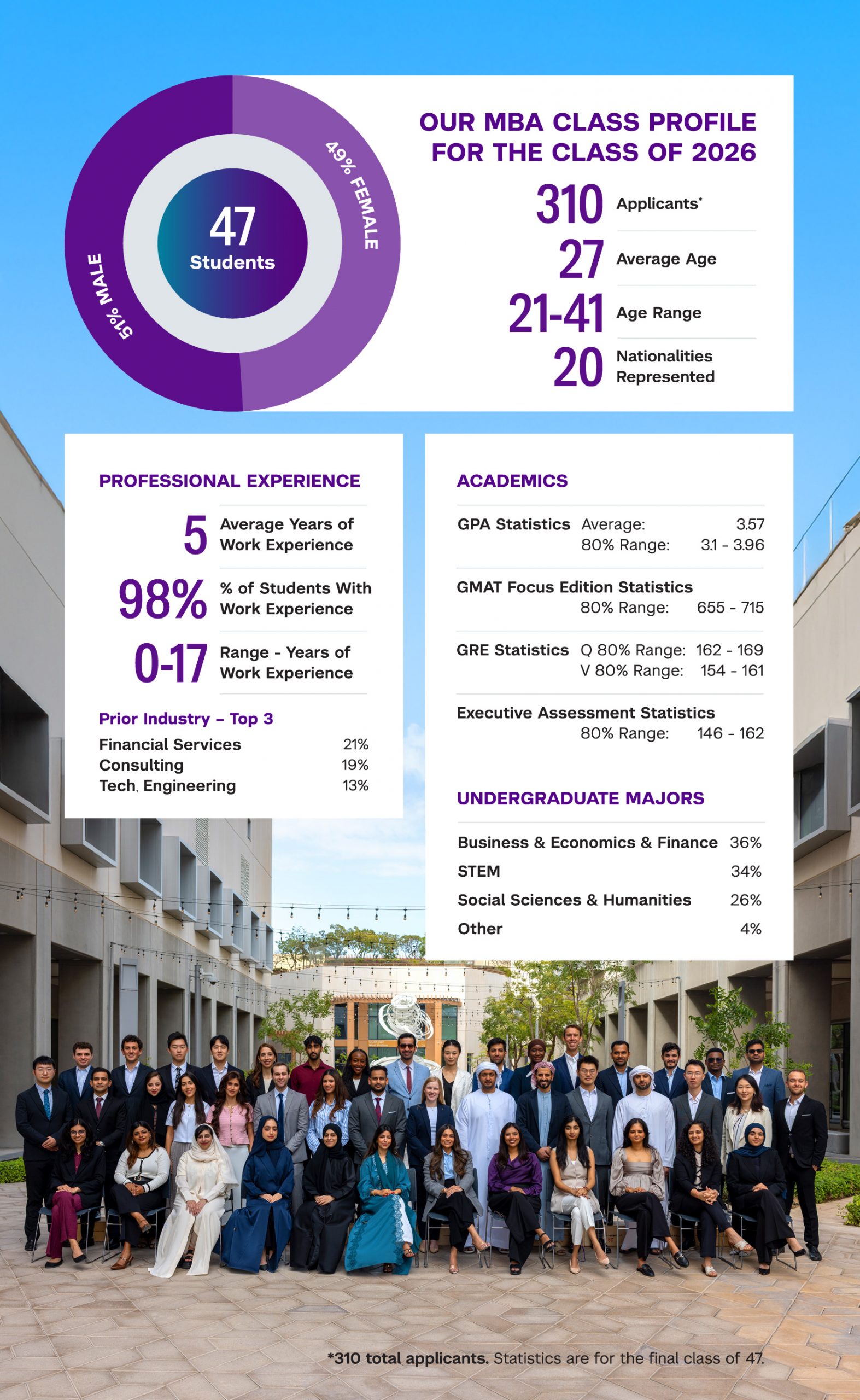
Accreditation lists and rankings
- AACSB accredited-school directory (country and school pages): https://www.aacsb.edu/accredited
- EFMD, EQUIS-accredited schools: https://www.efmdglobal.org/accreditations/business-schools/equis/equis-accredited-schools/
- Association of MBAs, accredited schools: https://www.associationofmbas.com/business-schools/accreditation/accredited-schools
- QS Global MBA Rankings 2027: Middle East & Africa (published 16 September 2026): https://www.topuniversities.com/mba-rankings/middle-east-africa
Exchange rates
- Reserve Bank of India, Reference Rate Archive, rates for 30 October 2026. RBI's terms require permission before linking to its inner pages, so the address is given as text: https://www.rbi.org.in/Scripts/ReferenceRateArchive.aspx
- Central Bank of the UAE, official rate table: https://centralbank.ae/media/dlcdkjd2/fx_jun26_en.pdf
- Saudi Central Bank: https://www.sama.gov.sa/en-US/MediaCenter/News/Pages/news-557.aspx
- Qatar Central Bank: https://www.qcb.gov.qa/Documents/BankInstructions/EN/01-02.pdf
- Central Bank of Bahrain: https://www.cbb.gov.bh/monetary-policy/
- Central Bank of Oman, fixed peg: https://cbo.gov.om/Pages/FixedPeg.aspx
- Central Bank of Kuwait, exchange rates (29 October 2026): https://www.cbk.gov.kw/en/monetary-policy/market-operations/exchange-rates
- European Central Bank, euro reference rates (29 October 2026; used in the benchmark register and superseded here): https://www.ecb.europa.eu/stats/eurofxref/eurofxref-daily.xml
Home-campus fees and outcomes
- INSEAD, MBA (Fontainebleau/Singapore): https://www.insead.edu/master-programmes/master-business-administration/financing
- HEC Paris, MBA (Jouy-en-Josas/Paris): https://www.hec.edu/en/mba-executive-mba/mba/admissions/fees-funding
- IE Business School, International MBA (Madrid): https://www.ie.edu/business-school/programs/full-time/international-mba/admissions-fees/
- London Business School, MBA (London): https://www.london.edu/masters-degrees/mba/fees-financing-and-scholarships
- Cambridge Judge Business School, Cambridge MBA: https://www.jbs.cam.ac.uk/programmes/mba/fees-funding/
- Indian School of Business (ISB), Post Graduate Programme in Management (PGP): https://www.isb.edu/programmes/post-graduate-programmes/pgp-in-management/fees-and-scholarships
- IIM Ahmedabad (IIMA), MBA-PGPX (One Year MBA): https://www.iima.ac.in/academics/MBA-PGPX/admission/fee-structure
- London Business School, Executive MBA (London stream): https://www.london.edu/masters-degrees/executive-mba/fees-financing-and-scholarships
- INSEAD, Global Executive MBA (GEMBA Europe, Fontainebleau): https://www.insead.edu/master-programmes/global-executive-mba/financing
- HEC Paris, Executive MBA (Paris): https://www.hec.edu/en/mba-executive-mba/executive-mba/admissions/fees-funding
- INSEAD, MBA (outcomes): https://www.insead.edu/master-programmes/master-business-administration/employment-statistics
- HEC Paris, MBA (outcomes): https://www.hec.edu/en/mba-executive-mba/mba/careers/employment-statistics
- IE Business School, International MBA (outcomes): https://docs.ie.edu/career-report/business-school/IE-International-MBA-Career-Report.pdf
- London Business School, MBA (outcomes): https://assets.london.edu/hxo16fanegqh/3AUIB9h2HJvzgh89cXjwdt/73abce036f2fe9511567750fb15755b3/mba_employment_report.pdf
- Cambridge Judge Business School, Cambridge MBA (outcomes): https://www.jbs.cam.ac.uk/masters-degrees/mba/careers/employment-report/
- NUS Business School, The NUS MBA (outcomes): https://mba.nus.edu.sg/career-development/
- HKUST Business School, HKUST MBA (full-time) (outcomes): https://mba.hkust.edu.hk/full-time
- Indian School of Business (ISB), PGP (outcomes): https://www.isb.edu/hire-from-isb
- Indian School of Business (ISB), PGP (outcomes): https://indian-school-of-business.aueast01.umbraco.io/media/vsch4xbq/placement-report_2026.pdf
- IIM Ahmedabad (IIMA), MBA-PGPX (outcomes): https://www.iima.ac.in/academics/MBA-PGPX/careers-and-placements
- London Business School, Executive MBA (London) (outcomes): https://www.london.edu/masters-degrees/executive-mba/career-impact
- INSEAD, Global Executive MBA (outcomes): https://www.insead.edu/master-programmes/global-executive-mba/career-development
- HEC Paris, Executive MBA (Paris) (outcomes): https://www.hec.edu/en/mba-executive-mba/executive-mba/careers
- NYU Stern, 2026-27 budget for MBA1 students (verified 30 October 2026): https://www.stern.nyu.edu/portal-partners/financial-aid/cost-attendance/full-time/mba1
- NYU Stern, 2026-27 budget for MBA2 students (verified 30 October 2026): https://www.stern.nyu.edu/portal-partners/financial-aid/cost-attendance/full-time/mba2
- NYU Stern, Two Year Full-time MBA requirements, 60 credits (verified 30 October 2026): https://www.stern.nyu.edu/portal-partners/academic-affairs-advising/mba-programs/full-time-mba/full-time-mba-fall-start
- NYU Stern, Executive MBA tuition and fees, New York (verified 30 October 2026): https://www.stern.nyu.edu/programs-admissions/executive-mba/tuition-financial-aid/tuition-fees
- Stern at NYU Abu Dhabi, one-year full-time MBA tuition: https://stern.nyuad.nyu.edu/tuition-scholarships/tuition/
- Georgetown McDonough, Executive MBA tuition, Washington, D.C. (verified 30 October 2026): https://msb.georgetown.edu/executive-mba/admissions-financing/
- HEC Paris, 12-month MBA option announcement: https://www.hec.edu/en/news-room/hec-paris-launches-12-month-accelerated-mba-program
- Career Services & Employer Alliance, 2025 Standards revisions: https://cdn.ymaws.com/cseaglobal.org/resource/collection/8D13C135-96C8-4E07-AB26-7998008F950C/Standards_Flyer_2025_Revisions.pdf
- IIM Ahmedabad, PGPX careers and IPRS reports: https://www.iima.ac.in/academics/MBA-PGPX/careers-and-placements
- ISB placement report, Class of 2025: https://placements.isb.edu/ssms/api/files/45e1daa4-a5c8-4a05-81d1-b8d9b4f7e8fb_Placement%20Report%20Co2025.pdf
Regulation and policy
- MoHESR, Federal Decree-Law on Higher Education and Scientific Research: https://www.mohesr.gov.ae/En/MediaCenter/News/Pages/UAE-Government-issues-Federal-Decree-Law-on-Higher-Education-and-Scientific-Research.aspx
- WAM, decree-law provisions (30 December 2025): https://www.wam.ae/en/article/15y3we9-uae-government-issues-federal-decree-law-higher
- WAM, National Framework for Licensing Higher Education Institutions (16 July 2026): https://www.wam.ae/en/article/c19136v-mohammed-bin-rashid-approves-national-framework
- WAM, 218,241 students and 103 institutions (30 August 2026): https://www.wam.ae/en/article/17efwdt-218000-students-enrolled-uae-universities
- WAM, remote learning extended to 17 April 2026: https://www.wam.ae/en/article/bzhbprx-mohesr-extends-remote-learning-for-higher
- WAM, remote learning 5-8 May 2026: https://www.wam.ae/en/article/c01kgli-uae-transitions-higher-education-remote-learning
- KHDA, resumption of on-site learning (April 2026): https://web.khda.gov.ae/en/About-Us/News/2026/Dubai’s-private-education-institutions-resume-on-s
- KHDA, incentive package and licence-fee deferrals (May 2026): https://web.khda.gov.ae/en/About-Us/News/2026/Under-Hamdan-bin-Mohammed’s-directives,-Dubai-free
- KHDA, Higher Education Landscape in Dubai 2012 (26 branch campuses): https://web.khda.gov.ae/getattachment/a658bd6e-f056-4f0a-a0aa-79e87f1334a5/20160328082132_HELandscape2012_English.pdf.aspx?ext=.pdf
- KHDA, Study in Dubai: international campuses (UQAIB established 2008): https://web.khda.gov.ae/getattachment/e6654357-7d8c-4d59-84e7-d73e489f95a8/20160328081158_Study_in_Dubai_international_campuses_11-4-213_Eng.pdf.aspx?ext=.pdf
- KHDA, UQAIB Quality Assurance Manual: https://web.khda.gov.ae/getattachment/561ab3a3-dd51-4722-960e-49d7c5fa71f0/20160413170445_UQAIB_EN.pdf.aspx?ext=.pdf
- KHDA, private higher education 2024-25 (41 institutions, 37 international campuses): https://web.khda.gov.ae/en/About-Us/News/2025/Dubais-private-higher-education-sector-continues
- KHDA, new institutions 2025-26: https://web.khda.gov.ae/en/About-Us/News/2025/Dubai-to-welcome-25-new-private-education-institut
- KHDA, sector expansion and Peking University HSBC Business School (August 2026): https://web.khda.gov.ae/en/About-Us/News/2026/Dubai%E2%80%99s-private-education-sector-expands-with-new
- ADEK, licensing and accreditation: https://adek.gov.ae/Education-System/Higher-Education/Licensing-and-Accreditation
- u.ae, Golden visa: https://u.ae/en/information-and-services/visa-and-emirates-id/residence-visas/golden-visa
- ADDED, Abu Dhabi Golden Visa for university graduates: https://added.gov.ae/en/live/long-term-residency/abu-dhabi-golden-visa/for-students/for-university-graduates
- GDRFA Dubai, student Golden Residency: https://alsaada.gdrfad.gov.ae/en/node/13917
- Umm Al-Qura, Regulation for Branches of Foreign Universities: https://www.uqn.gov.sa/details?p=23895; https://www.uqn.gov.sa/details?p=23897
- University of New Haven, Riyadh branch campus approval: https://www.newhaven.edu/news/releases/2025/first-to-receive-approval-international-branch-campus-saudi-arabia.php
- University of New Haven Riyadh, admissions FAQ: https://sa.newhaven.edu/en/admission/faq/
- University of Wollongong, Saudi campus plans: https://uow.edu.au/media/2025/uow-progresses-plans-to-establish-new-saudi-arabia-campus.php
- Saudi Vision 2030, Human Capability Development Program: https://www.vision2030.gov.sa/en/explore/programs/human-capability-development-program
- Qatar Foundation, higher education: https://www.qf.org.qa/education/higher-education
- Texas A&M University, Qatar campus closure vote: https://stories.tamu.edu/news/2024/02/08/texas-am-qatar-campus-to-close-by-2028/
- University of Strathclyde, Bahrain hub (September 2024): https://www.strath.ac.uk/whystrathclyde/news/2024/strathclydeopensbahraininnovationresearchandeducationhub/
- University of Strathclyde, partnership with Princess Nourah University (May 2024): https://www.strath.ac.uk/whystrathclyde/news/2024/strathclydepartnerswithprincessnourahuniversity/
Labour markets and employers
- u.ae, Emiratis' employment in the private sector: https://u.ae/en/information-and-services/jobs/Sector-of-employment/employment-in-the-private-sector/emiratis-employment-in-private-sector
- WAM, June deadline for Emiratisation targets (7 May 2026): https://www.wam.ae/en/article/c03cqiu-june-deadline-for-achieving-emiratisation-targets
- WAM, MoHRE reaffirms June deadline (22 June 2026): https://www.wam.ae/en/article/c0uqocb-mohre-reaffirms-june-deadline-for-private-sector
- HRSD, localisation of marketing and sales professions: https://www.hrsd.gov.sa/en/media-center/news/%D8%B1%D9%81%D8%B9-%D9%86%D8%B3%D8%A8-%D8%A7%D9%84%D8%AA%D9%88%D8%B7%D9%8A%D9%86-%D9%81%D9%8A-%D8%A7%D9%84%D9%85%D9%87%D9%86
- HRSD, procedural guide on localisation of project-management professions: https://www.hrsd.gov.sa/sites/default/files/2026-09/aldlyl-alajray-y-lqrar-almhn-adart-almshary--alnhay-y-mtrjm_0.pdf
- GASTAT, Labour Market Statistics Q1 2026: https://www.stats.gov.sa/documents/20117/2435273/Labor+Market+Statistics-+Q1+2026-EN+1.pdf/30ff8f67-d121-d9f8-4740-c68d394c38f9?t=1782815866165
- GMAC, Corporate Recruiters Survey 2024, Middle East profile: https://www.gmac.com/-/media/files/gmac/research/employment-outlook/2024-corporate-recruiters-survey/2024_gmac_crs_regional_profile-middle-east.pdf
Demand
- GMAC, Application Trends Survey 2024: https://www.gmac.com/-/media/files/gmac/research/admissions-and-application-trends/2024_ats.pdf
- GMAC, Application Trends Survey 2025: https://www.gmac.com/-/media/files/gmac/research/admissions-and-application-trends/2025-application-trends-survey/summary-report.pdf
- GMAC, Application Trends Survey 2026: https://www.gmac.com/-/media/files/gmac/research/admissions-and-application-trends/2026-application-trends-survey/2026-ats-report.pdf/
- GMAC, geographic mobility white paper (February 2026): https://www.gmac.com/-/media/files/gmac/research/admissions-and-application-trends/2026-geographic-mobility-white-paper.pdf
- GMAC, Prospective Students Survey 2026: https://www.gmac.com/-/media/files/gmac/research/prospective-student-data/2026/pss_2026.pdf
- GMAC, Prospective Students Survey 2026, Demand data report: https://www.gmac.com/-/media/files/gmac/research/prospective-student-data/2026/2026_pss_overviewreport2_demand.pdf
- GMAC, Prospective Students Survey 2026, Middle East and Africa report: https://www.gmac.com/-/media/files/gmac/research/prospective-student-data/2026/2026_pss_regionalreport4_mea.pdf
- GMAC, Prospective Students Survey 2025: https://www.gmac.com/-/media/files/gmac/research/prospective-student-data/2025/2025_pss_final.pdf
- GMAC, Prospective Students Survey 2024, Asia-Pacific report (India page): https://www.gmac.com/-/media/files/gmac/research/prospective-student-data/2024_pss_regionalreport1_apac.pdf
- GMAC, Profile of GMAT Testing: Citizenship, TY2020-TY2024: https://www.gmac.com/-/media/files/gmac/research/gmat-test-taker-data/profile-of-gmat-testing-citizenship-ty2020-ty2024.pdf
- GMAC, Profile of GMAT Testing: Residence, TY2020-TY2024: https://www.gmac.com/-/media/files/gmac/research/gmat-test-taker-data/profile-of-gmat-testing-residence-ty2020-ty2024.pdf
- KHDA, 2024-25 higher education infographic: https://web.khda.gov.ae/getattachment/108c33dc-9f1d-4d9e-8df2-bb3f83cfc26d/HE_Landscape_Inforaphic_En.pdf.aspx?lang=en-GB&ext=.pdf
- KHDA, Dubai as a global higher-education destination (E33 targets): https://web.khda.gov.ae/en/About-Us/News/2025/Dubai-strengthens-its-position-as-a-global-higher
- UNESCO Institute for Statistics, data API (inbound mobile students): https://api.uis.unesco.org/api/public/data/indicators?indicator=26637&indicator=26533&geoUnit=ARE&geoUnit=QAT&geoUnit=SAU&geoUnit=BHR&geoUnit=OMN&geoUnit=KWT&start=2015&end=2025&indicatorMetadata=false&footnotes=true
- Ministry of External Affairs (India), Rajya Sabha Unstarred Question 557, Annexure I: https://www.mea.gov.in/images/CPV/557-en-01-04-12-2025.pdf
- Rajya Sabha Unstarred Question 2608 (Bureau of Immigration departures): https://sansad.in/getFile/annex/266/AU2608_GRb6vT.pdf?source=pqars
Launches, exits and market events
- 2016, Abu Dhabi School of Management: https://adsm.ac.ae/wp-content/uploads/2025/12/ADSM_Catalog_AY-2025-2026_v6.0-1.pdf
- 2016, University of Bahrain: https://cob.uob.edu.bh/
- 2017-08, University of Sharjah: https://www.sharjah.ac.ae/Academics/business/Accreditation
- 2017-09, INSEAD: https://www.insead.edu/about-insead/middle-east-campus
- 2018-02-27, University of Birmingham Dubai: https://www.birmingham.ac.uk/news/2018/university-of-birmingham-officially-opens-new-campus-in-dubai
- 2020, Strathclyde Business School: https://www.sbs.strath.ac.uk/newsletter/2020-11/10.asp
- 2022-04-20, University of Birmingham Dubai: https://mediaoffice.ae/en/news/2022/April/20-04/Hamdan%20bin%20Mohammed%20inaugurates%20new%20campus%20of%20University%20of%20Birmingham%20Dubai
- 2023-03-17, American University of Bahrain: https://aubh.edu.bh/about/accreditation/
- 2023-09, Georgetown University McDonough School of Business: https://dubai.georgetown.edu/announcements/launch-executive-master-of-business-administration-program-in-the-uae/
- 2023-09-19, Stern School of Business at NYU Abu Dhabi: https://stern.nyuad.nyu.edu/news/nyu-stern-school-of-business-partners-with-nyu-abu-dhabi-to-launch-one-year-full-time-mba-program-in-the-uae/
- 2023-10, King Abdulaziz University: https://mc.gov.sa/en/mediacenter/News/Pages/16-10-23-01.aspx
- 2023-12-04, HEC Paris: https://qatar.exed.hec.edu/news/elt-pr
- 2023-12-12, Alfaisal University: https://pr.alfaisal.edu/pdf/2023/December/Executive%20Master%20of%20Leadership%20in%20Health%20Administration%20-%20Media%20report%20-%202023.pdf
- 2023-12-21, American University of Sharjah: https://www.aus.edu/media/news/american-university-of-sharjah-partners-with-abdulla-al-ghurair-foundation-to-offer-acclaimed-mba-in-blended-format
- 2024, Bayes Business School (City St George's, University of London): https://blogs.city.ac.uk/city-alumni/2024/06/27/alumni-and-prospective-students-join-bayes-city-alumni-reception-in-dubai/
- 2024-11-03, HEC Paris: https://qatar.exed.hec.edu/ELT-Launch
- 2025, Georgetown University McDonough School of Business: https://dubai.georgetown.edu/announcements/inaugural-executive-mba-dubai-cohort-graduates-in-washington-d-c/
- 2025-01-01, Qatar University: https://www.qu.edu.qa/sites/en_US/offices/vpaa/aqa/accreditation/acc-collegeProgram
- 2025-01-27, London Business School: https://www.london.edu/news/lbs-unveils-smart-executive-mba
- 2025-02-11, Stern School of Business at NYU Abu Dhabi: https://stern.nyuad.nyu.edu/news/stern-school-of-business-at-nyu-abu-dhabi-inaugurated-welcomes-first-mba-cohort/
- 2025-02-11, HEC Paris: https://qatar.exed.hec.edu/HECParisExecutiveMBA-Riyadh
- 2025-04-08, IIM Ahmedabad (Dubai campus): https://www.iima.ac.in/inmedia/iima-and-uae-government-ink-pact-establish-dubai-branch-campus-and-offer-full-time-one-year
- 2025-09-09, Stern School of Business at NYU Abu Dhabi: https://stern.nyuad.nyu.edu/news/stern-school-of-business-at-nyu-abu-dhabi-launches-executive-mba-program/
- 2025-09-12, IIM Ahmedabad (Dubai campus): https://iima.ac.in/inmediahh-sheikh-hamdan-bin-mohammed-opens-first-international-campus-indian-institute-management
- 2025-10-07, University of New Haven - Riyadh: https://www.newhaven.edu/news/releases/2025/first-to-receive-approval-international-branch-campus-saudi-arabia.php
- 2025-12-15, Stern School of Business at NYU Abu Dhabi: https://stern.nyuad.nyu.edu/news/stern-school-of-business-at-nyu-abu-dhabi-honors-inaugural-class-of-2025-at-first-convocation-ceremony/
- 2026, IIM Ahmedabad (Dubai campus): https://www.iima.ac.in/sites/default/files/2026-10/IIMAD-EMBA_Brochure_FV.pdf
- 2026, KFUPM Business School: https://kbs.kfupm.edu.sa/mba-for-entrepreneurs/
- 2026-01, London Business School: https://www.london.edu/news/lbs-welcomes-latest-intake-of-executive-mba-and-sloan-students
- 2026-02-13, MBSC (Prince Mohammed Bin Salman College of Business & Entrepreneurship): https://www.mbsc.edu.sa/mbsc-news/mbsc-marks-its-8th-graduation-ceremony-celebrating-596-graduates-from-the-class-of-2026/
- 2026-02-16, HEC Paris: https://qatar.exed.hec.edu/node/408
- 2026-02-20, Stern School of Business at NYU Abu Dhabi: https://stern.nyuad.nyu.edu/news/stern-at-nyuad-welcomes-mba-class-of-2026-from-20-countries/
- 2026-03, University of New Haven - Riyadh: https://sa.newhaven.edu/en/admission/faq/
- 2026-05-06, HEC Paris: https://qatar.exed.hec.edu/node/411
- 2026-06-03, Stern School of Business at NYU Abu Dhabi: https://stern.nyuad.nyu.edu/news/stern-at-nyuad-mba-employment-report-highlights-strong-career-outcomes-for-class-of-2025/
- 2026-06-04, Alfaisal University: https://news.alfaisal.edu/alfaisal-university-mba-program-receives-full-ncaaa-accreditation/
- 2026-07-21, Alfaisal University: https://news.alfaisal.edu/alfaisal-university-college-of-business-earns-aacsb-international-accreditation/
- 2026-08-24, Abu Dhabi University: https://www.wam.ae/en/article/c1w8zrt-abu-dhabi-university%E2%80%99s-college-business-earns-amba
- 2026-09-02, Stern School of Business at NYU Abu Dhabi: https://stern.nyuad.nyu.edu/news/stern-school-of-business-at-nyu-abu-dhabi-welcomes-inaugural-executive-mba-cohort/
- 2026-09-16, QS (ranking body): https://www.topuniversities.com/mba-rankings/middle-east-africa
- 2026-10-05, London Business School: https://www.london.edu/news/lbs-welcomes-new-cohort-of-students-across-its-london-and-dubai-campus
- 2026-08-25, Peking University HSBC Business School (via KHDA): https://web.khda.gov.ae/en/About-Us/News/2026/Dubai%E2%80%99s-private-education-sector-expands-with-new
Appendix A. The 43 Gulf MBA listings
All entries are Published from the programme pages listed under Sources, read on 30 October 2026; US$ figures are Converted at official central-bank rates for Gulf currencies and RBI rates for 30 October 2026 for euros and pounds; totals marked Computed multiply a published unit price by published credits, subjects or years (tuition only). Months are as published. n/p = not published. Accreditation shows which of the AACSB, EQUIS and AMBA lists name the school; the lists are school-level and do not confirm coverage of a Gulf location.
| ID | School and programme | Country, city | Format, months | Fee as published | US$ comparable total | Accreditation lists | Employment figures | First Gulf intake |
|---|---|---|---|---|---|---|---|---|
| A01 | Heriot-Watt University Dubai (Edinburgh Business School): MBA with a Specialism in Professional Practice | UAE, Dubai | full-time, 12 | AED 132,000 | US$35,943 (basis unclear) | None of the three | No | n/p |
| A02 | Indian Institute of Management Ahmedabad (IIMA) - Dubai Campus: One-Year MBA (full-time) | UAE, Dubai | full-time, 12 | US$80,000 | US$80,000 | EQUIS | No | 2025 |
| A03 | Middlesex University Dubai: MBA (Daytime) - General or one of 11 specialist pathways | UAE, Dubai | full-time, 12 | AED 84,872 | US$23,110 (basis unclear) | None of the three | No | n/p |
| A04 | S P Jain School of Global Management (SP Jain Global): Global MBA (GMBA) | UAE, Dubai | full-time, 12 | US$44,720 | US$44,720 | None of the three | Yes | n/p |
| A05 | Stern School of Business at NYU Abu Dhabi (Stern at NYUAD; NYU Stern with NYU Abu Dhabi): Stern at NYUAD One-year Full-time MBA | UAE, Abu Dhabi | full-time, 12 | US$126,360 | US$126,360 | AACSB | Yes | 2025 |
| A06 | KFUPM Business School (King Fahd University of Petroleum & Minerals): MBA for Entrepreneurs (with Dhahran Techno Valley) | Saudi Arabia, Dhahran | full-time, 12 | SAR 80,000 | US$21,333 | AACSB, AMBA | No | n/p |
| B01 | Alliance Manchester Business School (The University of Manchester - Dubai): Global Part-time MBA (Dubai) | UAE, Dubai | online-blended, 24 | GBP 42,064.1 | US$56,352 | AACSB, EQUIS, AMBA | No | 2006 |
| B02 | Georgetown University McDonough School of Business: Executive MBA Dubai | UAE, Dubai | modular EMBA, 20 | US$153,414 | US$153,414 | AACSB | No | 2023 |
| B03 | Hult International Business School: Executive MBA (Dubai home campus) | UAE, Dubai | online-blended, 24 | AED 276,000 | US$75,153 | AACSB, EQUIS, AMBA | No | n/p |
| B04 | INSEAD: Global Executive MBA (GEMBA) - Middle East section | UAE, Abu Dhabi | modular EMBA, 15 | EUR 142,150 | US$159,008 | AACSB, EQUIS, AMBA | No | n/p |
| B05 | Indian Institute of Management Ahmedabad (IIMA Dubai campus): Executive MBA | UAE, Dubai | part-time, 24 | US$100,000 | US$100,000 | EQUIS | No | 2027 |
| B06 | London Business School: Executive MBA (Dubai stream) | UAE, Dubai | modular EMBA, 17-22 | US$163,995 | US$163,995 | AACSB, EQUIS, AMBA | No | 2007 |
| B07 | NYU Stern School of Business at NYU Abu Dhabi (Stern at NYUAD): Executive MBA | UAE, Abu Dhabi | modular EMBA, 23 | US$90,126 per year | US$180,252 (Computed) | AACSB | No | 2026 |
| B08 | Strathclyde Business School (University of Strathclyde): MBA (part-time, UAE centre) | UAE, Dubai | part-time, 24 | Not published | not published | AACSB, EQUIS, AMBA | No | 1995 |
| B09 | University of Birmingham Dubai (Birmingham Business School): Birmingham MBA Dubai (part-time) | UAE, Dubai | online-blended, 24 | AED 87,255 per year | US$47,518 (Computed) | AACSB, EQUIS, AMBA | No | n/p |
| B10 | University of Wollongong in Dubai (UOWD): Master of Business Administration | UAE, Dubai | part-time, 18-24 | AED 9,597.3 per subject | US$31,359 (Computed) | AACSB (parent university) | No | n/p |
| B11 | HEC Paris (HEC Paris, Doha): Executive MBA (Doha track) | Qatar, Doha | modular EMBA, 15-18 | US$128,000 | US$128,000 | AACSB, EQUIS, AMBA | No | 2010 |
| B12 | HEC Paris (HEC Paris, Doha): Executive MBA (Riyadh track, with Altamayyuz Academy) | Saudi Arabia, Riyadh | part-time, 15-18 | US$128,000 | US$128,000 | AACSB, EQUIS, AMBA | No | 2025 |
| B13 | University of New Haven - Riyadh (College of Business and Digital Innovation): Master of Business Administration (MBA) - Strategic Leadership | Saudi Arabia, Riyadh | full-time, n/p | SAR 5,900 per credit hour | US$60,573 (Computed) | AACSB (parent university) | No | 2026 |
| B14 | Strathclyde Business School (University of Strathclyde): MBA (part-time, Bahrain centre) | Bahrain, not published | part-time, 24 | Not published | not published | AACSB, EQUIS, AMBA | No | 1995 |
| B15 | Strathclyde Business School (University of Strathclyde): MBA (part-time, Oman centre) | Oman, not published | part-time, 24 | Not published | not published | AACSB, EQUIS, AMBA | No | 2000 |
| C01 | Abu Dhabi School of Management (ADSM): Master of Business Administration (MBA) | UAE, Abu Dhabi | part-time, 12 | AED 110,000 | US$29,952 | None of the three | No | n/p |
| C02 | Abu Dhabi University (ADU), College of Business: Master of Business Administration (MBA) | UAE, Abu Dhabi | part-time, n/p | AED 2,940 per credit hour | US$24,016 (Computed) | AACSB, EQUIS, AMBA | No | n/p |
| C03 | American University in Dubai (AUD), School of Business: Master of Business Administration (M.B.A.) | UAE, Dubai | part-time, 24 | AED 4,830 per credit hour | US$47,346 (Computed) | AACSB | No | n/p |
| C04 | American University of Sharjah (AUS), School of Business Administration: Master of Business Administration (MBA) | UAE, Sharjah | online-blended, n/p | AED 175,560 | US$47,804 | AACSB | No | n/p |
| C05 | United Arab Emirates University (UAEU), College of Business and Economics: Master of Business Administration (MBA) | UAE, Abu Dhabi | part-time, 18 | AED 99,100 | US$26,984 | AACSB, EQUIS | No | n/p |
| C06 | University of Dubai, Dubai Business School: Master of Business Administration (MBA) - General MBA and specialised tracks | UAE, Dubai | part-time, 12-15 | AED 9,555 per course | US$26,018 (Computed) | AACSB | No | n/p |
| C07 | University of Sharjah (UoS), College of Business Administration: Executive Master in Business Administration (EMBA) | UAE, Sharjah | part-time, 24-48 | AED 3,200 per credit hour | US$28,754 (Computed) | AACSB | No | n/p |
| C08 | University of Sharjah (UoS), College of Business Administration: Master of Business Administration (MBA) | UAE, Sharjah | part-time, 24-48 | AED 4,200 per credit hour | US$37,740 (Computed) | AACSB | No | n/p |
| C09 | Qatar University, College of Business and Economics: Master of Business Administration (MBA) | Qatar, Doha | full-time, 24 | QAR 2,600 per credit hour | US$25,714 (Computed) | AACSB | No | n/p |
| C10 | Alfaisal University, College of Business: Accelerated MBA in Real Estate Development (AMBA-RED) | Saudi Arabia, Riyadh | part-time, 15-18 | SAR 250,000 | US$66,667 | AACSB | No | n/p |
| C11 | Alfaisal University, College of Business: Executive MBA (General EMBA; Healthcare Leadership track) | Saudi Arabia, Riyadh | modular EMBA, 15-18 | SAR 290,000 | US$77,333 | AACSB | No | n/p |
| C12 | Alfaisal University, College of Business: MBA (General and specialised tracks) | Saudi Arabia, Riyadh | part-time, 24 | SAR 200,000 | US$53,333 | AACSB | No | n/p |
| C13 | KFUPM Business School (King Fahd University of Petroleum & Minerals): Executive MBA | Saudi Arabia, Dhahran | modular EMBA, 20 | SAR 130,000 | US$34,667 | AACSB, AMBA | No | 2001 |
| C14 | KFUPM Business School (King Fahd University of Petroleum & Minerals): MBA (evening, cohort-based) | Saudi Arabia, Dhahran | part-time, 24 | SAR 80,000 | US$21,333 | AACSB, AMBA | No | 1975 |
| C15 | King Saud University, College of Business Administration: Executive MBA (EMBA) | Saudi Arabia, Riyadh | modular EMBA, n/p | Not published | not published | AACSB | No | n/p |
| C16 | Prince Mohammed Bin Salman College of Business & Entrepreneurship (MBSC): Executive MBA | Saudi Arabia, King Abdullah Economic City | part-time, 18 | SAR 268,125 | US$71,500 | None of the three | No | n/p |
| C17 | Prince Sultan University, College of Business Administration: MBA (tracks: General, Finance, Human Resource Management, Marketing) | Saudi Arabia, Riyadh | not published, n/p | SAR 5,000 per credit hour | US$48,000 (Computed) | AACSB | No | n/p |
| C18 | American University of Bahrain (AUBH), College of Business & Management: MBA | Bahrain, Riffa | part-time, 24 | BHD 7,410 | US$19,707 | None of the three | No | n/p |
| C19 | University of Bahrain, College of Business Administration: MBA | Bahrain, Sakhir | full-time, n/p | BHD 5,040 | US$13,404 | AACSB | No | n/p |
| C20 | Gulf University for Science and Technology (GUST), College of Business Administration: MBA | Kuwait, Hawally | full-time, n/p | KWD 10,800 | US$35,036 (AACSB survey; not in medians) | AACSB | No | n/p |
| C21 | Kuwait University, College of Business Administration: MBA | Kuwait, Kuwait City | part-time, n/p | KWD 600 | US$1,946 (AACSB survey; not in medians) | AACSB | No | n/p |
| C22 | Sultan Qaboos University, College of Economics and Political Science: MBA | Oman, Muscat | part-time, 24-36 | OMR 7,560 | US$19,662 | EQUIS | No | 2004 |
Appendix B. Home-campus fees on the reconciled exchange-rate basis
Fees Published by each school; US$ Converted at RBI reference rates for 30 October 2026. The last column shows the value in our benchmark register at the European Central Bank's rates for 29 October 2026, which this report does not use; it is shown so the reconciliation can be checked. Oxford is omitted because its site could not be read directly; NUS and HKUST because the RBI publishes no Singapore or Hong Kong dollar rate. The last three rows were read on the schools' official pages for this report.
| School and programme | Format, months | Fee as published | Fee year and basis | US$ (RBI, 30 Oct 2026) | US$ in benchmark register (ECB, 29 Oct 2026) |
|---|---|---|---|---|---|
| INSEAD: MBA (Fontainebleau/Singapore) | full-time, 10 | EUR 109,860 | August 2026 and January 2027 intakes (same fee); inclusive of all applicable taxes | US$122,889 | US$122,274 |
| HEC Paris: MBA (Jouy-en-Josas/Paris) | full-time, 16 (12-month option for January intakes) | EUR 102,000 | January 2027 and September 2027 intakes (same fee) | US$114,096 | US$113,526 |
| IE Business School: International MBA (Madrid) | full-time, 11 or 15 | EUR 89,900 | current published fee; intake year not stated ("reviewed on a yearly basis"); plus one-off EUR 1,200 IE Foundation contribution | US$100,562 | US$100,059 |
| London Business School: MBA (London) | full-time, 15-21 | GBP 123,950 | 2026 intake; plus GBP 400 Student Association fee; excludes programme travel | US$166,051 | US$165,063 |
| Cambridge Judge Business School: Cambridge MBA | full-time, 12 (published as "one-year") | GBP 86,250 | entry in September 2027; same fee for UK and overseas students | US$115,546 | US$114,858 |
| Indian School of Business (ISB): Post Graduate Programme in Management (PGP) | full-time, 12 | INR 3,448,000 | academic year 2027-28; EXCLUDES GST ("+ GST"); shared accommodation, single-instalment payment; covers admission, commitment and tuition fees; plus refundable INR 20,000 deposit | US$36,200 | US$36,192 |
| IIM Ahmedabad (IIMA): MBA-PGPX (One Year MBA) | full-time, 12 (published as "one year") | INR 3,620,000 | 2027-28 batch, single accommodation (SSH); married housing INR 3,830,000; bundled fee incl. tuition, books, accommodation; excludes International Immersion Programme | US$38,006 | US$37,998 |
| London Business School: Executive MBA (London stream) | modular EMBA, 17-22 | GBP 134,950 | programmes commencing September 2026; includes tuition, course materials, core textbooks, orientation-week hotel; plus GBP 200 Student Association fee | US$180,787 | US$179,712 |
| INSEAD: Global Executive MBA (GEMBA Europe, Fontainebleau) | modular EMBA, 15-20 | EUR 142,150 | November 2026 intake (Europe); identical EUR 142,150 for Asia Oct 2026, Middle East (Abu Dhabi) Oct 2026 and Flex May 2027; inclusive of applicable taxes; excludes transport and accommodation | US$159,008 | US$158,213 |
| HEC Paris: Executive MBA (Paris) | modular EMBA, 18 | EUR 110,000 | September 2026, January 2027 and Spring 2027 intakes (same fee); 2027 early-bird reduction of EUR 20,000 available on conditions | US$123,045 | US$122,430 |
| NYU Stern: Two Year Full-time MBA (New York), tuition per nine-month year | full-time, two academic years; 60 credits | US$92,658 | 2026-27; orientation fee US$2,040 extra | US$92,658 | n/a |
| NYU Stern: Executive MBA (New York), programme cost | modular EMBA, not stated on fee page | US$238,700 | August 2026 and January 2027 starts; includes fees, books, meals, opening residency hotel, global immersions | US$238,700 | n/a |
| Georgetown McDonough: Executive MBA (Washington, D.C.) | modular EMBA, not stated; 19 in-person class weekends | US$172,044 | Fall 2026 intake; excludes hotels on class weekends (school estimate US$9,000-15,000) | US$172,044 | n/a |
Appendix C. The readiness matrix in full
Team GyanOne Research assessment, October 2026, applying the criteria in Table 8.1. Ratings are judgements on published evidence; they are not added, averaged or weighted. The evidence column says where a rating rests on an absence of evidence or on questions we did not research.
| Row | Channel | Rating | Rationale | Evidence |
|---|---|---|---|---|
| UAE | Supply of international options | Moderate | Two daytime full-time MBAs from accredited international schools (NYU Stern AD, IIMA Dubai), both first taught in 2025; three more from schools on none of the three lists | Published: programme pages, accreditor lists |
| UAE | Brand depth | Strong | Ten international schools on at least one accreditor list teach MBAs here; six hold all three accreditations | Published: AACSB, EQUIS, AMBA lists |
| UAE | Price against home campus | Moderate | Five of eight same-school pairs at or below the home fee in US$ (LBS, INSEAD, Georgetown, NYU Stern twice); IIMA, Manchester and Hult charge more | Published fees; Converted at RBI 30 Oct 2026 |
| UAE | Outcome transparency | Moderate | One programme-specific employment report with a denominator (NYU Stern AD, Class of 2025, 33 job seekers); no external standard named | Published: one report |
| UAE | Regulatory clarity and stability | Strong | Decree-Law 31 of 2025 covers free-zone campuses; the July 2026 framework adds financial guarantees and continuity plans; international MBAs taught since 1995 | Published: MoHESR, WAM, KHDA |
| UAE | Residency and post-study pathways | Moderate | Golden Visa for top graduates: Abu Dhabi's criteria include UAE master's degrees, Dubai's name only bachelor's; branch-campus classification not verified | Published: ADDED, GDRFA, u.ae |
| UAE | Employer and market depth | Moderate | One class of outcome data (85.7% of employed NYU Stern AD graduates in MENA); Emiratisation of skilled private-sector jobs rises 2 points a year | Published: one report; MoHRE via WAM |
| Saudi Arabia | Supply of international options | Limited | No daytime full-time MBA from an international school; New Haven Riyadh teaches in the evening; KFUPM's new full-time MBA is a Saudi university's | Published: programme pages |
| Saudi Arabia | Brand depth | Moderate | Two international schools: HEC Paris (all three accreditations, via a partner centre) and New Haven (AACSB extension to Riyadh in process) | Published: accreditor lists, school pages |
| Saudi Arabia | Price against home campus | Moderate | One pair only: HEC Paris charges US$128,000 in Riyadh, 4.0% above Paris in US$; Gulf fee year not stated | Published fees; Converted |
| Saudi Arabia | Outcome transparency | Limited | No programme publishes employment figures; MBSC publishes graduate counts and HEC a partial cohort profile | Published (absence checked) |
| Saudi Arabia | Regulatory clarity and stability | Moderate | Foreign-branch regulation since 2023; first Council of Ministers approval (New Haven) in October 2025; executive rules not found | Published: Umm Al-Qura, university release |
| Saudi Arabia | Residency and post-study pathways | Limited | An education visa exists (HCDP page); no post-study residence route found | Published; route not found |
| Saudi Arabia | Employer and market depth | Moderate | Saudisation of 60% of marketing and sales and 70% of project-management roles builds demand for Saudi managers and narrows roles for expatriates; Saudi unemployment 6.4% (Q1 2026) | Published: HRSD, GASTAT |
| Qatar | Supply of international options | Limited | No full-time MBA from an international school; Qatar University's full-time MBA is scheduled for working students | Published: programme pages |
| Qatar | Brand depth | Moderate | One international business school: HEC Paris in Education City, with all three accreditations, since 2010 | Published: QF, HEC, accreditor lists |
| Qatar | Price against home campus | Moderate | One pair only: HEC Doha US$128,000, 4.0% above Paris in US$; fee year not stated | Published fees; Converted |
| Qatar | Outcome transparency | Limited | No employment report; HEC Doha publishes class size and make-up (45 executives, 44% Qatari) | Published |
| Qatar | Regulatory clarity and stability | Moderate | HEC has taught in Education City since 2010; national licensing rules not researched; Texas A&M Qatar (engineering) is closing | Published; partly not researched |
| Qatar | Residency and post-study pathways | Limited | Student visas through Qatar University's admission process; no post-study route found | Published; route not found |
| Qatar | Employer and market depth | Limited | No official labour-market or programme outcome data in our registers | Not researched |
| Other GCC (Bahrain, Kuwait, Oman) | Supply of international options | Limited | No international full-time MBA; Strathclyde's part-time MBA is the only international option (Bahrain since 1995, Oman since 2000) | Published: programme pages |
| Other GCC (Bahrain, Kuwait, Oman) | Brand depth | Moderate | One international school (Strathclyde, all three accreditations) in two of the three countries; none in Kuwait | Published: accreditor lists |
| Other GCC (Bahrain, Kuwait, Oman) | Price against home campus | Limited | No pair: Strathclyde does not publish its Gulf fees | Not published |
| Other GCC (Bahrain, Kuwait, Oman) | Outcome transparency | Limited | No programme publishes employment figures or a class size | Published (absence checked) |
| Other GCC (Bahrain, Kuwait, Oman) | Regulatory clarity and stability | Moderate | Strathclyde has taught here for 26 to 31 years; national regulators not researched | Published; regulators not researched |
| Other GCC (Bahrain, Kuwait, Oman) | Residency and post-study pathways | Limited | No post-study route in our registers | Not researched |
| Other GCC (Bahrain, Kuwait, Oman) | Employer and market depth | Limited | No official labour-market or outcome data in our registers | Not researched |
| Full-time segment (Gulf-wide) | Supply of international options | Moderate | Two daytime full-time MBAs from accredited international schools, with latest published intakes of 47 and 35 | Published: programme pages |
| Full-time segment (Gulf-wide) | Brand depth | Moderate | Two international schools (NYU Stern: AACSB; IIMA: EQUIS), neither with all three accreditations; KFUPM adds a Saudi AACSB and AMBA school | Published: accreditor lists |
| Full-time segment (Gulf-wide) | Price against home campus | Moderate | One of two pairs below home: NYU Stern AD tuition 31.8% below New York's two-year tuition; IIMA Dubai 2.1 times Ahmedabad | Computed; Converted |
| Full-time segment (Gulf-wide) | Outcome transparency | Moderate | One full employment report (NYU Stern AD); S P Jain publishes figures without a denominator; IIMA Dubai none yet | Published |
| Full-time segment (Gulf-wide) | Regulatory clarity and stability | Moderate | Legal basis is clear in the UAE, but accredited international full-time provision dates only from 2025 | Published |
| Full-time segment (Gulf-wide) | Residency and post-study pathways | Moderate | Students need a student visa and then a post-study route; the UAE Golden Visa covers top graduates on conditions not confirmed for branch campuses | Published |
| Full-time segment (Gulf-wide) | Employer and market depth | Moderate | One class: 85% of 33 NYU Stern AD job seekers accepted offers within three months; 85.7% of the employed stayed in MENA | Published: one report |
| Executive segment (Gulf-wide) | Supply of international options | Strong | 15 international EMBA and part-time listings in five countries, all from schools on at least one accreditor list (two through the parent university) | Published: programme pages, accreditor lists |
| Executive segment (Gulf-wide) | Brand depth | Strong | 12 international schools; seven hold all three accreditations | Published: accreditor lists |
| Executive segment (Gulf-wide) | Price against home campus | Strong | Five of seven same-school pairs at or below the home fee, counting within 5% as at par (LBS, INSEAD, HEC, Georgetown, NYU Stern); Manchester and Hult charge more in Dubai | Computed; Converted |
| Executive segment (Gulf-wide) | Outcome transparency | Limited | No Gulf EMBA or part-time MBA publishes employment figures; EMBA reports are rare at home campuses too | Published (absence checked) |
| Executive segment (Gulf-wide) | Regulatory clarity and stability | Strong | International EMBAs have run for decades under published rules (Strathclyde from 1995, LBS 2007, HEC Doha 2010) | Published |
| Executive segment (Gulf-wide) | Residency and post-study pathways | Strong | Not a binding constraint: participants keep their jobs and residence; 61% of LBS's Sept 2026 Dubai intake and 82% of its Jan 2026 blended class commute | Published: LBS releases |
| Executive segment (Gulf-wide) | Employer and market depth | Moderate | Localisation policies in the UAE and Saudi Arabia push employers to develop national managers; no programme outcome data | Published: MoHRE, HRSD |
How to cite this report
Team GyanOne Research (2026). The Gulf MBA: An Executive Market Testing Full-Time Ambitions. GyanOne Research Report 004. GyanOne Universal, 1 November 2026. https://www.gyanone.com/research/gulf-mba-market-2026/
You are welcome to quote our findings with this citation and a link to this page. For data questions or interviews, write to info@gyanone.com.
Downloads
Get the full report (PDF). Every chart, table, appendix, source and research note in one document. Tell us a little about yourself and your copy opens straight away; we also email you a personal link.
Open Report 004 (PDF) We have also emailed you the link. It stays active for 14 days.
Please cite as: Team GyanOne Research (2026), The Gulf MBA: An Executive Market Testing Full-Time Ambitions, GyanOne Research Report 004, gyanone.com/research/gulf-mba-market-2026/.
Corrections and version history
Found an error? Write to info@gyanone.com. We correct errors openly and record every change here.
Get the next report
The GyanOne Brief: one consequential insight into global education and careers, every fortnight.