
ISB interview experiences: real questions from past interviews
Last updated: 30 October 2026. The description of today’s ISB interview comes from ISB’s PGP eligibility and requirements page and application deadlines page for the 2027-28 cycle (PGP Class of 2028). The interview experiences below are reported by past applicants and are published as they were reported.
Interviewing this cycle? Read first-hand accounts from October 2026: ISB interview experiences 2026-27.
What you need to know in 60 seconds
- Today’s ISB interview lasts about 30 minutes, with a panel of ISB faculty, alumni and senior staff.
- You also write two essays on the spot during the interview process, so rehearsed answers alone won’t carry you.
- You choose virtual or in person: a Zoom interview or an in-person interview in a tier-1 city. ISB says both are evaluated equally.
- Notice is short: ISB tells you 3 to 7 days before your interview.
- For the Class of 2028, Round 1 interviews run from the second week of October to the second week of December 2026, and Round 2 interviews from the fourth week of December 2026 to the first week of February 2027.
- The eight interviews below come from real applicants across IT, investment banking, business research, insurance, manufacturing and corporate finance. Most lasted 20 to 40 minutes; one ran past an hour.
Each ISB interview experience on this page comes from a real interview reported by a past applicant, across information technology, investment banking, business research, insurance, manufacturing and corporate finance. Each lists the panel, the length of the interview and the questions asked. They were reported in different years, so read them for the kinds of questions ISB asks; the section below describes how the interview works today.
Free download: ISB Interview Preparation Kit
The questions ISB panels have asked our clients, a preparation worksheet, a mock-interview scorecard and a plan for the days before your invitation. Four printable pages.
How the ISB interview works now
The interview is stage 4 of ISB’s seven-stage PGP admissions process. Your application is first verified against your documents, then reviewed for academics, test scores, work experience, extracurriculars, essays, awards and your recommendation. If you are shortlisted, you are invited to interview.
- Format: you state a preference for a virtual interview on Zoom or an in-person interview at one of the available tier-1 city locations, and the Admissions Team assigns the final format based on your preference and scheduling. ISB says neither format has an advantage.
- Notice: 3 to 7 days before your interview.
- Length and panel: about 30 minutes, with a panel of ISB faculty, alumni and senior staff.
- On-the-spot essays: you complete two essays as part of the interview process.
- After the interview: your application goes to the Admissions Committee of faculty and alumni, which makes the final decision. Shortlisted applicants may later be invited to separate scholarship interviews.
ISB calls the interview “an integral component” of its holistic process: it is weighed with everything else in your application, not on its own. There is no group discussion.
Class of 2028 interview windows
| Round | Application deadline | Interviews (tentative) | Decision |
|---|---|---|---|
| Round 1 | 20 September 2026 (closed) | Week 2 of October to week 2 of December 2026 | End of December 2026 |
| Round 2 | 6 December 2026 | Week 4 of December 2026 to week 1 of February 2027 | Mid-February 2027 |
| Round 3 | 17 January 2027 | Week 1 to week 4 of February 2027 | Mid-March 2027 |
Source: ISB PGP application deadlines, Class of 2028.
What these interviews have in common
- Your work, in detail. Almost every panel went deep into the applicant’s projects, asking for their specific role and contribution and why they did things a particular way. One applicant spent five minutes on technical detail and was then asked, “What exactly is your role in this project?”
- Why an MBA, why now and why ISB, often with a panelist arguing that the applicant didn’t need an MBA at all.
- Your goals, tested. Panels probed short- and long-term goals, back-up plans, and popular choices such as consulting.
- Reapplicants are asked about it first. Both reapplicants below were asked early on why they were applying again and what had changed.
- Pressure is part of it. Several applicants describe a “good cop, bad cop” panel, a panelist who looked uninterested, or one who called an answer naive. Stay calm and answer the question.
- Anything in your essays or application is fair game, from a French course to Korean dramas to an app you built.
The interviews below don’t mention the two on-the-spot essays that are now part of ISB’s interview process, so prepare for those separately.
These ISB interview questions come from a GyanOne client in IT with over seven years of experience, who reapplied with a better GMAT score and was admitted after a 40-minute interview with two panelists. For one-on-one practice, see our ISB interview preparation.

ISB interview questions, by theme
These are the questions ISB panels have asked in the interviews reported below and in other debriefs GyanOne clients have shared, grouped by what the panel is testing. Expect follow-ups: the second and third questions are where interviews are won or lost.
| Theme | Questions from real interviews | What the panel is testing |
|---|---|---|
| Your work | “What do you do in your current role, and how big is your team?” “What exactly is your role in this project?” “What conflicts did you resolve?” | That your claims are yours, at a level of detail only you would know |
| Career moves | “Why did you choose a career in business research?” “How is research different from consulting? Why not consulting?” | Judgement: the reasoning behind each move |
| Goals | “What will you do after ISB?” “Why corporate finance?” “If you cannot get into an investment bank, what is your backup plan?” | A goal that survives the second question |
| Why MBA, why now | “Are you doing an MBA because your friends are? Is this FOMO?” “You have five years of experience already. Why not move into consulting without an MBA?” “Given that you are a CA, why do you need an MBA?” | That the MBA is the missing piece, not a default |
| Why ISB | “Why ISB? If not ISB, then what?” “Why didn’t you consider an international MBA?” “Why not a Master’s in Finance?” | That you understand what a one-year programme gives and costs |
| Setbacks | “Why weren’t you selected last year? What do you think went wrong?” “So your score was the only reason?” | Ownership, not excuses (reapplicants often get this first) |
| Thinking on your feet | “How would you solve Bangalore’s traffic problem?” “Is bankruptcy legislation a tool for inefficient companies to avoid creditors?” A guesstimate. | Structure under pressure; the process counts more than the answer |
| The investment | “The fee is a big investment. Are you sure about this?” | That you have thought through the cost of the programme |
| Your turn | “Any questions for us?” | Curiosity: bring two or three questions ISB’s website doesn’t already answer |
To prepare, work through our free ISB Interview Preparation Kit, read five tips to crack the ISB interview, or practise with ISB mock interviews.
Information Technology / 7 years 4 months
| Interview Duration | 40 minutes |
| Interviewers’ Profile | 2 panelists |
| Final Decision | Admitted |
ISB interview questions on reapplying
- Why are you reapplying to ISB?
I was expecting an ice-breaker, and this kind of question first up took me a bit of surprise. After a couple of seconds of pause, I regained my composure, and told them that I am clear on my reasons for getting an MBA and applying to ISB, and feel that with a better GMAT score this time, I would have a better chance of making it.
- So your score was the only reason you were rejected, in your opinion?
Explained that the score was not the only reason, but it was one of the reasons. Then, I also explained other reasons for why I thought I was a better candidate. Took them through changes in my profile, and explained the courses I have taken and work I have done over the last 2 years (since my last ISB application). They listened to me patiently and nodded.
ISB interview questions on your profile and plans
- Why did you take a course in French?
I spoke about how I visited France when I was younger, and was fascinated by the culture of the country. In college, I decided to take up a foreign language, and then decided on French. I also spoke about why it was a good choice because French is not just spoken in France, but former French territories in other countries too. I also added that knowing French helped me in my company as I could also handle French clients.
- Why French, why not Spanish or Chinese, they have a bigger population than French?
I explained that I gave a thought to those as well, but based on requirement, interest, resources available, I chose French. I also added that I am not restricting to one language, and that if in future I will be required to learn other languages I will do so, depending on the time I have.
- Why are you looking for funding for XYZ (my entrepreneurial initiative) and applying to an MBA program at the same time? Why is it something you can’t do without an MBA?
I told them that I had limitations in terms of business skills, and I had already spent 2 years trying to grow XYZ. While participating in competitions and pitches, I realized that an MBA could help me in taking my idea ahead further for the future. I would be able to convince people better, and with good corporate experience, would be able to use the funding better also, when we got it.
- You think just the degree will help you? If you get funding and ISB both, what will you choose?
Told him that I would choose ISB, because with my current business skills I would not be able to do justice to the venture. Told him about a McKinsey study that there are plenty of opportunities in the Indian market, and that one needs to focus on skills, not just one idea, to create impact. I told him the network, contacts and learning that I will get at B school will help me take up any business idea.
- Job, venture, social, there is too much happening in your application. I want to get more clarity on your thinking. That is why I am asking such questions (said this looking disinterested)
I patiently explained that there were many dimensions to me as an individual and a professional, and took him through my aspirations again, and various parts of my profile, explaining how they fit together. He continued to look disinterested through my answer.
- You took a course in ML and now in Automation. The two are very different, so why?
Told him that my work required me to learn those skills, and that RPA (Robotic Process Automation) was a part of my work responsibilities. As I needed to do my best for the organization, I took up these courses.
ISB interview questions from a good cop, bad cop panel
- The other guy said that I will be too cruel in going to ISB and leaving my employer as they have invested in me. He had a straight face throughout the interview. They had a good cop and bad cop kind of a scenario.
I explained how employees leave different organizations for various reasons, and as long as one had performed with competence and delivered value to the organization, one was within one’s rights to leave. Also explained how I had put in processes at the organization so that my leaving would not disrupt things too much and for too long. This seemed to convince them.
- Other guy asked that you have mentioned engagement manager at one place and XYZ (my venture) at the other, these too are completely different things.
Told him that I want to first get the right experience and connections. In long term the network and skills will help me to grow my idea in future.
- Any questions for us?
Asked about the ISB Exchange Programs and how I could communicate with corporate houses at ISB. They gave me answers for both in detail, and concluded the interview with warm handshakes.
Information Technology / 7 years 4 months: a second, 30-minute interview
| Interview Duration | 30 minutes |
| Interviewers’ Profile | 2 panelists |
- How are you doing today?
I couldn’t say ‘so far so good!’, so had a bit of small talk to break the ice. The panelists were in a good mood and were smiling at my responses. Off to a good start!
- Tell us one reason why you are applying to ISB
I started giving them many reasons, but they stopped me, and asked me to choose one (the top one). I spoke about ISB’s focus on digital. Later, I was also able to sneak in another reason (without them objecting again) on the pro bono consulting program at ISB, and related it to a similar college experience.
- Follow up question about my college even: How was it meeting so many people for the first time? Did you face any conflict? How did you handle it?
Spoke about how I am a people’s person and that meeting new people was actually a pleasant activity for me. Initially, I said that I didn’t face any conflict, but they refused to accept that. I then thought a bit more and was able to explain a situation when I had a difference of opinion with a classmate, and how I handled it amicably, and how despite the difficulties between us at the time, we are still friends.
- In all your work experience years, what will you say is your biggest quality?
This was tough, because I had already used the people card in my previous answer. So had to quickly think of something else. Spoke about my strength in learning new things quickly and my ability to work across teams. There were some follow-up questions on each asking for examples, which I handled.
- They then asked a follow-up question on the training content that I created for the SAP employees on Predictive Analytics.
This was a question I was delighted to get. I went on for around 5 minutes on what all I had done, and how it was difference, and had created value for SAP. They listened attentively, without any questions.
- Why MBA?
I thought I was done with this part (after the ‘Why ISB’ question earlier), but I realized it was a different question. Spoke about my need for an MBA and why I needed it now. A couple of follow-up questions from them were there, asking why I couldn’t grow without the MBA, and why a MOOC wouldn’t suffice. I was able to explain why a full-time MBA was the only right choice for me, and why without it, I would not be able to get the same growth.
- Any questions for us?
Asked about clubs on campus and about campus choice (Mohali v/s Hyderabad). They were happy to pitch in with detailed answers. That ended the interview.
Investment Banking / 3 years 5 months
| Interview Duration | 30 minutes |
| Interviewers’ Profile | 3 panelists |
| Final Decision | Admitted |
-
- What does your work involve?
A lot of cross questions. Lasted about 10 minutes. Went into a lot of detail on why I chose to be a Chartered Accountant (CA), what interests me about business and commerce, and why I chose to work with my current employer (a top-3 investment bank).
- Describe both your projects in granular detail.
This was again quite microscopic in its focus. As I explained the projects I worked on, there were counter questions on what my role and specific contribution was, why I chose to do things in a particular way, and why that was the best way (or if a different approach could have been taken). Some perspectives in this question also touched upon global regulations, the state of investment banking in India and abroad, and how Indian capital markets regulations are different from those abroad.
- What conflicts did you resolve?
I had written about this in my essays, so this point was possibly picked up for that reason. Explained to them in detail how the conflict arose, and what approach I took to resolve it. This was met by a couple of counter questions from the ISB interview panel on how I would deal with difficult employees, and if I was selected for ISB, how I would manage ISB classmates in a student club who do not follow rules. I explained all this in detail and this took 5-10 minutes in itself.
- Given that you co-ordinate between so many teams as part of your project role, explain the nature of differences in communication styles when you speak to each team.
This was a tough question. I began by putting forward a couple of perspectives, but was immediately interjected by an ISB interview panelist who said that my approach was very naive. I took a few seconds to understand his point, and explained why my approach would work. I also made the point that I would imagine myself in my manager’s/reportee’s shoes when tailoring my communication, and saw the senior-most panelist nod, which calmed me down. I then put forward a couple of more strategies and concluded.
- Why Corporate Finance?
This began well, as I explained my reasons for seeking a role in Corporate Finance. However, one of the ISB panelists then asked me why I needed an MBA to get into Corporate Finance given that I was already a Chartered Accountant with some experience. Gave him the answer, and discussed with him a couple of pros and cons on pursuing the MBA (cost-benefit analysis).
- The path to a CFO role also passes through consulting. Would you be open to it?
I felt this was a trap question, so politely put forward my views on why I believed the consulting route was not optimal and why I was not taking it. Then put forward a couple of points on why Corporate Finance was the right path for me, given my education, skills, and experience. The panel seemed convinced about this point. The panelists looked at each other, nodded, and asked no further questions.
Business Research / 3 years 7 months
| Interview Duration | 30 minutes |
| Interviewers’ Profile | 3 panelists |
| Final Decision | Admitted |
1) Why did you choose a career in business research?
2) How is research different from consulting? Why did you not go into consulting?
3) In today’s world where information is much more readily accessible, what is the role of business research in improving client recommendations?
4) You have 5 years of business experience already. Why not move into consulting without an MBA?
5) Why don’t you want to go back to business research after MBA?
6) Explain the differences between an in-house research team and a third-party research firm
7) What are the top 3 issues in the consumer goods industry today? (the applicant was a specialist in that industry)
Business Technology Analyst / 2 years 6 months
| Interview Duration | 30 minutes |
| Interviewers’ Profile | 2 panelists (one 2010 alumni (M) and other 2016 alumni (F)) |
| Final Decision | Admitted |
1) Tell me something about yourself
Gave a 3 mins introduction, talking about my upbringing and tried including my strengths, professional and personal achievements along with my hobbies
2) Follow up question on the project I had mentioned in the essay
Explained in detail about that and the kind of work I did , and how I managed my team
3) Major learnings from the project
Gave 3 major learnings all followed by an example
4) What are you looking forward to learn at ISB
Answered this, mostly revolved around how I was looking forward to learning from industries best experts in the form of alumni spread across 41 countries and learn about their industries how they work in it, and the daily challenges they face. Other than this, also want to know how we approach a basic business problem , what are all the data analysis, market research is involved in this and the different risk assessment involved
5) As everyone is so busy, How will you interact with these industry experts and your peer group
Talked about consulting club, and the mentor mentee program and the peer group program in it
6) Was further asked about the organization of testing cycles that I am involved in and the kind of work deloitte does
Answered them
7) You have done a lot of things, of all things mentioned in your profile what is the thing that you are most proud of
Answered how I learned basic Korean by myself by watching television dramas and how it was in my bucket list to talk to someone in Korean, and how I got the same chance with a Partner at the firm a
8) Further questions were asked on this, as in how the interest developed
Answered them properly, and also informed them how I have expanded my domain from Korean to Chinese, Japanese dramas and how I am currently more involved in European dramas
9) What is in your bucket list
Talked about my passion to travel and how I wanted to do backpacking across Europe and skydiving in new Zealand
10) How will you manage stress at the class?
Informed them about how stress is part of our every day life and how yoga has helped in coping with that
11) Many further questions were asked on this – like what if you don’t get to yoga any day or other than yoga what do you do to manage stress
Answered them all
12) Any questions for us
Asked them about the arrangement and the function that was taking place outside the admission office
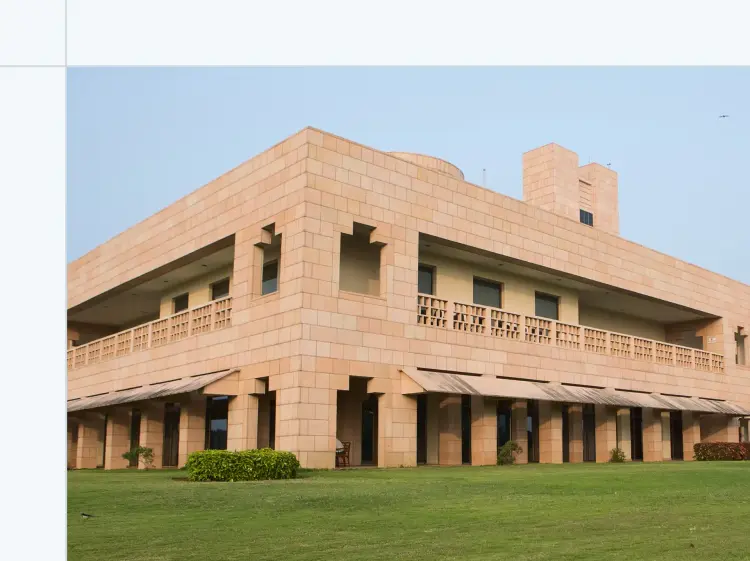
This ISB interview experience comes from a GyanOne client in insurance who reapplied to ISB and was admitted after an interview of over 60 minutes with three panelists. For one-on-one practice, see our ISB interview preparation.
Insurance / 4 years 7 months
| Interview Duration | Over 60 minutes |
| Interviewers’ Profile | 3 panelists |
| Final Decision | Admitted |
ISB interview experience: questions on reapplying
- Is this the first time you’re interviewing with us?
I am a reapplicant and had also interviewed with ISB the previous year. What made this answer a bit tricky was that I had applied in the last round in the previous year, and then in the first round in the next, and there was hardly a gap of 8-9 months in between. Apart from confirming that this was my second interview with ISB, also explained why I decided to apply again so quickly.
- Why did you not get selected last year? What do you think went wrong?
I had prepared well for this. Although my GMAT score had not changed, I had some important experiences to talk about from the past 8-9 months. I had prepared the reapplicant essay well during the application stage itself, and that helped a lot. Before I had applied for the current cycle, had discussed the shortcomings in my previous application thoroughly with GyanOne. Was therefore well prepared for this question, and was in fact expecting it.
ISB interview experience: why ISB and why an MBA
- Why ISB?
This was a straightforward answer, because it was basically already answered by my second ISB essay. Still, I had to explain why my goal had undergone some change, and why I was applying to ISB with those revised goals. In between, one of the ISB panelists interrupted me and asked me to mention specific resources at ISB that I would make use of to achieve my goal. I had done my homework, and could reply confidently to this.
- Why MBA?
While this is a very standard interview question in almost any B-school interview, it became bit hard for me when one of the ISB panelists began to actively convince me that I did not need an MBA now. I had to go back to my career history, and explain the key gaps that I had that only an MBA could fill. I did not disagree with the panelist, but added points on what all I could achieve if I were to pursue my goals with an MBA than without. The discussion continued for some 10 minutes, after which the panelist agreed.
ISB interview experience: questions on work and projects
- What did you do in your family business work experience?And then questions regarding ERP, why required and how implemented.
This question was a bit of a surprise, because though I had been expecting questions on my family business, I was not expecting the ISB interview panel to go so deep into the details of projects I had done. At every point, I was asked on my specific role and contribution in every task and achievement. At points, I felt that the panel was trying to verify that I had actually contributed to the family business, and not just claimed it otherwise. I could explain the details well, going into the numbers and profit margins. Was asked some follow-up questions on industry averages, and I knew those too.
- What do you do in your current role? Details about it.
I was quite excited about this question, because my current role had multiple exciting elements that could differentiate me as an applicant. Spoke in detail about this. The panel was quite interested. Although some follow up questions were there, they were all in a positive spirit.
- How big is your team?
Explained the team size and the number of people I managed. Also answered some questions they asked on team size as a proxy for seniority, and how I manage conflict within the team.
- Give demo of your app.
I was not expecting this question in the ISB interview, but was nonetheless prepared for it, as I had conducted several demos for the insurance app I had helped create. In doing that, I went into a lot of technical details, which I perhaps should not have done, because I then got the next question, which threw me off a bit.
- What exactly is your role in this project?
To be honest, I was a bit dismayed to get this question, because I had just spent the previous 5 minutes explaining in detail how I had managed this project, and all that I had done. Once I got this question, I realized I had gone too deep into technical details without covering the impact part, and highlighting the different areas I had managed. I broke up the project into various parts, and spoke about my role in each.
- Tell us about one app in the BFSI sector that you like the most, and why?
An easy one, because I could draw directly from the competitor research on apps that I had done before I helped my company create one. This was followed by a light moment when one of the ISB panelists asked why I didn’t consider my own company’s app the best, and I quickly responded that I did, but I was only covering the next best app. Everyone laughed.
ISB interview experience: commitment, goals and money
- Are you doing MBA because all your other friends are doing the same? Is this FOMO?
I answered this by telling the panel about my long history of applying to various top MBA programs across India, and not taking some of the ones (non-ISB of course) I had made it to in previous years because I wanted to set my sights higher. I could explain my commitment to an MBA and to ISB well in this answer, and there were no further questions. At this point, one of the interviewers left the room, and that made me a bit nervous.
PS: Later, I found that he had left the room to take an urgent call. The lesson here was not to read too much into external cues during the interview, and to focus on the questions.
- What will you do after ISB?
Covered this in detail in terms of both short and long term goals. They went into detail on all the parts – the mid term plan, the long term objective, and why that was right for me. Also asked me to consider some alternative scenarios for how I would achieve my long term goal if things did not go my way in the short and medium term.
- What about placements?
I had done my homework here, and could tell them about some companies I could potentially work in. GyanOne’s prep really helped me at this point, because they had gone over many of these points with me in detail, so I knew about the companies and the sector very well. There was some discussion with the ISB panel on average salaries and what I would do if my salary dropped. Tackled that well.
- 40Lakhs is a big investment. Are you sure about this?
They began this by giving me a calculation of where 40 Lakhs invested at a certain interest rate would take me, and how long it would take me to earn it if I earned just the average ISB salary. The panelists asked me to specifically give them a financial, and not philosophical answer, and shot down my response that I am not investing in the MBA just for money. I needed to go into a lot of details for this one. Not sure about whether they were convinced about this one. To be honest, this question made me sweat a bit, even though it was closer to the end of the interview.
- Any questions for us?
I had prepared some good questions to ask and the ISB panelists provided me detailed answers to each question I had. By this time, the interview had gone on for well over one hour, and I was a bit tired. Heard out their responses, thanked them, shook hands, and left the room.
Manufacturing / 2 years 6 months
| Interview Duration | 20 minutes |
| Interviewers’ Profile | 3 panelists |
| Admission Result | Admitted |
- Tell us about yourself
At the time, I had just 2 years of experience in the manufacturing (just about enough to not apply in the Early Entry Option). Had to cover this carefully as I did not want them to think that I needed more experience. As a result, I ended up speaking about not just my profile, but also why I need an MBA. This first answer itself took 5 minutes of the interview. The panelists were patient and heard me out.
2.Tell us more about your work
Covered various aspects in detail. I had worked for the first 6 months of my career with a manufacturer in North India, before moving to Dr. Reddy’s. I spoke in detail about my career there, why I made the move, and what value I had been adding at Dr. Reddy’s. They then asked me follow-up questions on manufacturing and the specific drugs I had been responsible for the production of, and I covered each in detail. A good 10-minute discussion followed.
3. Why ISB?
I had been preparing for this for a long time, and I could cover multiple aspects in this answer. In between, they stopped me a couple of times, and asked me to explain the particular aspects of ISB I was talking about. For example, they asked me to explain what ELP was and why it was important for me. Then asked me why I was so happy about ELP when other MBA programs offered a full summer internship, which is longer and more intense. I had prepared these parts well and could put forward answers that convinced them.
4. Why do you want to move to Consulting?
This question started on a bit of an aggressive note, as they said that everyone wants to do consulting nowadays, and with a background in manufacturing, I should not be joining the bandwagon. I took some time to explain my reasons for choosing consulting, and convinced them that I was not choosing it just because it was a popular choice. This was followed by some probing from their side on which kind of firms I wanted to work for and how I would get there. I faced no problems, as I had prepared these beforehand.
Corporate Finance / 4 years 8 months
| Interview Duration | 40 minutes |
| Interviewers’ Profile | 2 panelists |
| Final Decision | Admitted |
1) What is the difference between investment banking and asset management?
2) Why do you want to move into a career in investment banking? Why not continue in corporate finance?
3) Which side of investment banking do you want to work on? Buy side or sell side? Why?
4) What is your plan to seek a job with your target companies? Take me through the step by step process.
5) Given that you are a CA, why do you now need an MBA?
6) An auditor is neither a part of the government nor a part of the company that she/she audits. Yet, the government and the company both rely on the auditor, despite auditors having been caught in multiple scams. Why?
7) Is bankruptcy legislation a tool in the hands of inefficient companies to avoid creditors? Why or why not?
8) You have plenty of finance knowledge already. What courses will you take at ISB and why?
9) Why did you not consider an international MBA?
10) Why not consider a Master’s in Finance instead of an MBA?
11) If you cannot get into an investment bank, what is your backup plan?
Why strong applicants still get rejected, and how to prepare
By the interview stage, ISB has already judged your profile strong enough on paper. The panel tests whether the person matches the file, against the three qualities ISB says it looks for: analytical thinking, demonstrated leadership potential and commitment to growth. These are the five failure patterns we see most often in candidates whose profiles were never the problem.
1. Goals that don’t survive the second question
Most applicants can state a goal. Far fewer can survive “why that role?”, “why can’t you get there from your current job?” and “who hires for it?” in quick succession. The PGP has no summer internship, as ISB’s FAQ states, so a goal that would need a trial run in a new function is harder to defend than at a two-year school. What works: name an industry, a function and the kind of firm; say what in your experience already points there; and say what specifically you lack that ISB supplies.
2. Answers that drift from what you wrote
The panel has your essays, résumé and application in front of it. Months after submitting, applicants often tell a story with a different team size, role or result from the essay version. To a panel testing analytical thinking, that reads as carelessness or inflation. What works: reread everything you submitted, list the ten claims a sceptic would test (numbers, titles, team sizes, results), and be ready to go two levels deeper on each.
3. A “why ISB” that could be about any school
“Great faculty, strong network, good brand” describes every school on your list. ISB’s PGP has specific features: a 12-month residential format on two campuses, the Experiential Learning Programme of live consulting projects in place of an internship, exchange partners abroad, and placements that usually start in November or December. What works: one sentence on why an MBA, one on why now, then two or three ISB features tied to your goal, ideally informed by conversations with alumni in your target field.
4. Defensive answers on weaknesses, setbacks and past rejections
ISB says commitment to growth shows in “your response to setbacks”, and panels test it directly: a low test score, a short stint, a career gap or an earlier rejection. Blaming a manager, the market or the test, or offering a rehearsed “weakness that is really a strength”, signals the opposite. What works: own the gap in one or two sentences, describe exactly what you changed, and give evidence that the change has lasted.
5. Examples with no texture, or answers that sound memorised
“I led a cross-functional team to deliver a project ahead of schedule” could come from thousands of applicants. The panel will ask who was on the team, who disagreed, what you decided and what it cost. A PGP PRO alumnus writing on ISB’s blog put it plainly: “You cannot rely on rehearsed answers”. Situational questions can be uncomfortable on purpose; one past applicant was asked how to handle an employee accused of harassment by a colleague, and the panel wanted to see the reasoning, not a single right answer. What works: a bank of eight to ten real stories, each with a situation, numbers, a decision point and a lesson, that you can tell in about 90 seconds and expand when asked.
One question, two answers (illustrative)
An invented example, not a real client: a Big Four tax consultant with four years’ experience is asked, “Why an MBA now?”
| Weaker answer | Stronger answer |
| “I have learnt a lot in tax, and now I want to broaden my skills into strategy and leadership. ISB will give me the network and exposure to make that move, and this feels like the right time in my career.” | “For two years I have run the tax workstream on acquisitions, and each time the commercial decisions were made before we were in the room. I want to move into corporate development at a large Indian group. My firm has no route there. I need valuation and strategy depth and a recruiting path into those teams, and a one-year programme lets me do that without two years out.” |
The second answer invites follow-up questions the applicant can win: which deals, which groups, why not consulting. The first invites “so why not ask for a transfer?”
A preparation plan for the weeks before your invitation
Because invitations come only three to seven days ahead, most of the work has to happen before you know your date.
| When | What to do |
| Straight after submitting | Reread your full application. List the ten claims a sceptic would probe and attach an example to each. Build a bank of eight to ten stories mapped to ISB’s three criteria. |
| Three weeks out | Pressure-test your goals: industry, function, type of firm, why now, why ISB. Speak to at least two ISB alumni in your target field. Follow business news in your own industry. |
| Two weeks out | Practise the on-the-spot essays. ISB does not publish their topics or timing; our clients’ debriefs describe short typed responses of roughly 20 minutes on professional dilemmas or business situations, so write four to six timed answers of that kind. Work through a few guesstimates aloud, and do a first mock with someone who will interrupt you. |
| Invitation week | Settle logistics: Zoom set-up, camera, light and a quiet room, or travel to the interview city. Do a second mock on your weakest answers. Prepare two or three questions for the panel that ISB’s website does not answer. |
| The day before | Reread your essays one last time, stop adding new material, and rehearse only the first 90 seconds of your introduction. |
| Afterwards | Write down every question you were asked while it is fresh. It helps with other interviews, and gives you an honest record if you reapply. |
What applicants often hear about the ISB interview, and what’s true
With Round 1 interviews for the Class of 2028 running until the second week of December 2026, online forums are full of debriefs and advice. These are the claims we hear most often from applicants who have read them, checked against what ISB itself says.
The panel decides your result, so it comes down to luck: partly right
Panels do differ in style, as the interviews above show: some are warm, others push back hard. But the panel doesn’t decide on its own. ISB says interview feedback goes into a full evaluation, and the Admissions Committee of faculty and alumni makes the final offers, weighing the interview alongside everything else in your application. A tough panel is not a verdict. In our experience, an answer that holds up after a challenge often does more for you than a smooth answer that was never tested.
You need a GMAT Focus score of 655 or more to get an interview: wrong as a rule
ISB sets no minimum GMAT or GRE score, and says its holistic review produces a class with a wide range of test scores. The Class of 2027’s GMAT Focus median was 675 and its average 672, according to ISB’s class profile, so half the class scored below 675. A score under the median means the rest of your application has to do more of the work; it doesn’t rule you out. Once you are shortlisted, use the interview to show what a score can’t: how you think, how you work with people and why your plan holds together. Our guide to the GMAT score for ISB covers score targets.
ISB verifies everything now, so one mismatch will sink you: half right
ISB does check. Within about 20 days of submission it verifies your application against your supporting documents, such as transcripts and professional documents, and gives you three days to fix anything missing or mismatched. Only verified applications go forward. The application also asks for the designation, pay and duration of every role you have held.
A mismatch fixed at that stage is an administrative matter. The bigger risk is in the room: panels probe your exact role on each project, and an answer that doesn’t match your CV or essays does far more damage than a modest claim explained well. Before your interview, reread your application line by line and be ready to back every number in it. Threads describing post-admission checks with your manager refer to rules that aren’t on ISB’s admissions pages, so we can’t confirm them.
Old debriefs tell you what to expect: only if you check the date
Debriefs that circulate online are rarely dated, and many come from earlier cycles. The ones that don’t mention the two on-the-spot essays describe an earlier format or leave out part of the process. Use any debrief, including the ones on this page, for the kinds of questions panels ask, and take the format only from ISB’s current pages.
Using these ISB interview experiences
Every ISB panel tailors its questions to your profile, so use each ISB interview experience here to practise the kinds of questions asked, not as a script. Prepare clear examples from your work, your goals and why ISB, and expect follow-up questions on each. Practise writing a short essay against the clock too, since today’s interview includes two essays written on the spot.
To prepare with mock interviews and written feedback, see our ISB interview preparation. You can also read why strong applicants still get rejected in our guide to ISB interviews, the ISB consulting interview questions, or start with ISB application help.
For the latest official details, see ISB’s PGP admissions process and application deadlines.