
From Global Consulting to the LBS Executive MBA: Atif Jawed’s Story

Atif Jawed had 17 years of consulting behind him when the LBS Executive MBA offered him a place. His story shows what London Business School wants from senior applicants: growing leadership, not long service.
Last updated: 31 October 2026
The short answer: the LBS Executive MBA is a 17- to 22-month MBA for senior professionals who keep their jobs. You study in London or Dubai, mostly in blocks of a few days.
LBS Executive MBA: what you need to know in 60 seconds
- Who: Atif Jawed, a consultant with 17 years’ experience, most recently at Accenture. He works with organisations through large-scale transformation and strategic change.
- Programme: the London Business School Executive MBA, which runs in London and Dubai.
- Why an EMBA: to broaden his perspective and learn alongside senior leaders from around the world. He also wanted to prepare for larger leadership roles while continuing to work.
- Outcome: an offer from the LBS Executive MBA.
- What made the difference: a record of steadily growing responsibility, presented as leadership and impact rather than as years served.
Who is Atif Jawed?
 Over the past 17 years, Atif Jawed has built a career helping organisations navigate change. He has worked in consulting, most recently at Accenture. There, he partnered with businesses facing large-scale transformation, strategic challenges and shifting market demands.
His work meant balancing business objectives with execution. It also meant bringing together diverse stakeholders and delivering solutions with measurable impact.
Many people call consulting one of the most demanding career paths, because every project brings a different business problem. For Atif, those projects became a way to build leadership across industries, functions and teams. They also built the strategic mindset needed to influence decisions at the highest levels.
Why did Atif want an Executive MBA?
As his career progressed, Atif saw that leadership was becoming less about solving individual business problems. Instead, it was becoming more about shaping organisations.
Years of advising clients had sharpened his analytical thinking, his communication and his ability to manage complexity. Still, he wanted to broaden his perspective further.
So an Executive MBA was the logical next step. He was not looking for technical knowledge. Instead, he wanted a programme that would put him alongside senior leaders from around the world.
He also wanted a programme that would challenge his thinking. Above all, it had to prepare him for larger leadership responsibilities in an increasingly global business environment. That search led him to the LBS Executive MBA.
What made his application stand out?
Atif’s application showed far more than the number of years he had worked.
His 17 years in consulting showed sustained professional growth and increasing responsibility. They also showed constant exposure to complex business transformation. More importantly, they showed someone who had helped organisations through uncertainty while steadily building his own leadership.
Admissions committees judge applicants on career progression. But they also weigh what you will add to a classroom of experienced executives. Atif’s consulting background, strategic mindset and international business exposure mattered here. They showed he would both learn from the Executive MBA and add to it.
The admit: what did it mean?
His efforts resulted in an offer from the LBS Executive MBA.
The admit recognised years of leadership development, consulting expertise and a clear view of the future. Atif did not see the Executive MBA as the peak of his career. Rather, he saw it as a platform to prepare himself for what comes next.
That means leading larger organisations and influencing strategic decisions. It also means creating greater business impact in the years ahead.
Leadership is a continuous journey
Executive MBA admissions reward professionals who have built meaningful careers, not those who have simply accumulated years.
Atif’s journey shows how years of solving business problems and leading transformation can open the door to a leading Executive MBA. For experienced consultants, his story carries a reminder.
A title does not define leadership. Instead, the impact you create over time defines it. So does a willingness to keep learning, even after years of success.
What is the LBS Executive MBA?
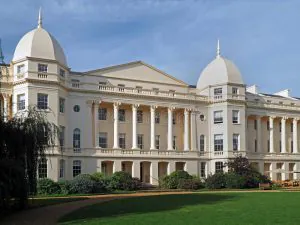
It is London Business School’s part-time MBA for senior professionals who want to keep working. You study at one of two campuses: Regent’s Park in London or the Dubai International Financial Centre (DIFC).
Both streams start together with an orientation week in London. After that, you follow the same curriculum in your home city. The Dubai programme holds AACSB, EQUIS and AMBA accreditation, the three main international quality marks for business schools.
Best for: senior managers, typically with around 15 years’ experience, who want a global class without a career break.
The programme at a glance
| Length and format | 17 to 22 months, in person or blended, in London or Dubai. You choose the city when you apply and cannot switch later. |
| Start dates | September and January, in both cities |
| Year-one schedule | London in person: 16 Fridays and Saturdays, every other week. Dubai in person: 8 monthly block weeks, Thursday to Sunday. The blended options mix in-person units with live and self-paced online study. |
| September 2026 intake | EMBA London: 50 students from 18 nationalities, 14 years’ work experience on average, 26% commuting. EMBA Dubai: 40 students from 17 nationalities, 13 years on average, 61% commuting. |
| Typical admit | About 15 years’ work experience on average and at least 5 years’ managerial experience |
| Tests | GMAT, Executive Assessment or GRE, with no minimum score. Waivers are possible for exceptional candidates, for example with C-level experience in a heavily quantitative role, a quantitative degree, or a professional qualification such as CFA or ACCA. |
| Selection | Application, a Kira video assessment, and an interview with a member of the Admissions Committee or an EMBA alumnus |
| Fees (September 2026 start) | London: £134,950. Dubai: US$163,995, plus 5% UAE VAT. |
Sources: LBS’s Executive MBA page, how to apply and cohort announcement (5 October 2026).
How is the programme structured?
- Year one, the core: three terms of core courses. You work through them with a study group of five or six classmates.
- Year two, electives: you choose six to nine electives from more than 100. They run as intensive block weeks or across a term, and most need you on campus.
- Global Experience: a week-long programme in which you apply your learning in an unfamiliar market.
- Leadership development: personalised coaching, plus optional workshops on skills such as presenting and negotiating.
What do the core courses cover?
LBS currently lists 12 core courses, which we have grouped below. Themes such as Mastering the Digital Landscape run through all of them.
- Finance and data: Accounting and Financial Reporting for Executives, Corporate Finance, and Data Analytics for Executives.
- Strategy and the economy: Advanced Strategic Management, Managing the Firm, The Global Economic Environment, and The Marketplace Environment.
- Customers and operations: Creating and Capturing Customer Value, Customer-centric Market Strategies, and Operations Management.
- People: Executive Leadership, and Leading People and Organisations.
If you come from consulting, the strategy courses may feel familiar. The bigger stretch is often finance, accounting and operations, which you study alongside peers from other industries.
London or Dubai: which LBS Executive MBA stream suits you?
Each city offers an in-person format and a blended one.
| Stream and format | Year-one pattern | Days on campus in year one |
|---|---|---|
| London, in person | 16 Fridays and Saturdays, every other week; about 80% in person and 20% self-paced online | About 21 business working days |
| London, blended | 8 units: 40% in person in London, 40% live online, 20% self-paced online | About 13 business working days |
| Dubai, in person | 8 monthly block weeks, Thursday to Sunday; plus 20% self-paced online | About 21 business working days |
| Dubai, blended | 8 units: 40% in person in Dubai, 40% live online, 20% self-paced online | About 13 business working days |
These day counts exclude travel time. So confirm the options for your intake when you apply.

What should you weigh?
- You cannot switch. After the core, though, you can take electives on either campus.
- Commuting is normal. At least 30% of EMBA students live outside the UK and the UAE and fly in.
- Visas matter. Most commuters use a visitor visa, so arrange yours early.
Example: say you lead a team in Mumbai. Dubai in person means eight longer trips in year one, each a short flight. By contrast, London in person means a trip every other week, a much heavier load from India.
What this means for you: if you will commute from India, map a year of trips against your work calendar first.
Who is in the class?
- Whole September 2026 cohort, per the EMBA FAQ: 93 students, 39 nationalities, 15 years’ experience on average and 40% women.
- Typical admit: at least five years’ managerial experience, such as managing teams, projects, budgets or resources.
Either way, this is a senior, international class.
What this means for you: since 15 years is the norm, long experience alone won’t set you apart. Atif’s profile worked because it showed growth and impact over those years.
How much does the LBS Executive MBA cost?
- Tuition: as in the table above, for a September 2026 start.
- Commitment fee: £5,000 (London) or US$6,430 including VAT (Dubai), paid when you accept your place.
- Student Association fee: £200.
- What the fee covers: tuition, course materials, essential core textbooks and hotel accommodation for orientation week.
- Instalments: two if your company sponsors you or you take a loan. If you fund yourself, you may be able to pay in five equal instalments.
So budget separately for flights and hotels if you will commute.
Scholarships and sponsorship
LBS offers several scholarships for self-sponsored applicants, covering varying shares of tuition. They include the 30% Club Scholarship, the Diversity in Leadership Scholarship and the Laidlaw Women’s Leadership Fund.
You can apply for several, but you can receive only one award.
Your employer must support you with time, though not necessarily with money. Many employers sponsor students in full or in part, and LBS suggests building a business case.
How do you apply to the LBS Executive MBA?
What does LBS look for?
- Experience: about 15 years on average, with at least 5 years managing teams, projects, budgets or resources.
- Education: usually an undergraduate degree. Without one, LBS may still consider strong experience and other qualifications. It will then look more closely at your test score.
- Leadership and progression: a record of reaching goals and growing responsibility, and a clear motivation for the EMBA.
- International outlook: the class draws on about 40 to 50 countries, so LBS wants people who work well across cultures.
- Team skills: flexibility and a willingness to help classmates develop.
What do you submit?
- Two essays of up to 600 words each. The first asks how you will add to others’ experience and how the EMBA will help you. The second asks what being an LBS alumnus would mean to you and how you would give back.
- A one-page CV. Explain any significant gaps in employment on a separate sheet.
- One reference from your immediate line manager, in your current or a previous role.
- A GMAT, Executive Assessment or GRE score. There is no minimum, and LBS recommends the Executive Assessment if you haven’t taken the GMAT.
- Transcripts and, if needed, proof of English (TOEFL, IELTS, PTE or Cambridge). LBS may waive the English test if you studied or worked in English.
- An application fee of £180.
What happens after you submit?
LBS reviews applications within two weeks. If it shortlists you, you first complete a Kira video assessment, recording answers to questions on camera. It assesses leadership, critical thinking and communication.
Next comes an interview with an Admissions Committee member or an EMBA alumnus, in person or online. Final decisions arrive six to eight weeks after a complete application. You will get an offer, a waitlist place or a rejection.
When are the deadlines?
LBS’s admissions calendar lists these rounds.
| Round | Deadline | Note |
|---|---|---|
| 1 | 13 November 2025 | Final deadline for the January 2026 intake |
| 2 | 26 February 2026 | |
| 3 | 30 April 2026 | |
| 4 | 9 July 2026 | Final deadline for the September 2026 intake |
| 5 | 5 November 2026 | Intake not stated |
The next intakes start in January 2027. So if you are aiming for 2027, ask the EMBA team now which round applies. LBS also warns that competition can be fierce in later rounds.
What you can learn from Atif’s application
- Show growth, not tenure. With 15 years as the typical figure, long experience is the norm. What sets you apart is how your responsibility and impact grew.
- Make the contribution case. An EMBA class learns from its members. Spell out what your industries, clients and transformations will add to the discussion; LBS’s first essay asks for exactly this.
- Be clear about why now. Atif treated the EMBA as preparation for larger leadership, not a reward for past work. That forward-looking reason is what committees want to hear.
- Lead with impact, not titles. His application centred on organisations he helped through change and results he delivered, not on job titles.
- Bring a global lens. His international business exposure counted, and LBS selects for an international outlook.
- Choose London or Dubai with care. You cannot switch later, and the schedules differ. Many Dubai students commute, so weigh travel time and cost from India against each format.
Who does the LBS Executive MBA suit?
It suits you if:
- You have at least five years of managerial experience and a record of growing responsibility.
- You want to keep your job, and your employer will give you the time.
- Regular travel to London or Dubai for about two years is realistic for you.
- A senior, multinational class matters more to you than a career switch.
Look elsewhere if: you have under five years of managerial experience, or you want to stop work and switch careers. Weighing a full-time year for senior leaders? See our comparison of the LBS Sloan programme and the Executive MBA.
Frequently asked questions about the LBS Executive MBA
Do I need the GMAT?
You need a GMAT, Executive Assessment or GRE score, with no minimum. However, LBS grants waivers case by case, for example for CFA, ACCA, CIMA or ACA holders.
Can I do it while working in India?
Yes. Many students commute, and most use a visitor visa, so plan your trips and visas early.
Does my employer have to pay?
No. Your employer must give you the time, but you don’t need financial sponsorship. Self-funded students can also apply for LBS’s scholarships.
Is the Dubai curriculum the same as London’s?
LBS says the two streams follow fully aligned curriculum requirements. Faculty also travel between the two campuses.
Related guides and stories
- The Executive MBA at London Business School
- LBS Sloan Fellows vs Executive MBA: which one fits you?
- The Executive Assessment
- Ganesh Subramanian’s path to Chicago Booth and the MIT Executive MBA
- Prashanth Rajagopalan: from doctor to Kellogg EMBA, LBS and Oxford
- GyanOne’s LBS admit stories
Other facts come from LBS’s programme content, core courses, fees and scholarships, who attends and FAQ and Dubai pages, read on 31 October 2026.
GyanOne has helped 5,000+ applicants over 18+ years. Considering an Executive MBA? See our Executive MBA admissions help for senior professionals, or book a free 30-minute profile evaluation call with a GyanOne consultant.
Considering an Executive MBA?
Tell us about your experience and goals. We'll tell you which programmes fit and how to position your application.
Get a free profile evaluationWhatsApp us
A free 30-minute one-on-one call with a GyanOne consultant. No obligation.


MBA admissions consultants since 2008, led by Founder Rishabh Gupta, a Poets&Quants top-10 MBA admissions consultant in 2023, 2024 and 2025 (No. 12 in 2026), and Co-Founder and Managing Partner Swati Gupta: a top MBA with 18+ years of industry experience who designed every GyanOne consulting programme and built our interview coaching to be the best in the world. 5,000+ applicants helped, and 500+ admits to M7 schools for our clients. Meet the team


