

A father who built a business in the towns no one else bothered to visit, a son who carried that same instinct into one of the most transactional industries there is, and an admit to Yale’s School of Management. Some people lead with their numbers. Kunal led with his heart.
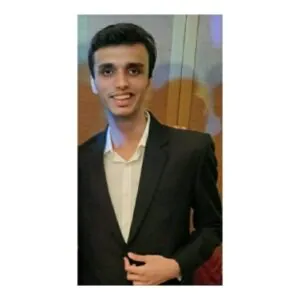 Kunal Sheth grew up listening to a single idea, repeated so often and lived so completely that it eventually became the organising principle of his own life. His father had built a distribution business in Mumbai from nothing, and over roughly thirty years he turned it into ExxonMobil’s exclusive lubricants partner for the city. He won by getting into his car and driving out to the industrial towns across Maharashtra that the rest of the trade considered too small, too far, or simply too much trouble. The way Kunal tells it, his father had a line for all of this. The city, he would say, has a hundred people chasing every customer. Out there, I am the only one who shows up. That sentence shaped Kunal more than any classroom ever did. It taught him, long before he had the vocabulary for it, that the best opportunities tend to sit exactly where other people cannot be bothered to look, and that showing up, reliably and in person, is its own kind of advantage. A BMS from NM College with a near-perfect record. A CFA charter. Four and a half years in investment banking, where he built a pharma franchise at Equirus from scratch and led the Senores Pharma IPO, a seventy-million-dollar offering that was oversubscribed nearly ninety-four times, the strongest pharma IPO subscription India had seen in a decade. On paper, he was the textbook strong banker.
The thing that turned a good career into a genuine conviction happened in a conference room in Vadodara. Kunal sat across from an elderly founder and slowly realised that the unremarkable-looking company in front of him was a four-hundred-and-forty-crore medtech business, quietly out-competing global giants like Alcon and Johnson and Johnson at roughly fifty percent margins, and that almost no one in Mumbai’s financial world had any idea it existed. It was his father’s lesson again, in a new and undeniable form. They would come from Vadodara, Indore, Coimbatore, and Lucknow, from exactly the places the capital was not looking. He spent eighteen months searching for the right way to act on that belief, turning down everything that did not fit, before helping to launch Pulsar Peak, a growth fund built specifically to put money into the industrial businesses scaling up in the parts of India that infrastructure and attention have not yet reached.
The part that does not show up on a resume
Investment banking is not an industry known for tenderness. It runs on long hours, constant pressure, and a fairly ruthless sorting of people into the useful and the not. Kunal spent years inside it and somehow came out the other side as the person his juniors still message on WhatsApp long after they have stopped working together. There is a reason for that, and it has very little to do with deals.
Kunal did not send him home, and he did not quietly file it away as a weakness. He sat down on the floor of a hotel room with him and stayed there, through the worst of it, until the young man’s breathing steadied, and then he walked him back into the room himself, so that the hardest part, walking back in, would not have to be done alone. On another occasion, when an intern failed his exams and assumed his shot was gone, Kunal pushed internally to turn a three-month internship into a full year, because he could already see what the person would become even when the person could not see it himself. He simply shows up for people, in a line of work where almost no one expects him to.
And there it is, the thread running through all of it. The father who showed up in the towns no one visited. The investor who shows up for the companies no one is funding. The colleague who shows up for the people no one else is willing to sit with on the floor. It is the same instinct wearing three different sets of clothes, and once you notice it, the whole of Kunal makes a kind of quiet, complete sense.

Why Yale’s School of Management, and how he got there
When Kunal first came to GyanOne, his instinct was the natural one for someone with his background. He wanted to lead with the thesis, the case for non-metro India, the gap in how capital gets allocated, the argument he could defend confidently in any room. It was a genuinely good argument, and it was also, as an application strategy, a quiet problem. An ambitious Indian investment banker with a crisp market thesis is precisely the candidate a school like Yale has already read several hundred times over. Leading with that meant blending in with the strongest version of a very crowded type.
So our work with him, more than anything else, was about persuading him to do the one thing his profile made him least inclined to do, which was to lead with his heart rather than his competence. The resume already proved he was smart. The recommendation would prove he could execute. The career essays could carry the thesis perfectly well on their own. What none of those things could do, and what only Kunal could offer, was the picture of an investment banker whose defining quality is the way he treats the people around him. We anchored the centre of his application on exactly that, and let the Bharat thesis live where it belonged, in the goals. The application stopped being a louder argument for his ability and became a portrait of a person. It gained, for want of a better way to put it, a heartbeat.
It also happened to be a near-perfect fit for the school. Yale’s School of Management exists, in its own words, to educate leaders for business and society, and most applicants gesture at the society half as an aspiration, something they fully intend to get to one day. Kunal could simply point at how he had already been living it, not in a side project or a weekend cause, but in the ordinary way he showed up at work every single day. His goals carried the rest. After Yale, growth equity in healthcare and emerging markets, learning how the best healthcare businesses actually scale. Then a return to India to put capital into healthcare that reaches beyond the metros. And eventually, the thing the whole story has been pointing toward all along, a diagnostics and distribution platform built for the India that the existing infrastructure has quietly left out.
He got into Yale’s School of Management.
Somewhere in Mumbai there is a man who spent thirty years proving that the person who shows up where no one else will is usually the one who wins. His son has just carried that idea to New Haven, on his way to a career spent showing up for the patients, the towns, and the companies that the rest of the market keeps overlooking. We have had the privilege of working with a great many sharp and accomplished people over the years. Every so often one of them turns out to be, underneath the CFA and the deal sheet, simply a very good human being. Kunal is one of those.
Congratulations, Kunal. Keep showing up.


 info@gyanone.com
Recent Comments